Underwood & Underwood
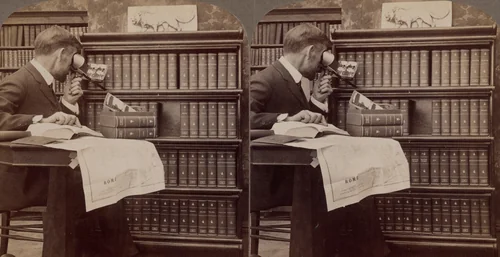
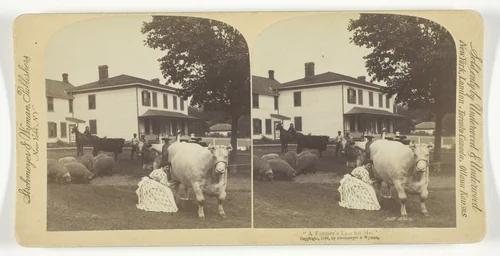
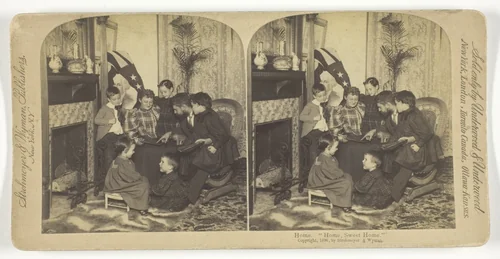
Underwood & Underwood stands as one of the most commercially successful and historically influential photographic firms of the late 19th and early 20th centuries. Active primarily between 1850 and 1908, the company specialized initially in the production and mass distribution of stereoscopic images. These dual photographs, when viewed through a specific stereoscope, created a compelling three-dimensional illusion, fundamentally transforming photography from a niche specialty into an accessible mass medium. This process allowed Victorian and Edwardian households across Europe and America to experience distant lands and major global events firsthand, shaping the public's perception of the world.
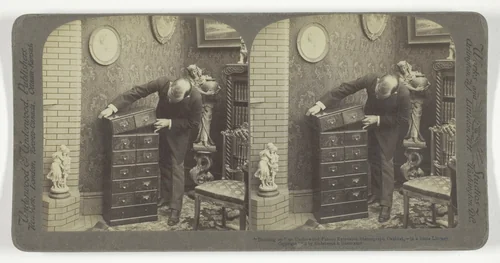
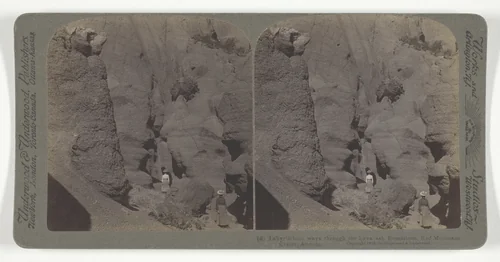
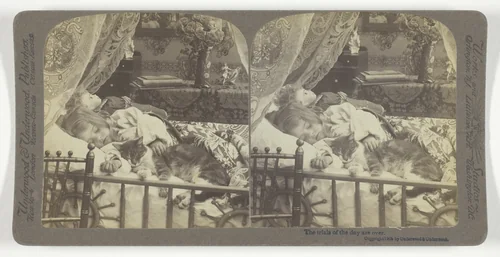
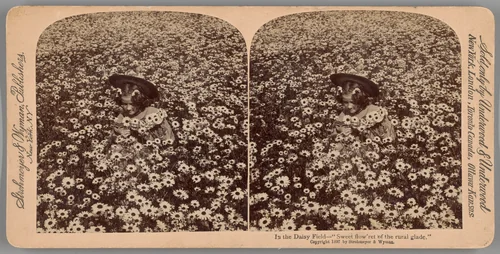
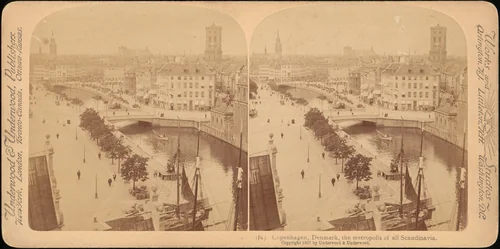
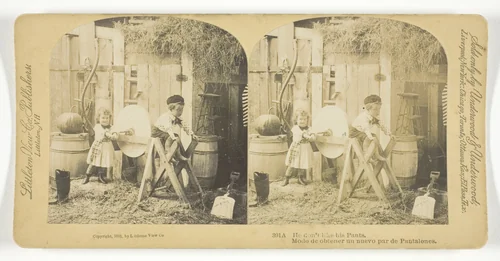
The firm’s significance extends beyond parlor entertainment. Recognizing the rising need for timely visual documentation, U&U pioneered the modern news bureau model. By establishing a vast network of staff photographers internationally, they captured conflicts, political upheavals, and societal milestones with an unprecedented scale and immediacy. Their extensive output, curated by institutions such as the Art Institute of Chicago and the National Gallery of Art, ranges from meticulously staged travel views to early examples of photojournalism. This corpus includes precise, topographical records, such as Copenhagen, Denmark, the metropolis of all Scandinavia, alongside unscripted genre scenes like He don't like his Pants. These museum-quality images demonstrate the company’s ability to cover both the grandeur of culture and the quotidian aspects of life.
The sheer organizational breadth of the U&U catalog reveals an empire built on visual curiosity. While primarily a commercial enterprise dedicated to selling views, the company was also inadvertently running a subtle pedagogical project, educating the public about geography and current events through accessible, visual language. Their global distribution system made them the definitive visual chroniclers of the era. Today, much of their historical documentation has entered the public domain, ensuring that these high-quality prints remain readily available to scholars and researchers as downloadable artwork for study and reproduction, preserving their foundational role in the history of visual culture.
Source: Wikipedia · CC BY-SA 4.0
![[Group of 3 Stereograph Views of Belgium] by Underwood & Underwood, photograph, 1890](https://img.artbee.org/a87f0ac4-e136-4738-99d6-228cc6c4d3f9/small.webp)
![[Group of 23 Stereograph Views of Yosemite Valley Housed in Original Publisher's Box] by Underwood & Underwood, photograph, 1897-1907](https://img.artbee.org/3e5e1547-9de7-47df-9518-0a4ca0214d45/small.webp)