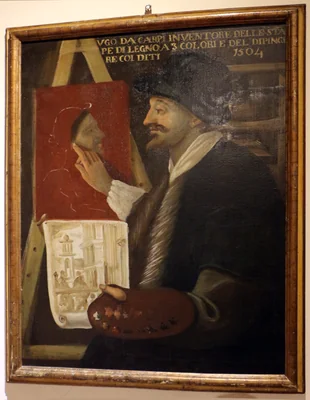
Ugo da Carpi
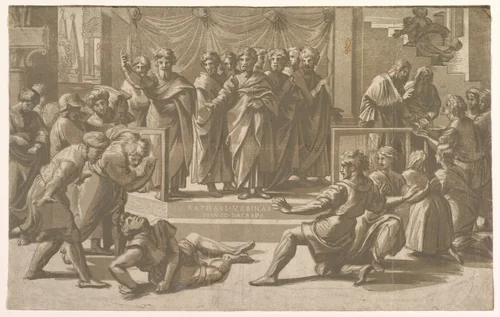
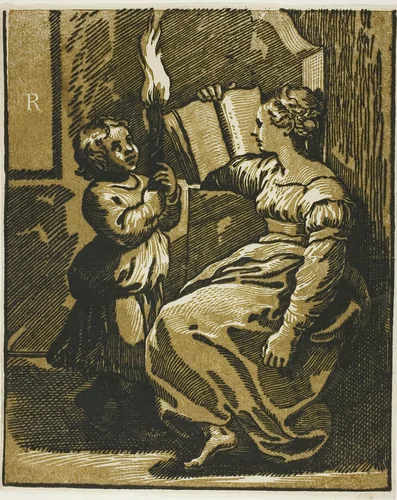
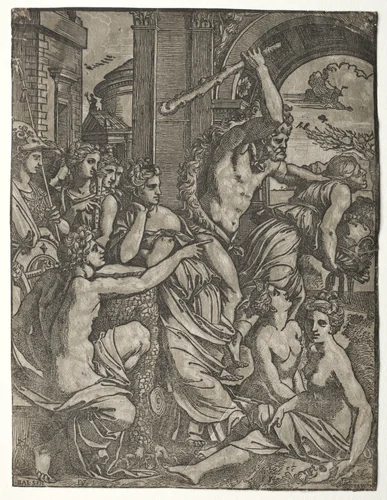
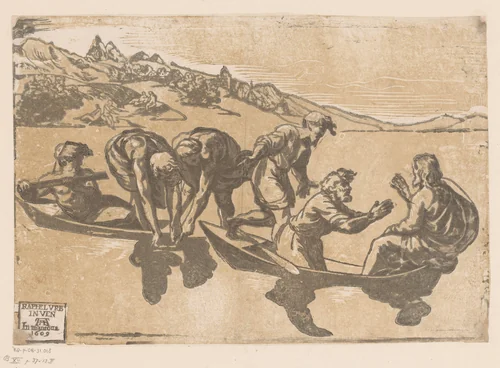
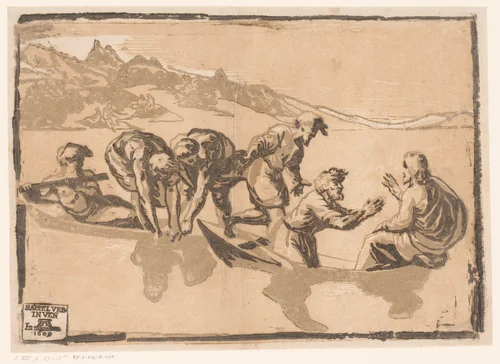
Ugo da Carpi (c. 1480-1532) was a pivotal figure in early 16th-century Italian printmaking, celebrated for advancing the technically complex process of the chiaroscuro woodcut. Active across influential artistic centers including Venice, Rome, and Bologna between approximately 1502 and 1532, da Carpi’s contribution was not simply mechanical; it was fundamentally interpretative, elevating the multi-block printing process into a sophisticated tool for tonal and textural expression.
Although the technique of using multiple, color-coded blocks to create gradations of light and shade predated his career, Ugo da Carpi was among the first Italian practitioners to harness its dramatic potential successfully. With characteristic ambition, he claimed personal authorship of the method, petitioning the Venetian Senate and subsequently Pope Leo X for a copyright monopoly over the process. While his claim was historically inaccurate, this endeavor underscores his profound commitment to the medium and his recognition of the commercial and artistic value inherent in producing high-quality prints that effectively mimicked wash drawings.
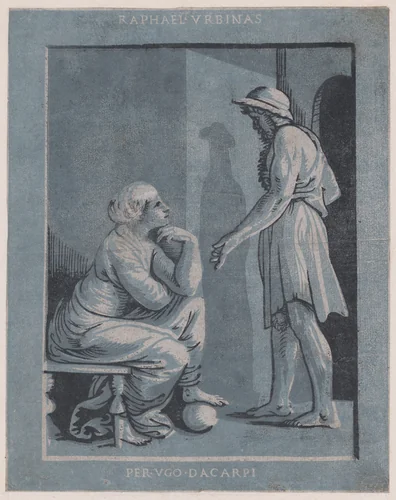
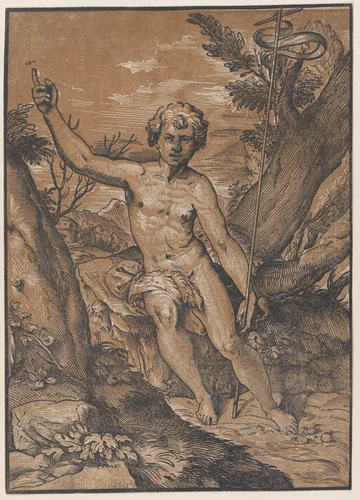
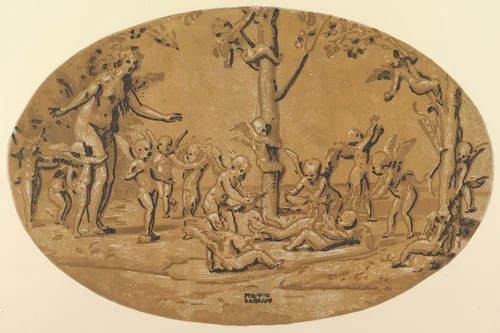
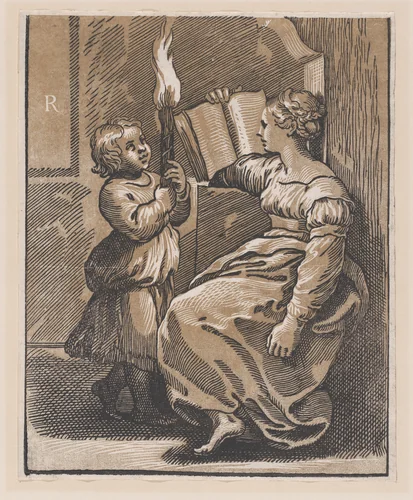
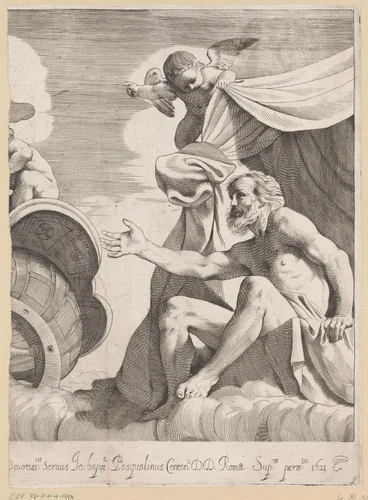
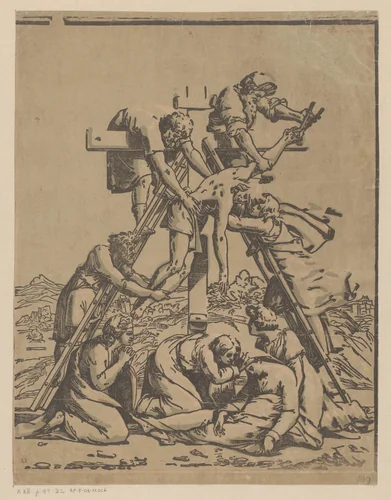
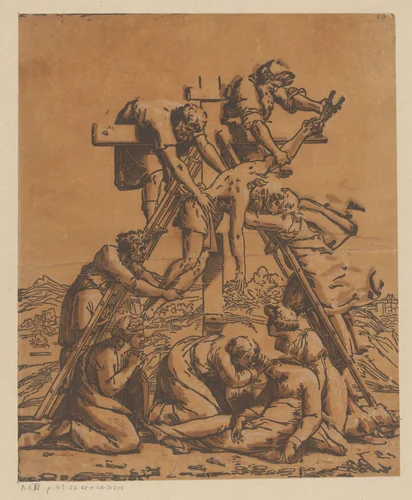
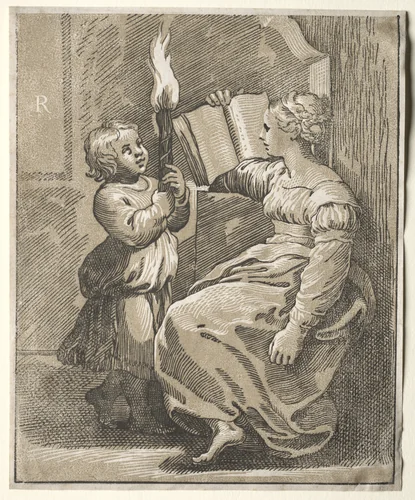
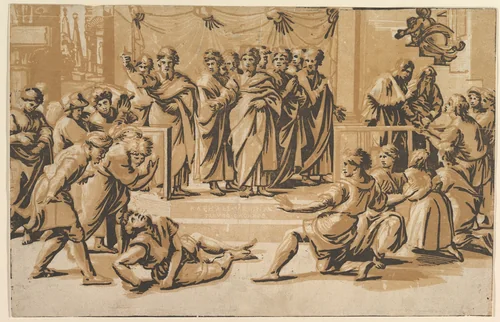
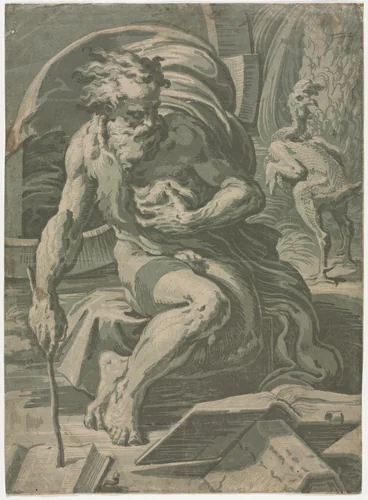
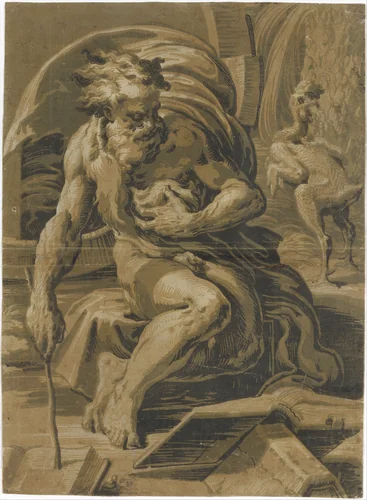
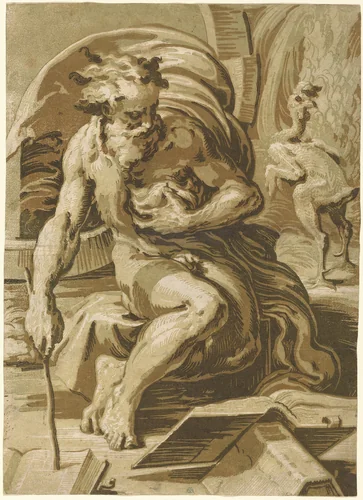
Da Carpi refined the woodcut method through an intense focus on tonality and the expressive power derived from layered color. His surviving works, such as the powerful rendering of Diogenes, demonstrate a robust, sculptural style that successfully translated the monumental quality of Renaissance drawing and painting into a reproducible format. He prioritized depth and the seamless tonal transition afforded by the multiple blocks, fundamentally expanding the artistic vocabulary of graphic art during the High Renaissance. Today, these seminal Ugo da Carpi prints are preserved in major institutional holdings, with examples widely studied as downloadable artwork for scholars and enthusiasts of Renaissance graphics.
Beyond his numerous prints, Ugo da Carpi is known to have produced a writing book and, notably, one significant painting: the altarpiece of Saint Veronica housed in St. Peter’s Basilica in Rome. His artistic legacy is securely established through his pioneering graphic output, and many fine examples of his work are held in collections such as the Metropolitan Museum of Art, the Cleveland Museum of Art, and the Rijksmuseum, ensuring his foundational role in the history of Italian prints remains central to study.
Source: Wikipedia · CC BY-SA 4.0