Troy Kinney
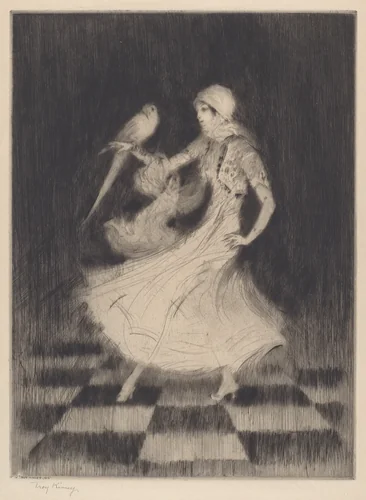
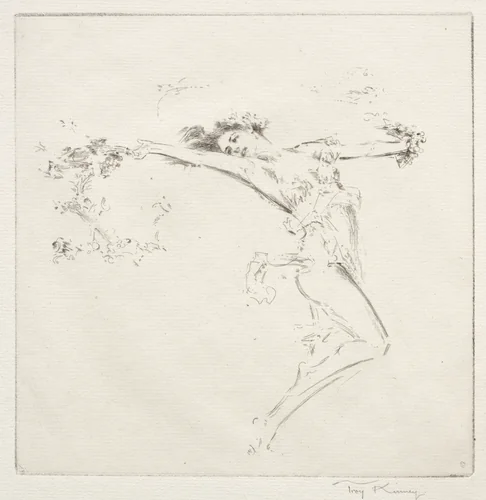
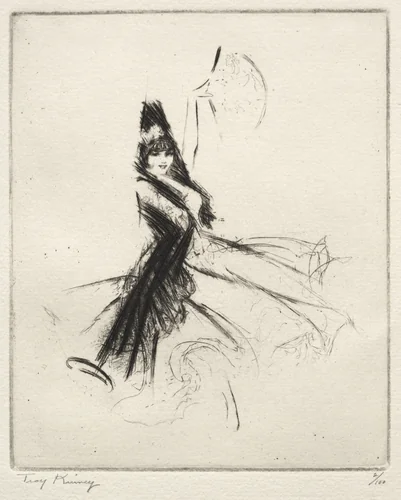
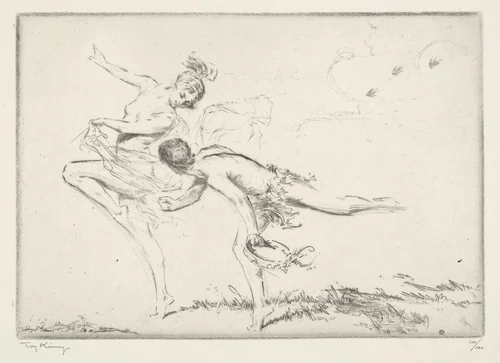
Troy Sylvanus Kinney (1871-1938) stands among the most important American etchers and graphic artists documenting the transitional period of modern dance at the turn of the twentieth century. Active primarily between 1891 and 1919, Kinney developed a distinctive etching style characterized by its precision and inherent ability to convey fleeting motion. While he was also an author, his enduring renown rests almost entirely upon his highly sought-after prints portraying classical dancers, theatrical performers, classically styled nudes, and fanciful subjects.
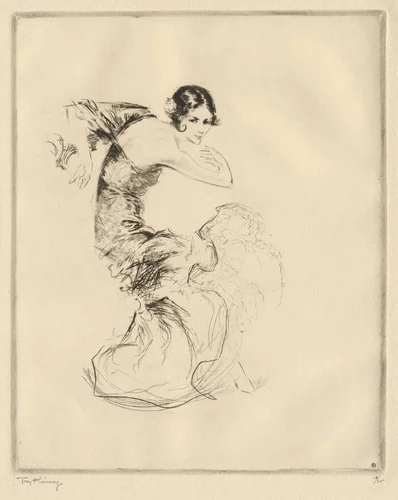
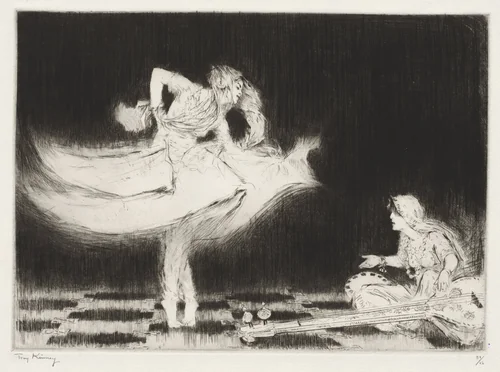
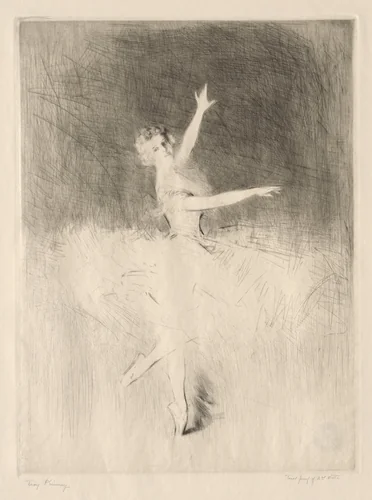
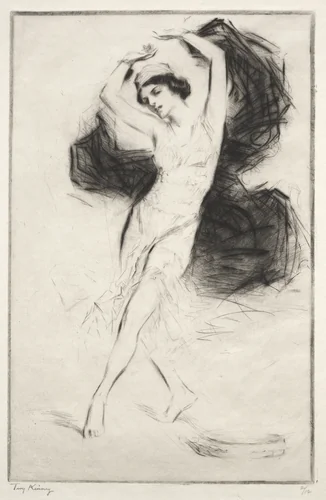
Kinney established himself as the primary artistic chronicler for many of the era's most influential figures in movement arts. He worked closely with figures who revolutionized performance, including Ruth St. Denis, the visionary interpreter of Orientalist dance, and the legendary Russian ballerina Anna Pavlova. Kinney’s objective was not mere static portraiture, but rather the depiction of performance captured in media res. This specialized focus resulted in compelling, dynamic images such as Pavlowa in "Carmen", the elegant study Adeline Génee, and the exotic portrait Roshanara. One might observe that, unlike many of his contemporaries who focused on landscape or conventional portraiture, Kinney chose a demanding subject matter that guaranteed movement, requiring exceptional technical mastery to successfully fix dynamism onto the copper plate.
His dedication to accuracy, combined with his skill in infusing his figures with dramatic, stylized energy, established his works as essential documents of early twentieth-century stagecraft. Kinney’s historical importance is underscored by his widespread institutional acceptance. His artistic works are held in major American collections, including the National Gallery of Art, the Art Institute of Chicago, the Cleveland Museum of Art, the New York Public Library, and the Library of Congress. The enduring appeal of his imagery, particularly the early Troy Kinney prints, ensures they remain critical resources for dance historians and collectors alike. Many of these seminal works, having entered the public domain, are now widely accessible as downloadable artwork, enabling widespread study and appreciation of these museum-quality reproductions.
Source: Wikipedia · CC BY-SA 4.0