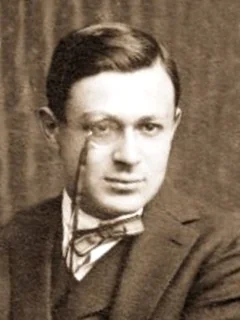
Tristan Tzara
Tristan Tzara was the definitive architect and chief provocateur of the international Dada movement. A prolific Romanian and French avant-garde poet, essayist, and performance artist, his conceptual leadership steered Dada from its nascent European origins into a comprehensive anti-establishment force that fundamentally affected literature, visual art, and political discourse. His early artistic trajectory, however, showed a deep immersion in established modernism; the adolescent Tzara developed a strong interest in Symbolism, co-founding the influential magazine Simbolul alongside Ion Vinea and the painter Marcel Janco.
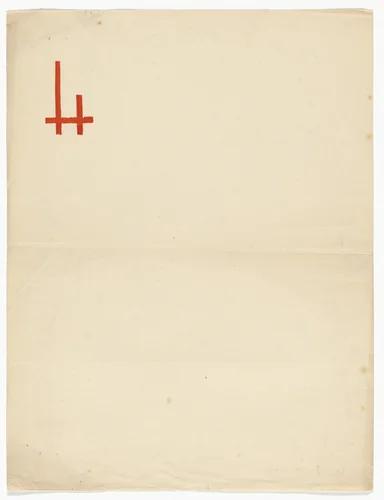
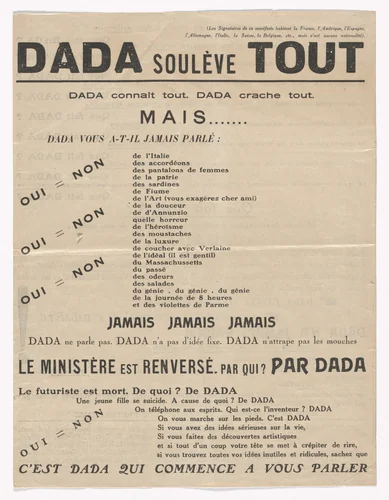
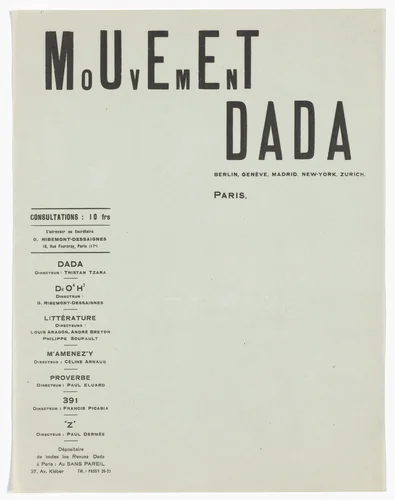
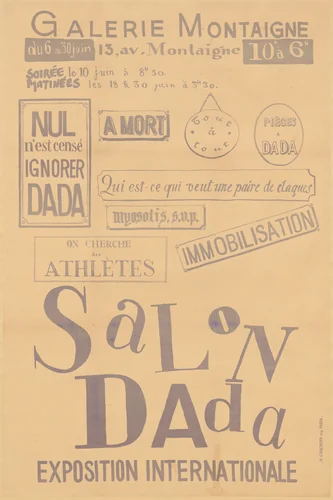
Tzara’s contribution to the visual arts was not limited to critical writing and manifestos. Between 1920 and 1921, his graphic designs provided the essential tools for disseminating the Dada ethos, establishing the aesthetic and typographic anarchy that defined the movement’s short but intense lifespan. Works such as his influential Tristan Tzara Letterhead and the iconic poster for Salon Dada: Exposition Internationale, Galerie Montaigne, Paris jettisoned traditional composition. They instead embraced jarring juxtapositions, fragmented text blocks, and aggressive machine-age fonts to capture the movement’s chaotic energy.
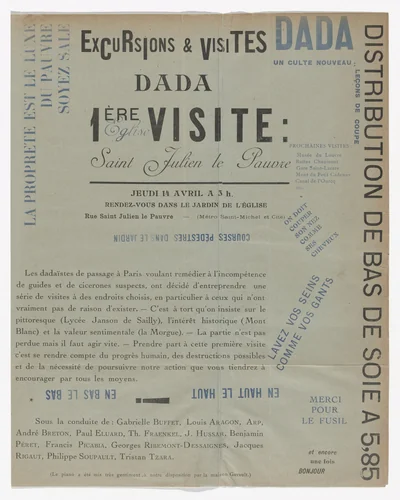
He applied this revolutionary layout to seemingly mundane administrative documents, transforming logistical planning into performance art. Announcements like Excursions & visites DADA, 1ère visite: Église Saint Julien le Pauvre became subversive artworks themselves. This relentless production schedule ensured that Dada resonated far beyond small European circles, providing a blueprint for conceptual art that followed.
An innovator across disciplines, Tzara also worked as a journalist, playwright, literary and art critic, composer, and experimental film director. The visual artifacts from this intense period are today highly sought after; several, including key graphic designs and publications, are held in major institutional collections, notably the Museum of Modern Art. Scholars and institutions worldwide utilize high-quality prints derived from this archival material. These documents and Tristan Tzara prints are increasingly available in the public domain, ensuring that his pivotal, if brief, graphic output remains accessible and influential to subsequent generations of designers and critics.
Source: Wikipedia · CC BY-SA 4.0