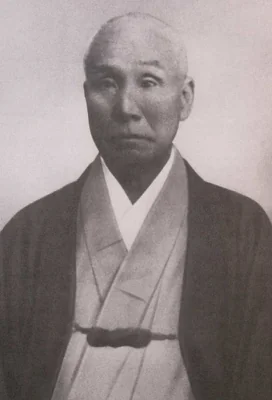
Toyohara Kunichika
Toyohara Kunichika (1835-1900) established himself as a dominant force in Japanese woodblock printing during the critical transitional decades of the late Edo and early Meiji eras. Recognized for his artistic talent early in life, he entered the studio of Utagawa Kunisada, then the leading print master in the capital, at the age of approximately thirteen. This foundational instruction provided him access to the core techniques and dramatic conventions that would define his later output.
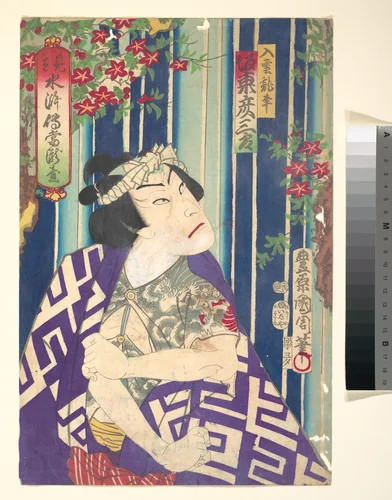
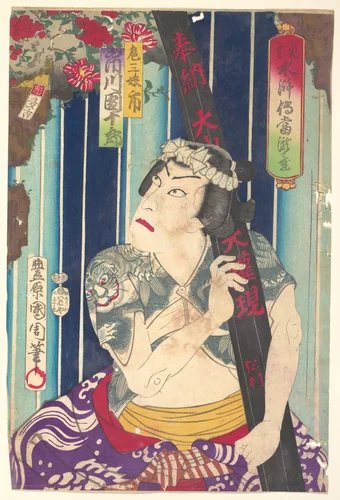
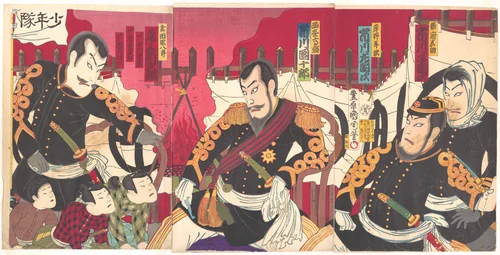
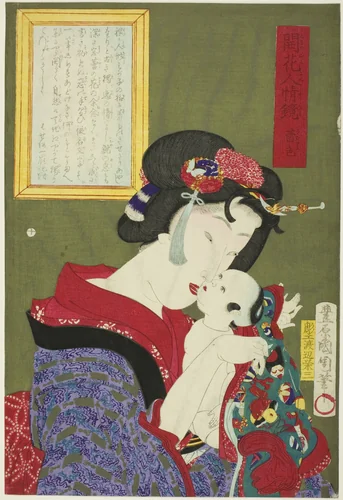
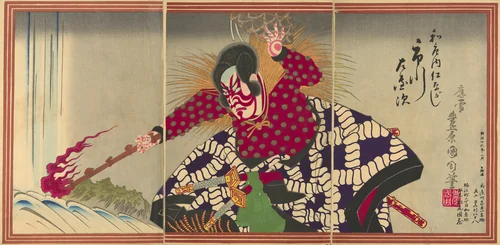
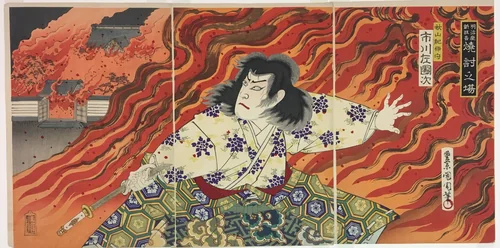
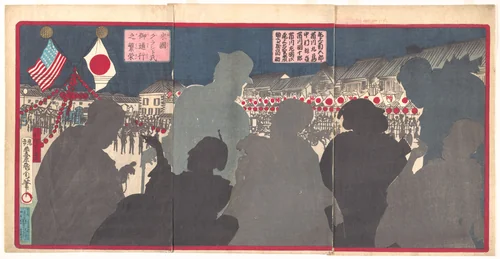
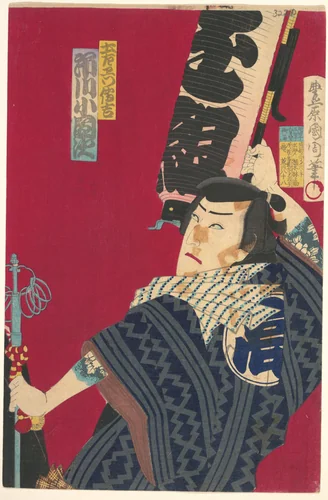
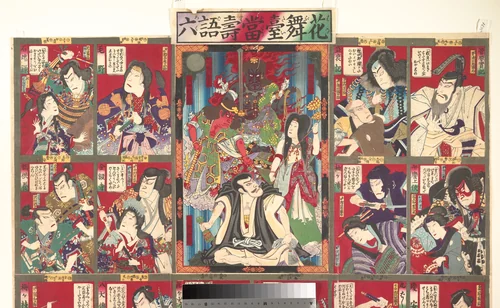
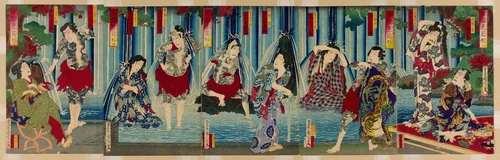
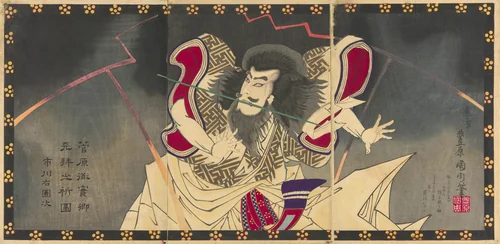
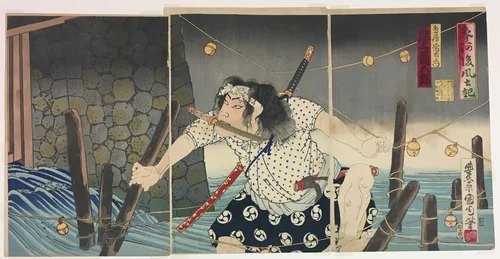
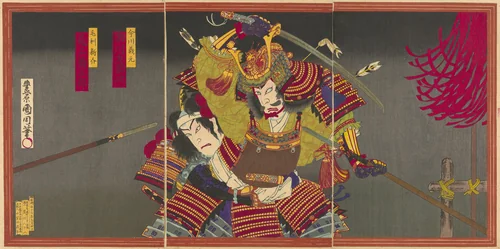
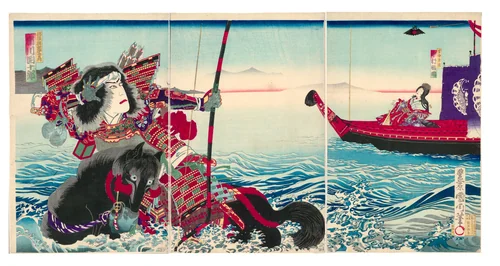
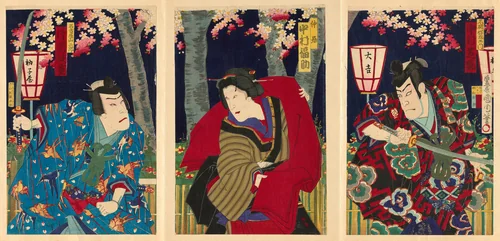
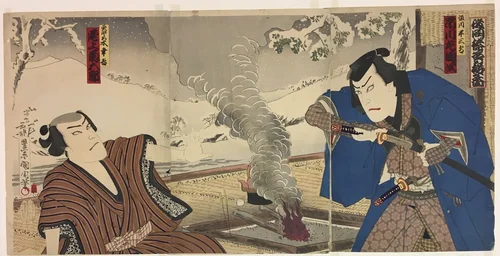
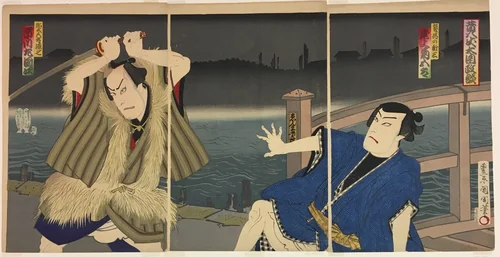
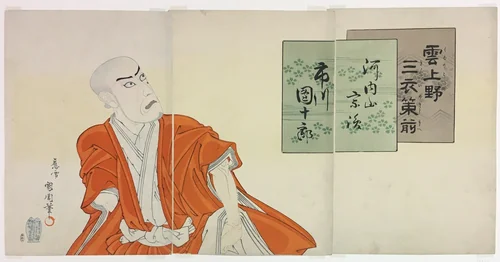
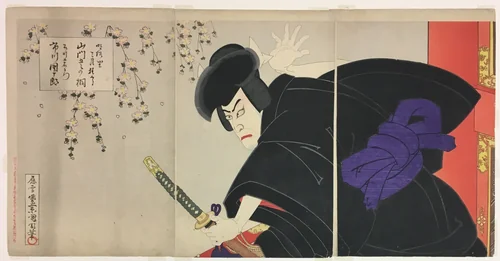
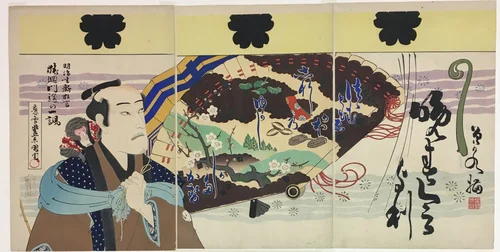
Kunichika’s career was inextricably linked to the Tokyo theatre district. His profound appreciation and specialized knowledge of Kabuki drama ensured that his oeuvre focused almost exclusively on yakusha-e, or actor prints, and depictions of celebrated scenes. Unlike some of his contemporaries who might treat the actors as purely decorative figures, Kunichika documented the theatrical moment with the intensity of a true devotee, capturing the high drama and psychological tension of the performance. He documented both specific dramatic moments, such as in The Actor Onoe Kikugoro as the Ghost of Koyo Hoshi, and the lighter social context, evident in views like Evening Amusements at Ryogoku in the Eastern Capital.
Active through a period of immense social and visual change, Kunichika successfully synthesized traditional ukiyo-e aesthetics with a modern sensibility. His series, such as Mirror of Photographs Backstage (Shashin gakuya kagami), which includes the striking portrait Sawamura Tosshō II (1838–86), demonstrates a sophisticated awareness of how photography was influencing visual representation, pushing the boundaries of the traditional actor portrait toward a new form of realism.
Kunichika’s prolific production of high-quality prints secured his position as one of the last great masters of the genre before the tradition faded entirely. Today, these seminal works are held in major institutions including the Metropolitan Museum of Art and the Art Institute of Chicago, often made accessible to scholars and the public. Researchers seeking museum-quality reproductions can often locate these striking works, along with similar downloadable artwork, in the public domain. Kunichika remains vital for understanding the visual culture of Tokyo during its rapid modernization.
Source: Wikipedia · CC BY-SA 4.0