Tosa School
The Tosa school, established during the early Muromachi period, defined itself as the primary inheritor and exponent of yamato-e painting. This artistic dedication focused almost exclusively on subject matter and techniques derived from ancient Japanese traditions, creating a self-consciously native aesthetic that stood in purposeful contrast to other dominant schools of the era, particularly the Kanō school, whose influence was derived heavily from Chinese art.
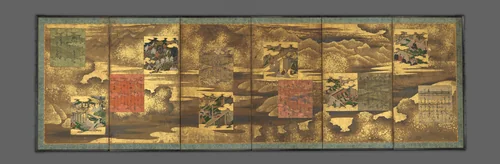
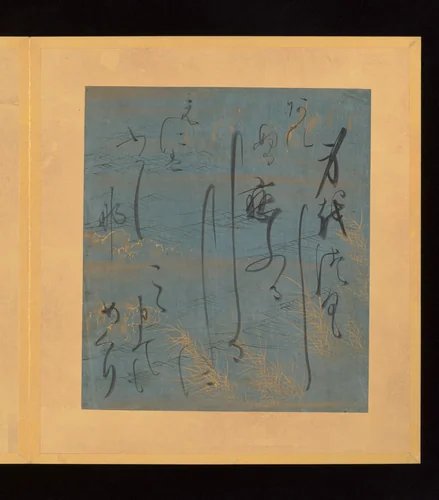
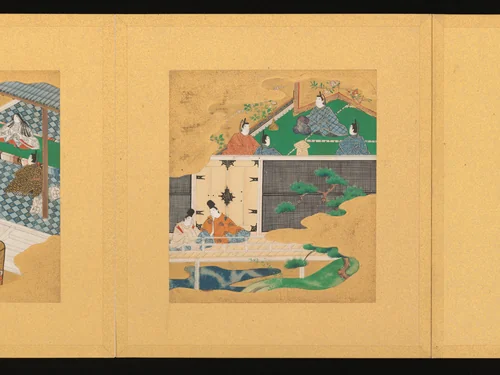
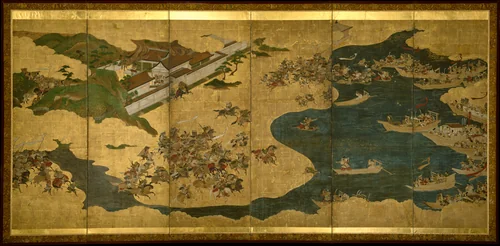
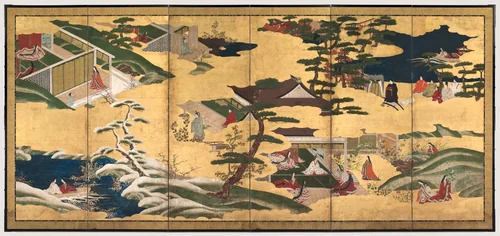
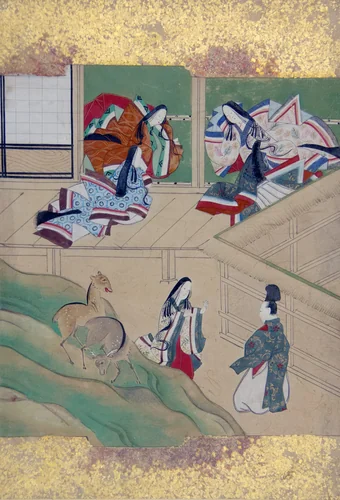
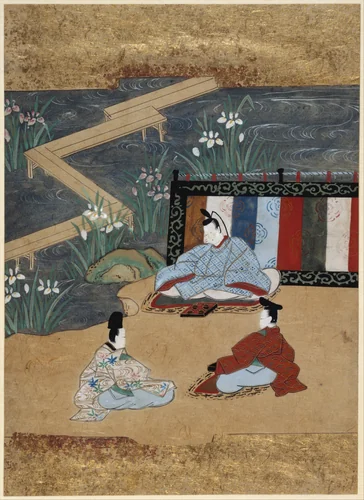
Tosa School paintings are immediately recognizable for their characteristic technical restraint and precision. The style relies upon areas of flat, opaque color meticulously defined by simple outlines. The drawing is conventionalized yet precise, an approach ideally suited for creating detailed and extensive visual narratives. The school specialized in depicting pivotal events from classical Japanese literature and history. Key surviving examples, now housed in major collections such as the Metropolitan Museum of Art and the Cleveland Museum of Art, include detailed scroll illustrations like Scenes and Calligraphic Excerpts from The Tale of Genji and the martial drama captured in The Battle of Yashima, from The Tale of the Heike (Heike monogatari).
While the ideological division between yamato-e and Chinese-influenced painting was stark in the school’s formative years, this demarcation began to soften as both the Tosa and Kanō houses matured. By the seventeenth century, Tosa artists broadened their technical range, sometimes incorporating compositional features previously exclusive to their rivals. This evolution, reflecting both increasing artistic ambition and the demands of patronage, slowly blurred the distinction between the two schools; the artists, pragmatic professionals, ultimately ensured that a good technique was worth adopting regardless of its stylistic origin.
The Tosa School maintained its prestige and activity into the eighteenth century, contributing significantly to courtly aesthetics across two centuries of documented output (1600-1771). These museum-quality works continue to provide crucial insights into Japan's artistic and literary past. Today, many of these classic Tosa School prints and paintings are increasingly accessible to scholars and the general public alike as downloadable artwork available through institutions committed to sharing their public domain collections.
Source: Wikipedia · CC BY-SA 4.0