Torii Kiyomitsu
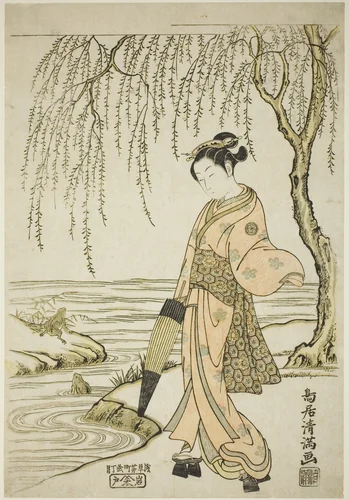
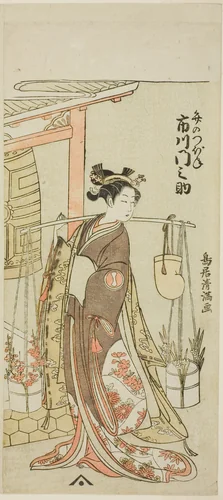
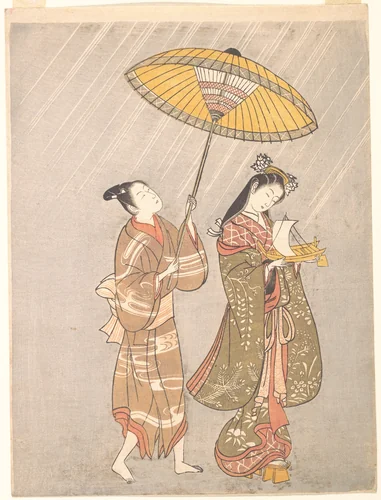
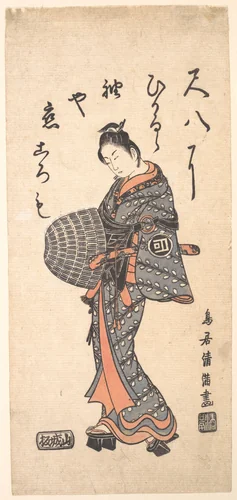
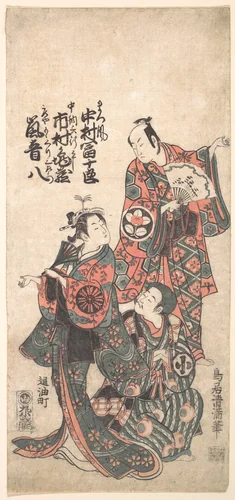
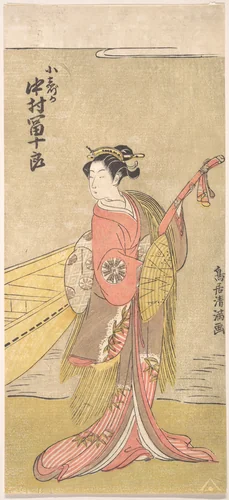
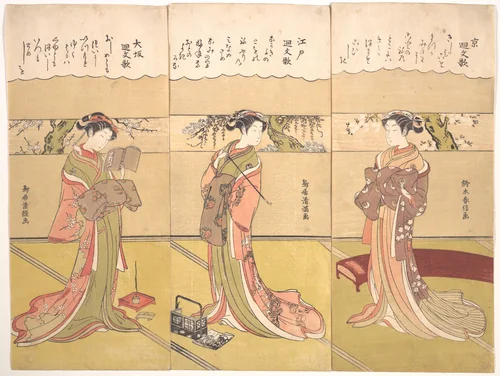
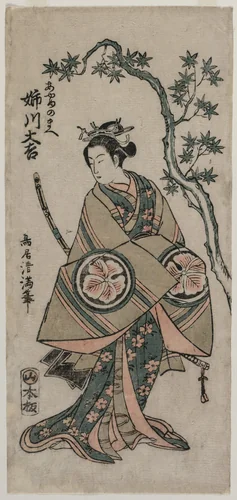
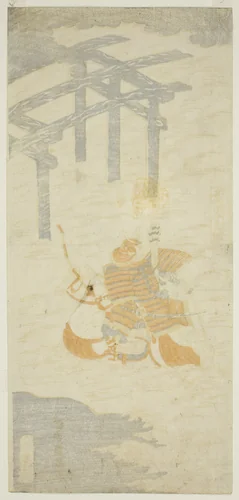
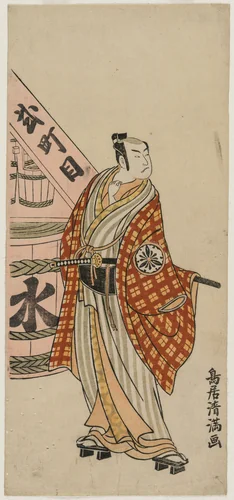
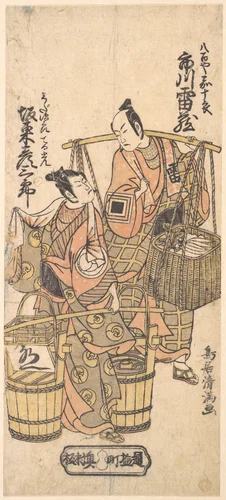
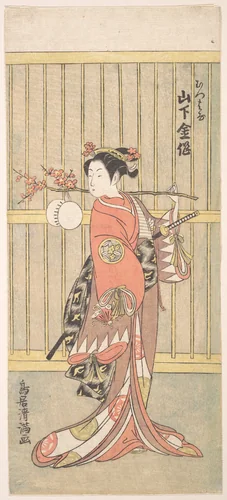
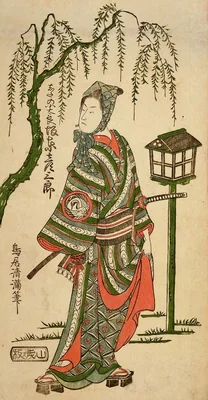
Torii Kiyomitsu (originally named Kamejirō) served as the third formal head of the influential Torii school, a lineage dedicated almost exclusively to the visual representation of the Kabuki stage and its celebrated stars. Active primarily from 1735, Kiyomitsu inherited leadership either from Torii Kiyonobu II or Torii Kiyomasu II, maintaining the school's dominant position during a pivotal era in the development of ukiyo-e printmaking. His artistic output was sharply focused, dividing his talents consistently between bold, dramatic actor prints (yakusha-e) and elegant studies of beautiful women (bijinga).
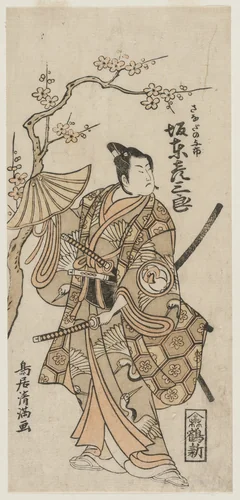
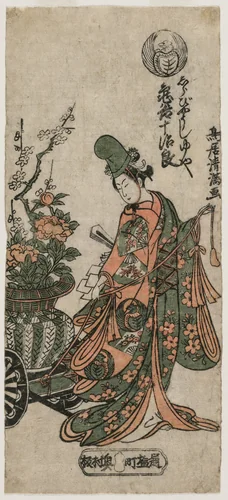
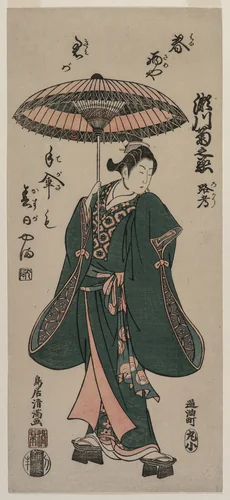
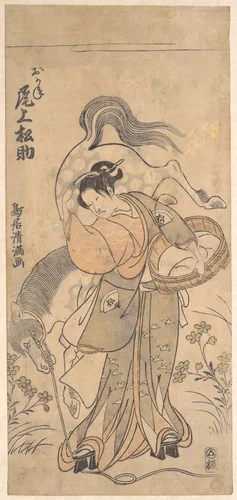
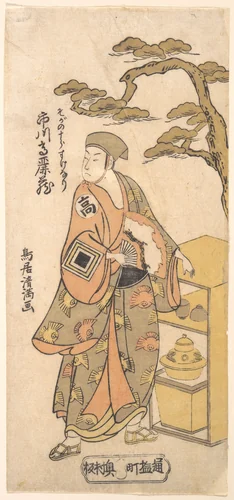
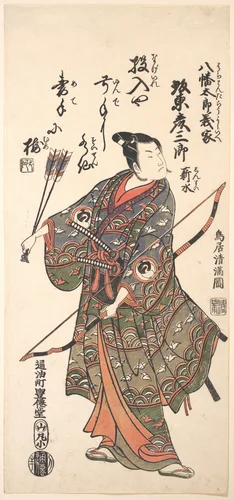
Kiyomitsu’s most prolific period coincided with the crucial technological shift from strictly monochrome prints, which required laborious hand-coloring, to mass-produced color impressions. Throughout his active years, he mastered and heavily utilized the benizuri-e technique. This style was characterized by the application of only one or two colors of ink (most commonly rose and green) applied directly via the woodblock. This innovation offered a new, graphic immediacy that allowed the prints to capture the energy of theatrical moments, as demonstrated in works such as The Actor Onoya Matsusuke, in Female Robe of O-Kane, Adjusts the Comb in His Hair and Bando Hikosaburo as Hanaregoma Chokichi Holding His Black Horse.
It is worth noting that while Kiyomitsu effectively bridged the gap between the primitive monochromatic style and full-scale color work, the widespread introduction of true full-color printing (or nishiki-e) did not arrive until 1765, late in his career. His dedication to mastering the earlier, more restrictive palette confirms his role as a technical traditionalist.
The works of Torii Kiyomitsu prints are indispensable primary sources for understanding mid-eighteenth century Japanese theater and the fashion surrounding it. Today, his surviving output is housed in major institutions globally, including the Metropolitan Museum of Art and the Cleveland Museum of Art, reflecting their enduring historical and aesthetic value. Because much of this material is now in the public domain, a new generation of researchers and enthusiasts can access museum-quality digital reproductions. These high-quality prints and downloadable artwork provide essential context for the evolution of the Ukiyo-e tradition, ensuring that the visual legacy of the third Torii master remains widely accessible royalty-free.
Source: Wikipedia · CC BY-SA 4.0