Torii Kiyomitsu I
Torii Kiyomitsu I (active 1735–1755) was a central figure in the mid-eighteenth century development of Japanese ukiyo-e. Serving as the third head of the esteemed Torii school, a lineage dedicated almost exclusively to theatrical representation, Kiyomitsu inherited the stylistic traditions of his predecessors, including his probable father, Torii Kiyonobu II or Torii Kiyomasu II. Originally known by the childhood name Kamejirō, his career flourished during a period of profound technical transition in Edo printmaking, solidifying his role as a key artist bridging early limited-color works and the later age of full polychromy.
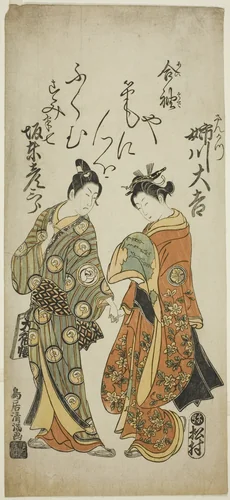
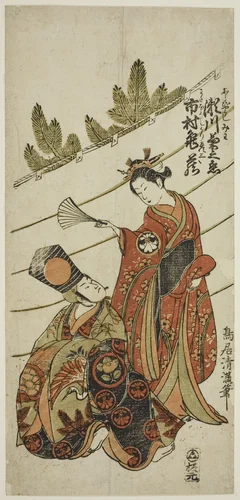
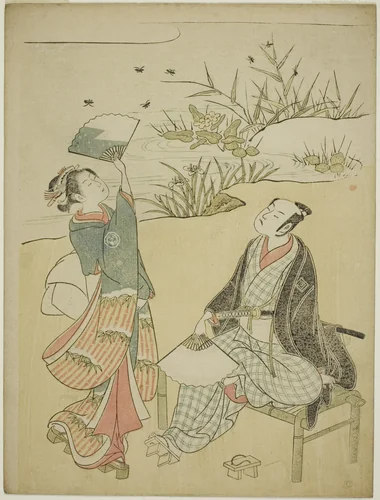
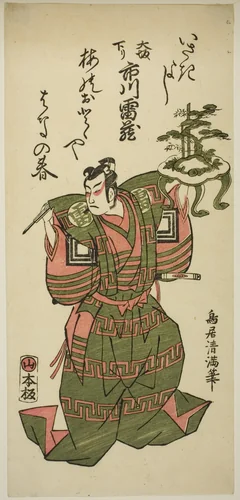
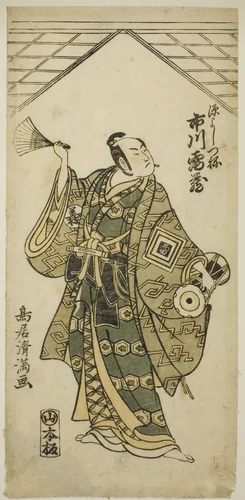
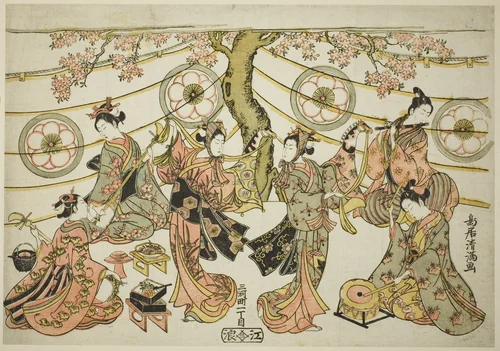
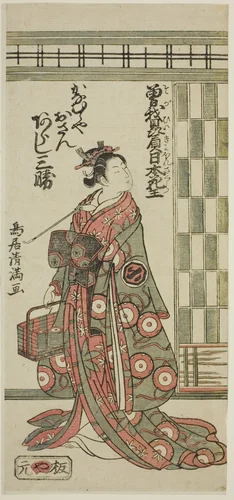
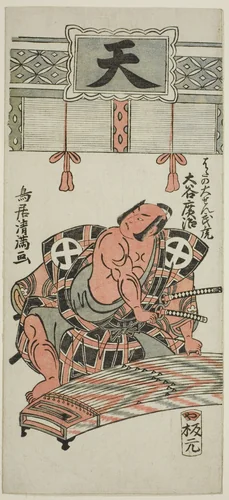
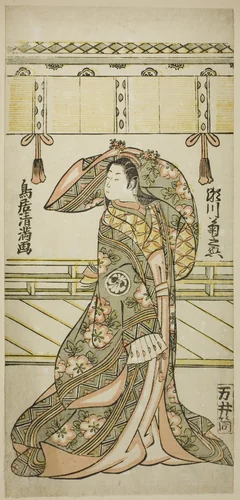
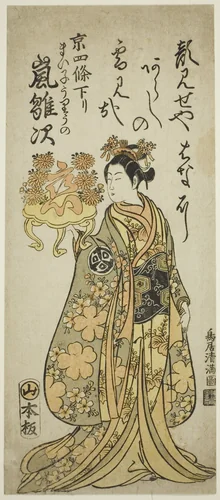
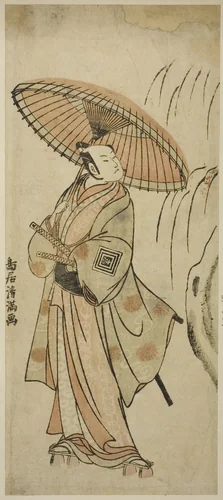
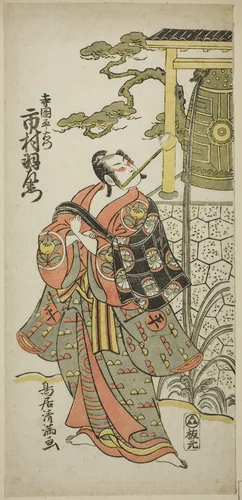
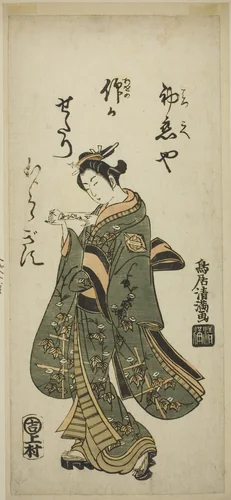
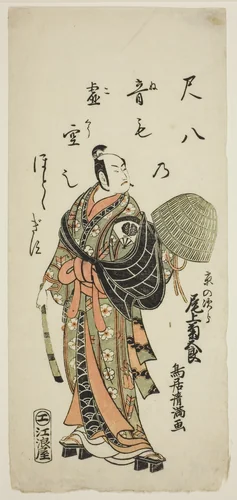
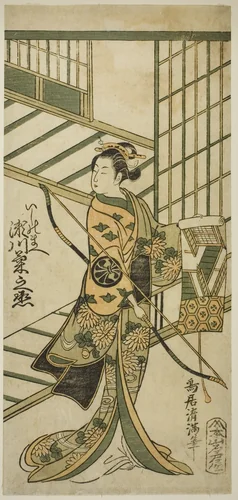
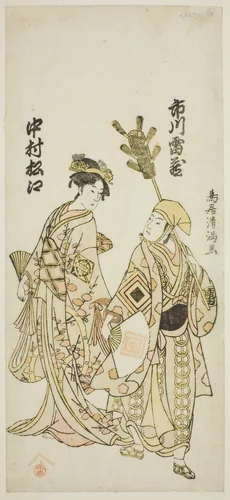
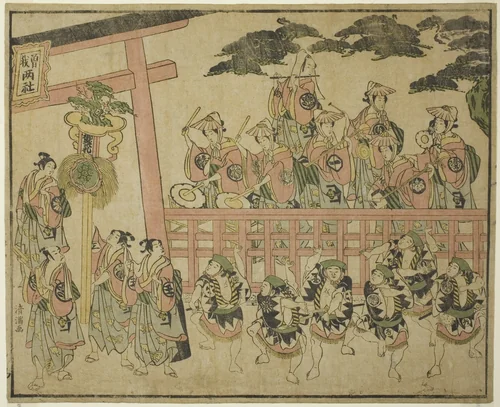
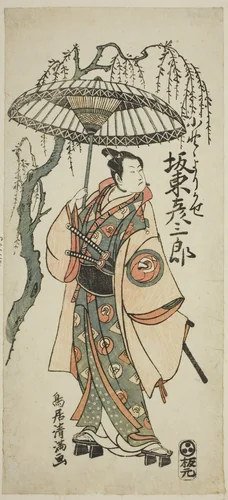
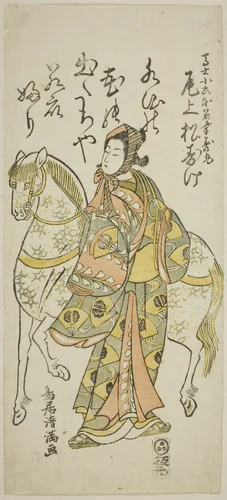
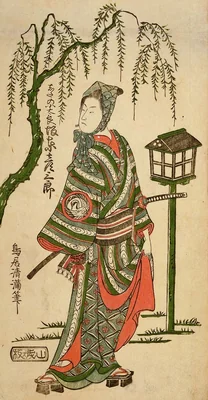
Kiyomitsu’s extensive body of work divides traditionally between dramatic depictions of actors (yakusha-e) and graceful studies of contemporary women (bijinga). His prints, such as The actor Onoe Kikugoro I as Watanabe no Tsuna and the multi-panel A Triptych (Sanpukutsui): Courtesans of the Pleasure Quarters of the Three Cities, capture the vibrancy of Edo society. He worked predominantly in the benizuri-e technique, utilizing two-color blocks, often in pink (beni) and green. This restriction, applied consistently across subjects like Taking a Walk on New Year's Day, often forced Kiyomitsu into masterful compositions built solely on decisive line and elegant form, demonstrating that technical limitation often breeds artistic ingenuity.
His active period placed him squarely before the invention of the complete color print (nishiki-e). While this innovation, introduced around 1765, marked the end of the benizuri-e era, Kiyomitsu was still active and participated in this technological shift, adapting the school’s traditions to new aesthetic possibilities. His enduring significance lies not just in his maintenance of the dramatic Torii style, but in his successful navigation of this rapid shift in print technology. Today, many fine examples of Torii Kiyomitsu I prints are preserved in major collections, including the Art Institute of Chicago, offering museum-quality access to this transitional phase of Japanese art history. For those interested in studying this period, these historical records are increasingly accessible through public domain archives, allowing the dissemination of high-quality prints and downloadable artwork internationally.
Source: Wikipedia · CC BY-SA 4.0