Tobias Stimmer
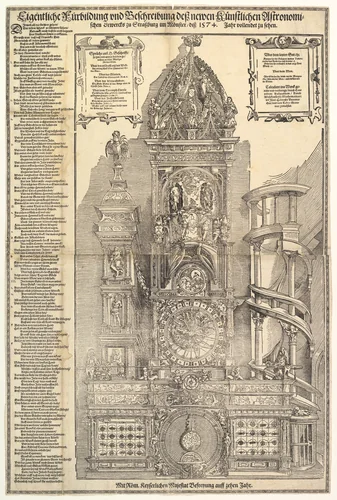
Tobias Stimmer (1539-1578) stands as one of the most inventive Swiss artists of the late Renaissance, distinguished both as a painter of large-scale decorative schemes and as a prolific draftsman for the burgeoning print market. His enduring fame rests largely upon the monumental cycle of paintings executed for the Strasbourg astronomical clock, a complex mechanical marvel that required an equally impressive and sophisticated visual program, confirming his ability to handle both allegorical narratives and architectural illusion on a grand scale.
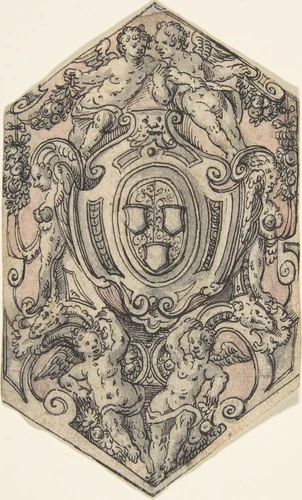
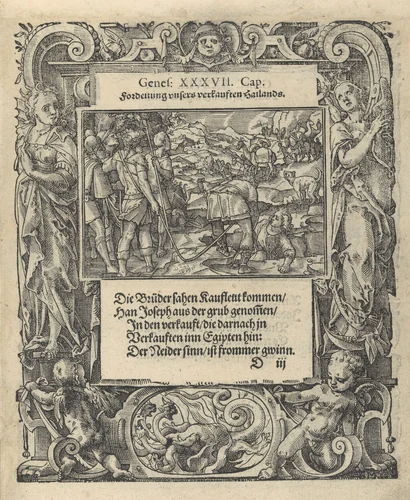
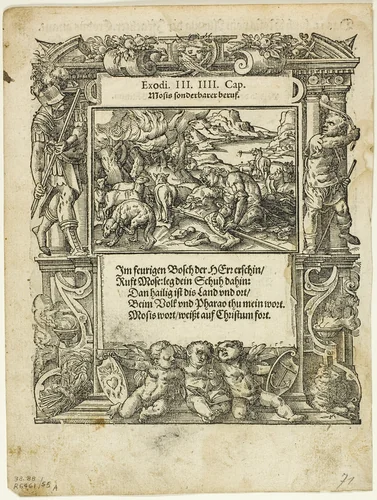
Active primarily between 1564 and his death in 1578, Stimmer excelled in transitioning classical models into accessible graphic formats. He was highly successful in translating the grandeur of Roman styles, often seen in works like his Design for a Coat of Arms with Putti holding Garlands, into the popular media of woodcut and engraving. The breadth of his output—comprising numerous drawings, prints, and illustrated books—cemented his reputation as a principal figure in transmitting Renaissance artistic principles across Central Europe, bridging the gap between high courtly art and popular illustration.
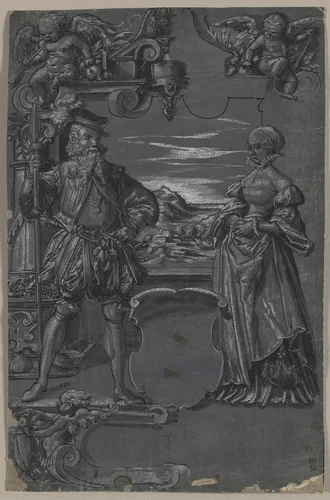
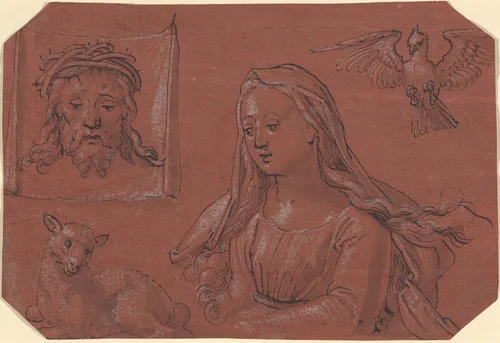
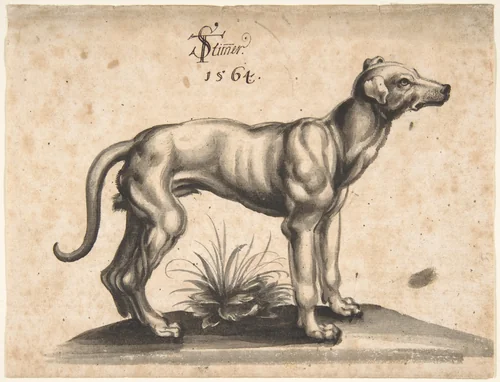
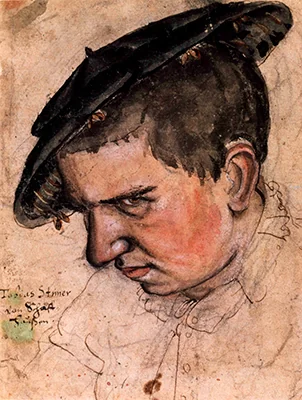
His mastery is consistently evidenced in the preparatory sketches housed in global collections, ranging from the architectural precision of Design for Glass Painting: Man and Woman in Architectural Setting to the devotional sensitivity displayed in Studies of Sudarium and Saint Agnes. Stimmer’s observational skills, applied even to seemingly minor subjects such as his sharp study A Dog Looking to the Right, bring a subtle wit and immediate presence to his graphic work. His career, though brief—he passed away before his fortieth year—was immensely influential.
Today, prime examples of Tobias Stimmer paintings and important studies reside in major American institutions, including the Metropolitan Museum of Art, the National Gallery of Art, and the Art Institute of Chicago. Recognizing the pedagogical importance of his widespread published work, much of his graphic output is now in the public domain, available as museum-quality and high-quality prints. This continued accessibility ensures that Stimmer’s pivotal role in 16th-century illustration remains robustly recognized through downloadable artwork globally.
Source: Wikipedia · CC BY-SA 4.0