Thomas Wyck
Thomas Wyck was a significant, if often understated, contributor to the Dutch Golden Age of painting, specializing in highly detailed genre scenes and evocative Mediterranean port views. Active primarily between 1616 and 1650, Wyck’s work documents the mid-17th century fascination with both the exoticism of international trade and the minutiae of daily domestic life, providing a valuable visual record of the era’s expanding commercial horizons.
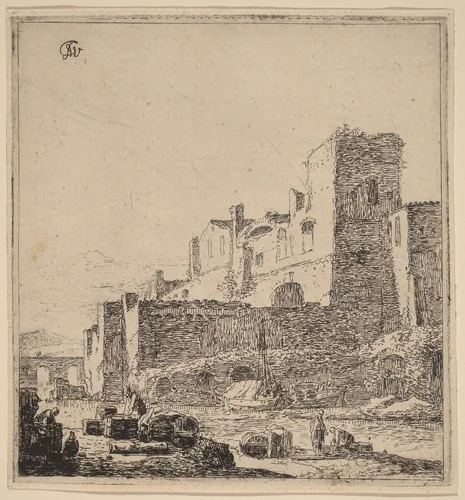
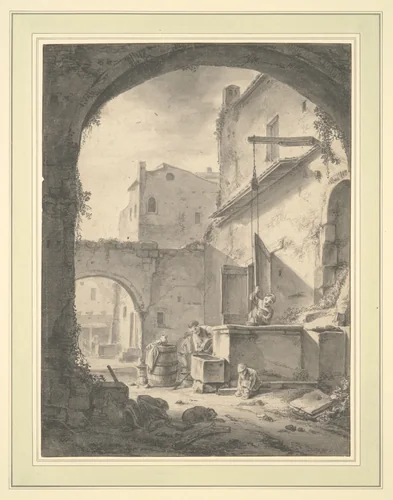
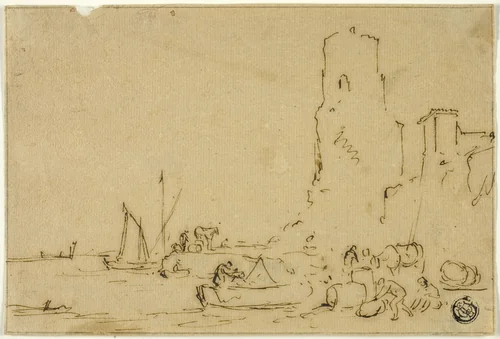
Wyck’s output divides neatly between oils depicting fictionalized southern European harbors, often populated by merchants, sailors, and Levantine figures, and his more localized scenes of Dutch courtyards and workshops. His ability to fuse architectural accuracy with compelling human narrative is evident in works such as View into a Courtyard with a Family at a Well, where intimate observation meets a masterful handling of light and shadow. Conversely, the drama inherent in pieces like The Oriental Merchant or the practical labor shown in Fishermen Barreling Fish at Water's Edge highlights his command of bustling composition and depth of field.
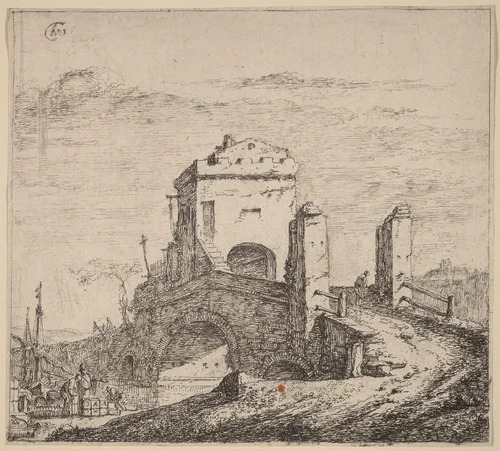
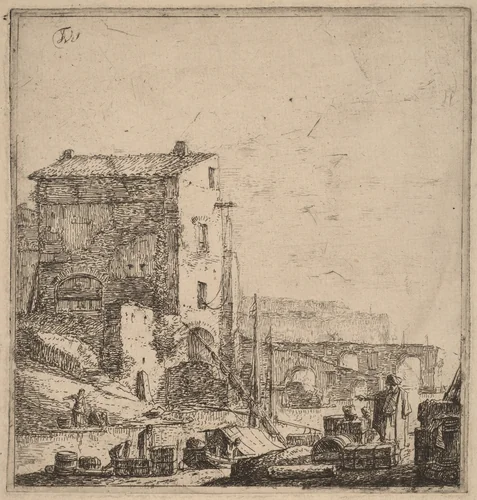
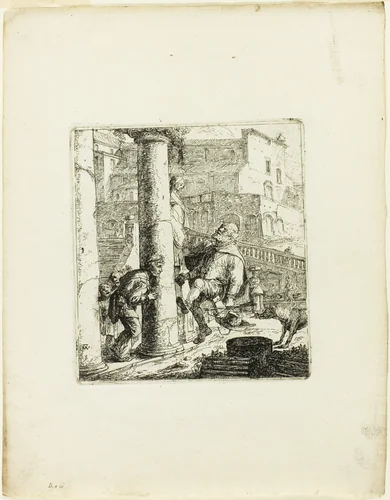
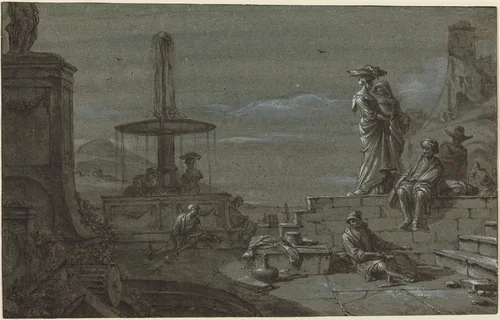
Perhaps Wyck’s most enduring legacy lies in his graphic work, which includes a surviving suite of influential drawings and etchings. Unlike many of his contemporaries who idealized the subjects of labor, Wyck often imbued his working figures, particularly those in the marine settings like Sailors at the Waterside, with a subtle, palpable sense of fatigue. This grounded realism lends his work an authoritative air, treating daily work not as a picturesque backdrop, but as a central fact of life. His graphic skill is equally evident in his detailed renderings of infrastructure, such as the print titled Bridge.
Wyck’s artistic reputation is sustained through his presence in major institutions, including the National Gallery of Art and the Art Institute of Chicago. Though original Thomas Wyck paintings remain highly valued, his drawings and prints, noted for their fine line work, have achieved widespread modern access. Today, collectors can easily source high-quality prints and downloadable artwork derived from his oeuvre, ensuring that this skilled and meticulous painter remains available to a global audience long after the close of the Golden Age. Much of his work is now available through public domain resources, making excellent examples of Dutch genre painting available as royalty-free images.
Source: Wikipedia · CC BY-SA 4.0