Thomas Wilmer Dewing
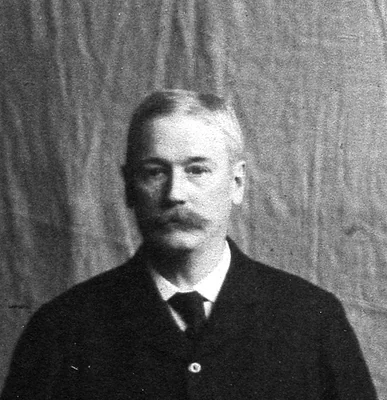
Thomas Wilmer Dewing (1851-1938) established a distinct and atmospheric approach to American figure painting at the transition from the 19th to the 20th century. Following early training in Boston, Dewing refined his academic technique in Paris, studying at the Académie Julian in the late 1870s. Upon returning to the United States, he quickly became associated with an emerging strain of American Aestheticism, prioritizing tonal harmony and sophisticated, often melancholic, interior moods over narrative illustration. His early career included teaching appointments, notably at the influential Art Students League of New York, where he significantly influenced a younger generation of artists.
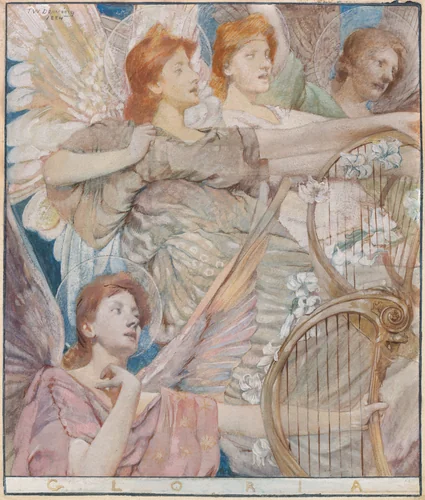
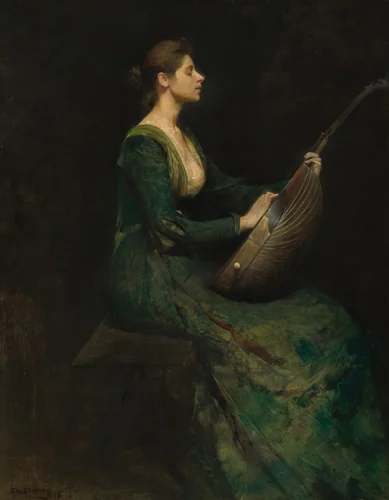
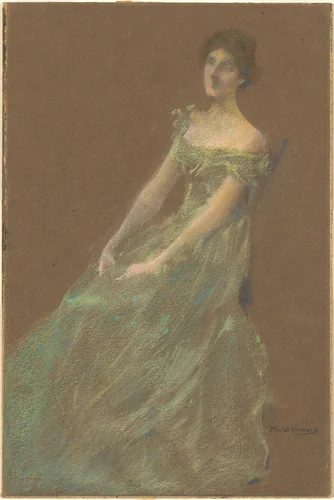
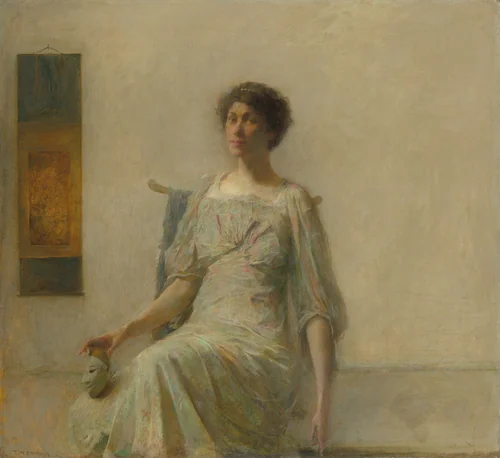
Dewing’s signature style emerged through his quiet, highly controlled compositions, characterized by delicate color palettes and hazy, suggestive atmospheres. His primary subjects were aristocratic or upper-class women, often captured in states of contemplation or leisure. Works like Gloria, Lady with a Lute, and The Green Dress exemplify this approach: figures are usually slender, elongated, and placed within sparsely detailed, elegant interiors, allowing their posture and the delicate rendering of fabric to carry the emotional weight. These Thomas Wilmer Dewing paintings capture the refined ennui prevalent in Gilded Age high society. The subtle rendering of light and shadow, combined with a muted color scheme, imparts a sense of suspended time to his most successful works.
Dewing’s commitment to individualized artistic expression led to a pivotal moment in American art history. In 1898, he became a founding member of the Ten American Painters (The Ten), a celebrated secessionist group formed in protest against the perceived rigid conservatism of established art institutions like the Society of American Artists. This action solidified his standing as a leading advocate for subtle, non-narrative figuration.
A significant collection of his finest pieces, recognized for their superb museum-quality finish, resides at the Freer Gallery of Art, a museum whose founder, Charles Lang Freer, was a devoted patron of both Dewing and his wife, fellow painter Maria Oakey Dewing. Today, the subtle brilliance of Dewing’s aesthetic vision remains highly valued. Many of his pieces, including his most famous studies, are now in the public domain, making high-quality prints and downloadable artwork readily available for collectors and scholars worldwide.
Source: Wikipedia · CC BY-SA 4.0