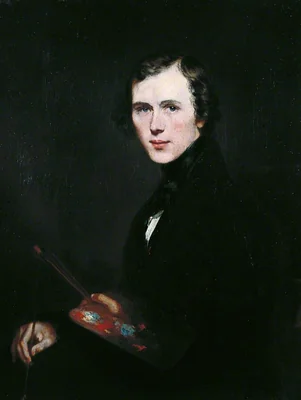
Thomas Sidney Cooper
Thomas Sidney Cooper, an English landscape painter hailing from Canterbury, maintained a highly specialized practice during his active period between 1803 and 1837. While his contribution to grand landscape painting was moderate, his work secured a distinctive niche in the history of British genre art through its unwavering focus on rural life, particularly the detailed, sympathetic portrayal of farm animals.
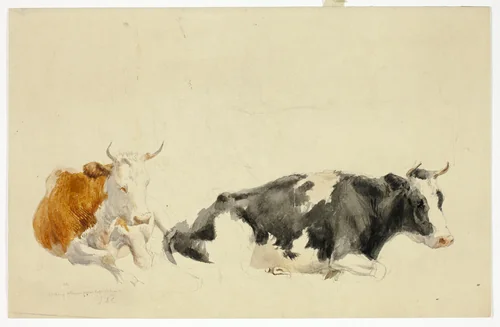
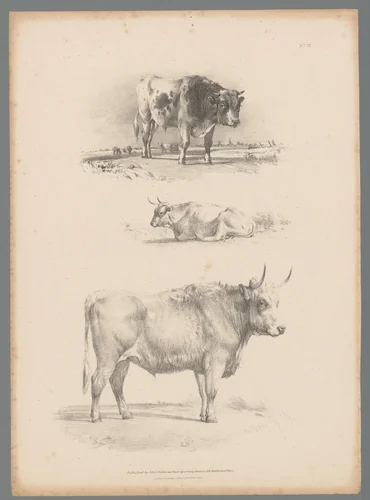
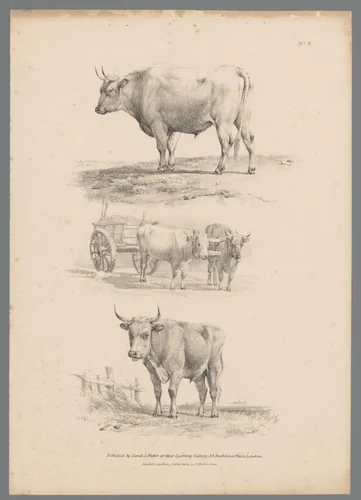
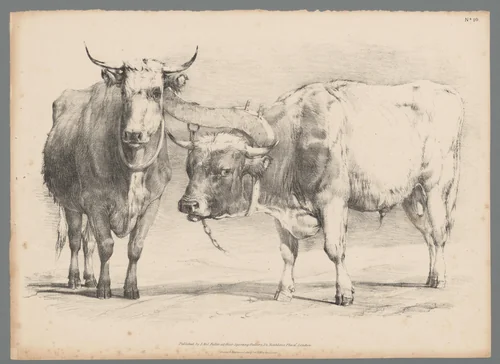
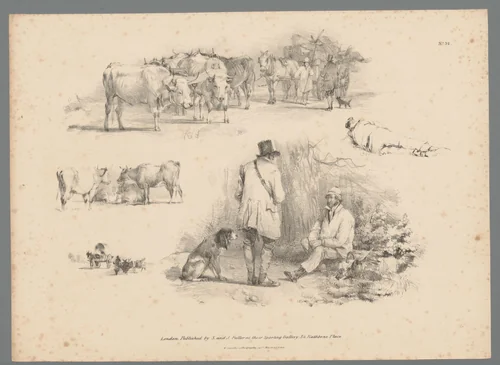
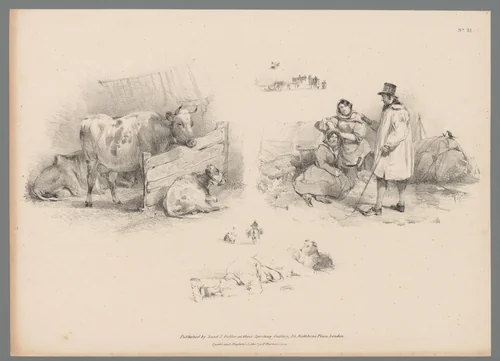
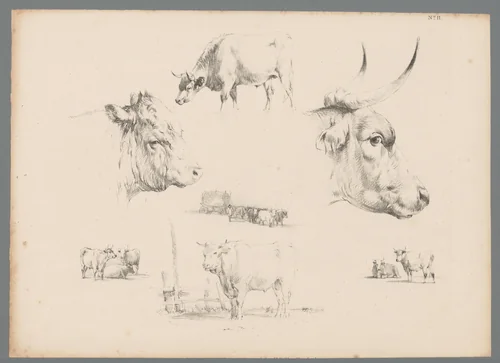
Cooper excelled in depicting cattle, transforming what might otherwise be utilitarian subject matter into contemplative studies of form and texture. Unlike contemporaries who used livestock merely as incidental staffage, Cooper centered the animal itself, exploring its geometry and temperament with keen observational skill. This commitment is evident in drawings such as Two Recumbent Cows (recto); Sketch of Standing Cow (verso) and the specific studies titled Drie voorstellingen van een rund. These works underscore his rigorous approach to draughtsmanship, suggesting that the limited collection of Thomas Sidney Cooper paintings available today stemmed from a profound dedication to preparatory drawing and printmaking.
The consistent quality of Cooper’s work ensures his enduring relevance in international collections. Major institutions, including the Rijksmuseum, the Metropolitan Museum of Art, and the Art Institute of Chicago, maintain examples of his prints and sketches, confirming the lasting museum-quality of his production. It is a quiet irony that an artist so singularly devoted to bovine portraiture managed to find endless compositional variety in the passive bulk and enduring patience of resting livestock.
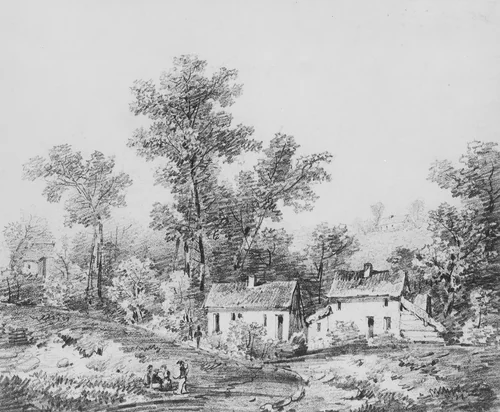
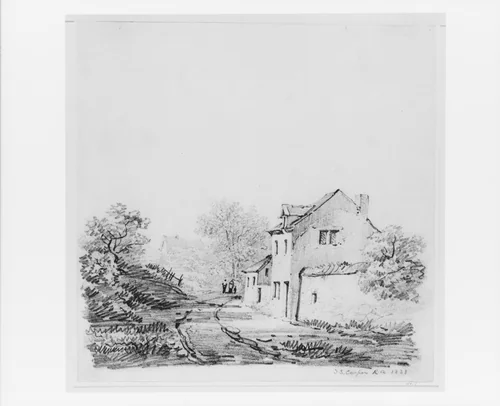
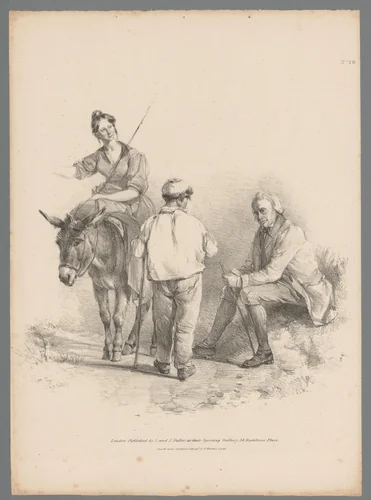
Today, Cooper’s focused output is highly valued, not only for its historical fidelity to early 19th-century farmscapes but also for its technical excellence. His reliance on media reproducible through printing, as seen in pieces like Village Landscape and Farm Landscape (both from the McGuire Scrapbook), has ensured broad access to his oeuvre. Many of these historical resources have entered the public domain, making high-quality prints and downloadable artwork widely available for scholarly analysis and enjoyment. His prints, detailing the everyday life of the English farm, provide important records while demonstrating a quiet mastery of light and composition.
Source: Wikipedia · CC BY-SA 4.0