Thomas Robert Way
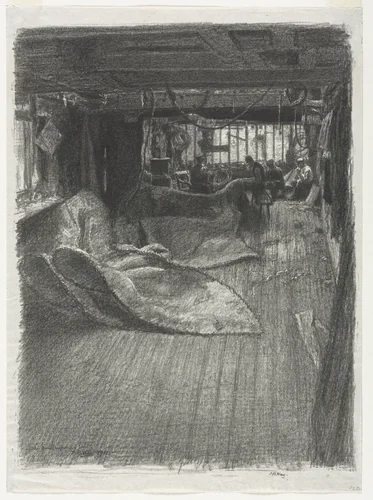
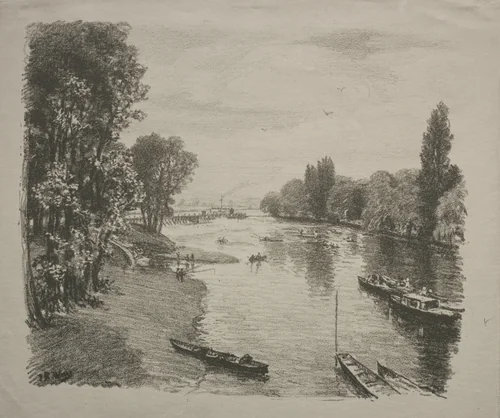
Thomas Robert Way (1861-1911) was a highly accomplished English printmaker, printer, and painter whose career bridged traditional graphic methods and the evolving technical demands of the late Victorian era. Although he exhibited landscapes and portraits in London between 1883 and 1893, Way's lasting significance rests upon his masterful command of lithography and his pivotal role in interpreting the works of more famous contemporaries. This dual function, serving as both an independent exhibitor of his own Thomas Robert Way paintings and a sophisticated technical collaborator, secured his unique place in the art historical record.
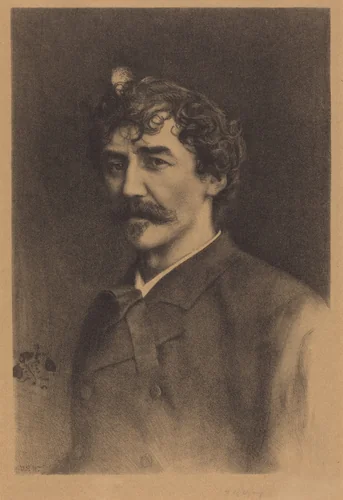
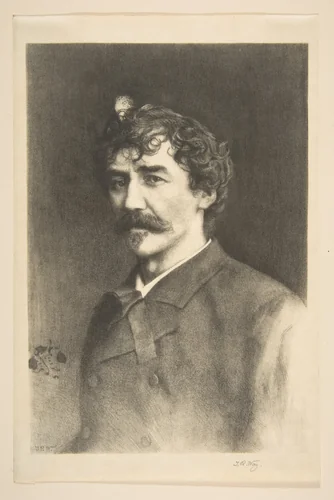
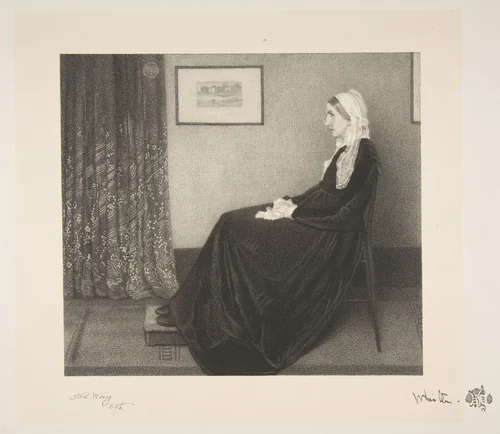
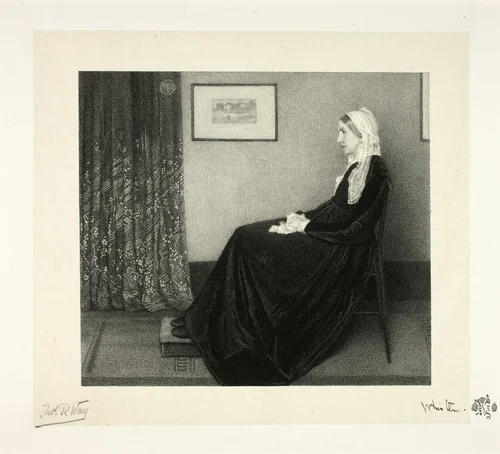
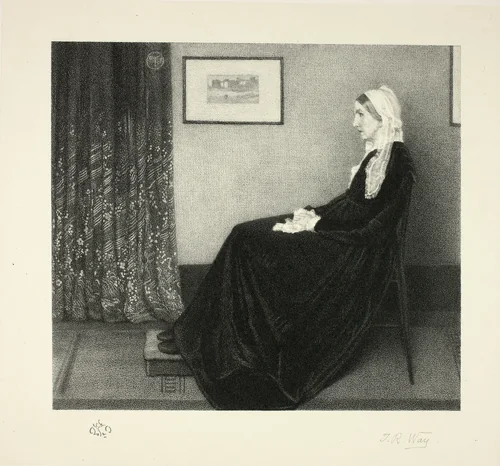
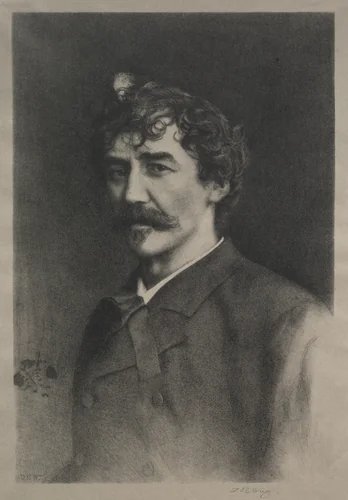
His most celebrated contributions stem directly from his professional relationship with James McNeill Whistler. Way was instrumental not only in capturing the personality of the expatriate artist, producing striking works like Portrait of Whistler and the sharply observed Whistler with the White Lock, but also in disseminating Whistler’s aesthetic vision. Crucially, Way provided the definitive lithographic interpretation of Whistler’s masterpiece, the Arrangement in Grey and Black: Portrait of the Artist's Mother. His ability to translate the complex tonal shifts and subtle atmospheric qualities of Whistler’s original into the demanding format of the reproductive print cemented his reputation for technical brilliance.
Way’s expertise extended beyond simple reproduction; he consistently championed the artistic potential of the medium. The precision and delicacy inherent in his prints demonstrated that lithography could achieve a museum-quality richness traditionally reserved for etching or painting. It is perhaps a subtle observation of historical status that an artist so skilled in capturing the likeness and style of his peers, thereby immortalizing them, ultimately ensured his own place in history through that very collaborative process.
Today, the enduring quality of Way’s graphic work is readily accessible. Major holdings reside in institutions like the Metropolitan Museum of Art, the National Gallery of Art, and the Cleveland Museum of Art. Because many of these influential works are now in the public domain, they are widely appreciated and available as high-quality prints for contemporary study, offering valuable insight into the sophisticated reproductive processes of the fin-de-siècle print movement.
Source: Wikipedia · CC BY-SA 4.0