Thomas Lawrence
Sir Thomas Lawrence stands among the foremost portraitists of the British Regency, culminating his distinguished career as the fourth President of the Royal Academy. An English painter, his prolific output during his active period, roughly 1794 to 1818, defined the visual representation of the era’s political and social elite. His works are cornerstones in major international collections, including the Art Institute of Chicago and the Rijksmuseum.
Lawrence was recognized as a child prodigy from an early age. Born in Bristol, his precocious talent emerged in the unlikely setting of Devizes, where his father managed the Bear Hotel in the Market Square. This setting, however, belies his rapid artistic maturity. By the age of ten, having moved to Bath, the young artist was already supporting his family through highly sought-after pastel portraits, a remarkable early demonstration of his innate facility for capturing likeness and character.
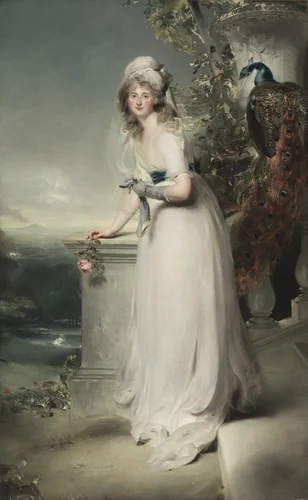
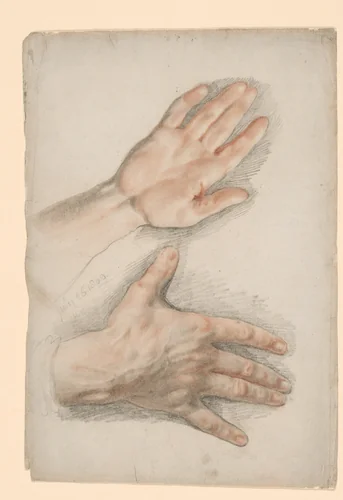
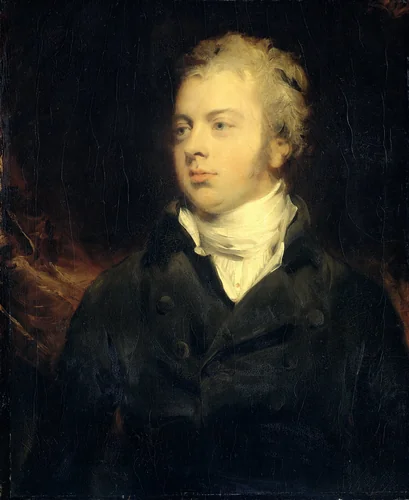
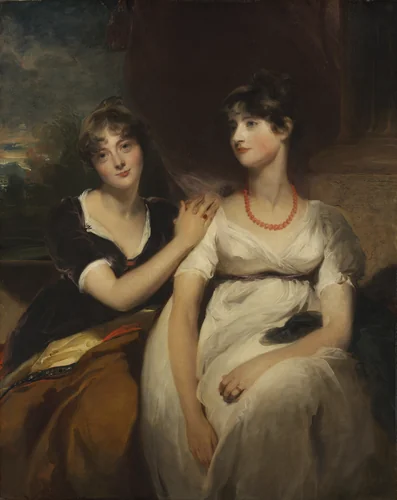
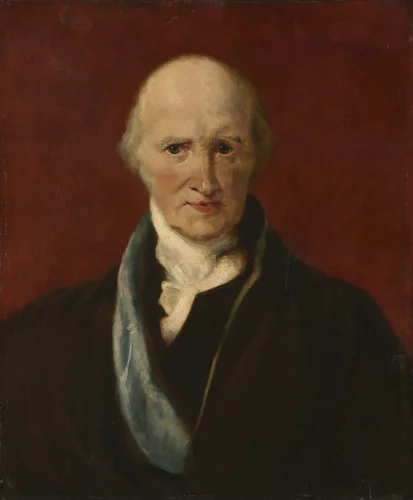
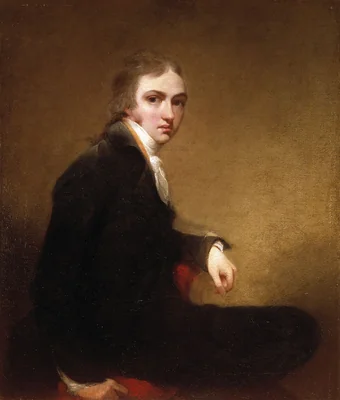
Transitioning to oils, Lawrence quickly developed a distinctive style characterized by sophisticated fluidity, dramatic lighting, and a penetrating psychological insight. His technical range is evident across his oeuvre, from sensitive preparatory sketches like Two Studies of a Right Hand, to formal, full-length compositions. Whether documenting the youthful charm of Portrait of Charlotte and Sarah Carteret-Hardy or offering a striking glimpse into the established artistic hierarchy through his authoritative Portrait of Benjamin West, Lawrence confirmed his status as the primary successor to Reynolds in British portraiture. His work is known for an elegance that flatters the sitter without sacrificing veracity.
The legacy of Thomas Lawrence paintings endures not only in physical museum collections but also through contemporary accessibility. Much of his extensive catalog has entered the public domain, ensuring that the elegance and refinement defining the Georgian and Regency eras remain widely available. This accessibility allows institutions to offer high-quality prints and downloadable artwork, supporting modern scholarship and appreciation of his masterful technique and enduring impact.
Source: Wikipedia · CC BY-SA 4.0