Thomas Hovenden
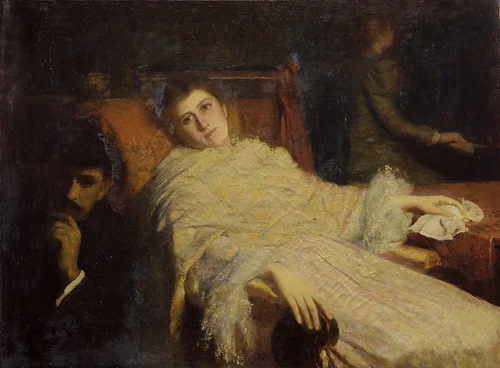
Thomas Hovenden (1840-1892) was a pivotal Irish-born artist and educator whose career flourished in the United States, placing him squarely within the tradition of American genre painting during the latter half of the nineteenth century. Recognized for his compelling narrative subjects and quiet, realistic depictions of domestic life, Hovenden masterfully combined precise academic training with deeply observed human content.
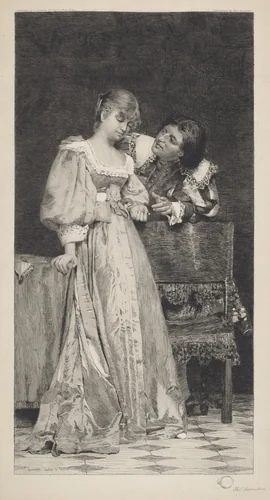
After receiving training abroad, Hovenden established himself as a significant figure in Philadelphia and New York. His paintings were characterized by their straightforward realism and commitment to storytelling, often focusing on subjects that resonated with the burgeoning American middle class. Unlike artists who aimed for heroic or grand historical themes, Hovenden found his métier in the everyday, concentrating on scenes of familial interaction and localized community events.
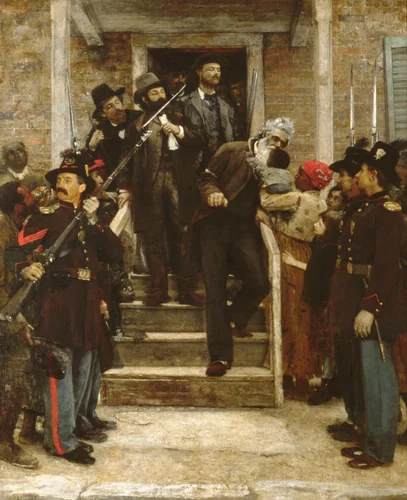
Critically, Hovenden frequently employed African Americans as subjects, a practice that set him apart from many of his contemporaries. His sensitivity in portraying moments of dignity, labor, and community life offered a quiet but important counterpoint to the often-stereotypical representations found elsewhere in period art.
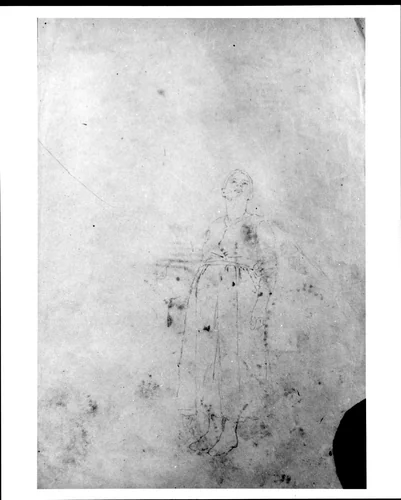
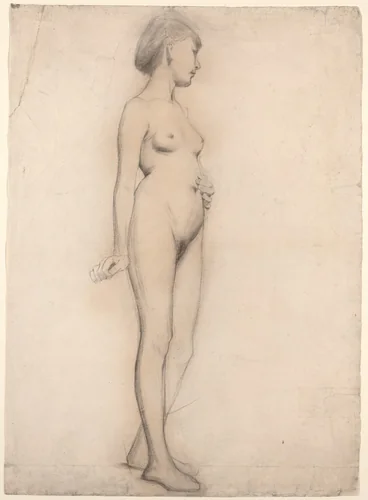
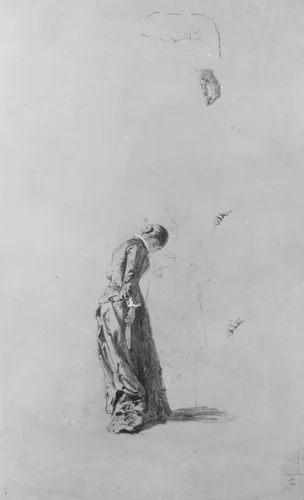
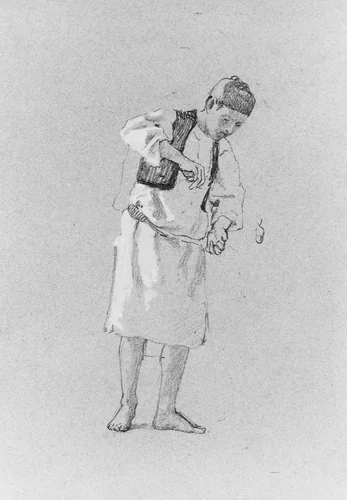
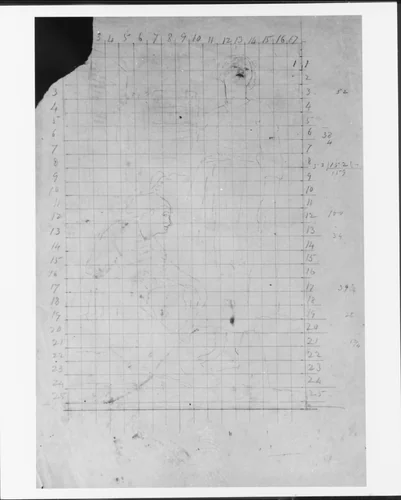
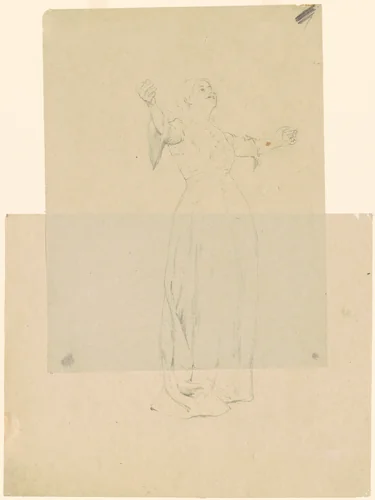
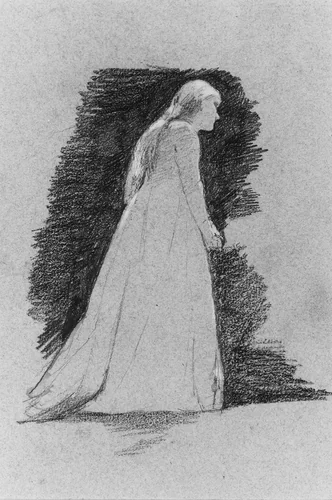
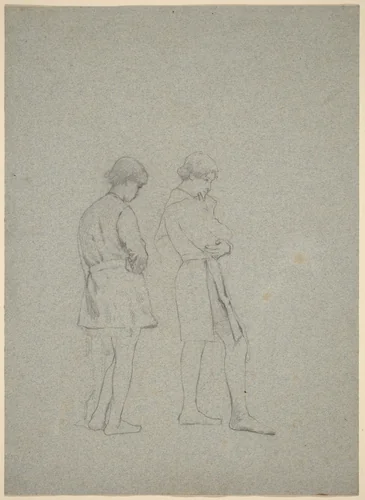
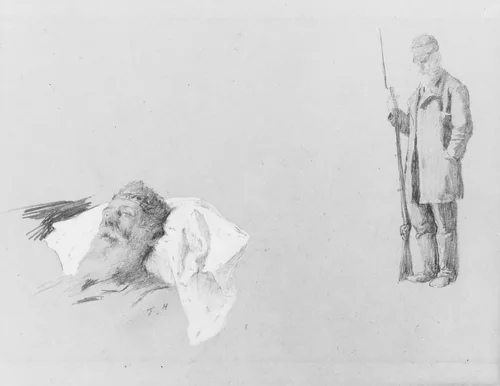
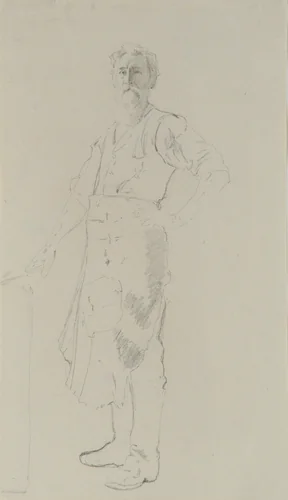
Hovenden’s dedication to technical mastery is evident in the surviving preparatory sketches and studies, which underscore his academic rigor. Works like the detailed Sketch of Arm and Sketch of Two Hands and Study of a Man confirm his rigorous attention to anatomy, demonstrating that even the most intimate genre scene required the foundation of sophisticated draftsmanship. He was also a respected teacher, extending his influence through the Philadelphia art scene.
Though his active career spanned only about two decades before his death in 1892, Hovenden’s contributions remain central to understanding late American realism. His enduring presence in major institutions, including the Metropolitan Museum of Art and the National Gallery of Art, confirms the enduring appeal and museum-quality of his output. Furthermore, because many of his studies and finished works are now considered to be in the public domain, historians and collectors have access to high-quality prints and downloadable artwork for educational and research purposes.
Source: Wikipedia · CC BY-SA 4.0