Thomas Fearnley
Thomas Fearnley (1802-1842) holds a pivotal position in the formation of modern Norwegian visual identity, serving as a defining figure in the movement of Norwegian Romanticism. A student of the celebrated landscape painter Johan Christian Dahl, Fearnley quickly established himself as a leading representative of Norwegian romantic nationalism, utilizing the dramatic, untamed landscape to articulate the spirit and character of the newly independent nation.
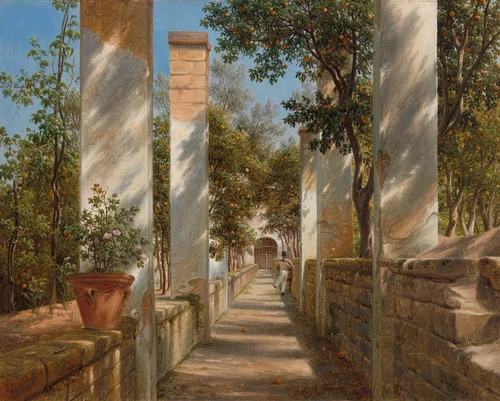
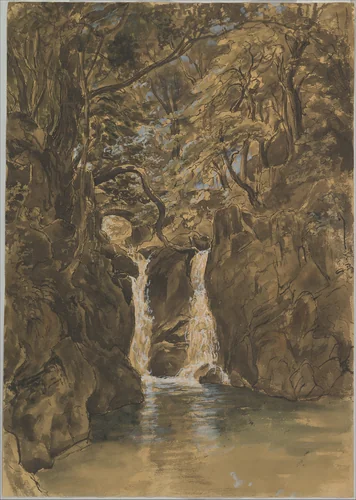
Although his active period was confined to a compressed fifteen-year span, from 1824 until his premature death in 1842, Fearnley’s output was characterized by rigorous technique and profound emotional engagement with natural forms. His extensive travels throughout Europe, especially in Germany, Italy, and England, provided a broad palette of visual stimuli. While his famous canvases, such as the dramatic Italian vista The Labro Falls and the atmospheric study A View of Lower Rydal Falls, Cumbria, demonstrated his mastery of oil painting, his approach was deeply rooted in detailed field observation.
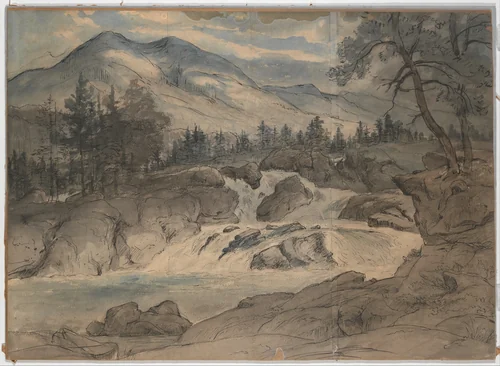
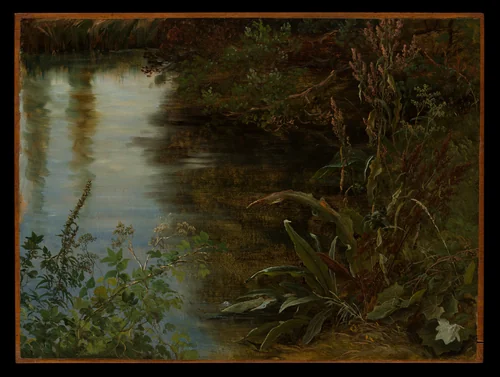
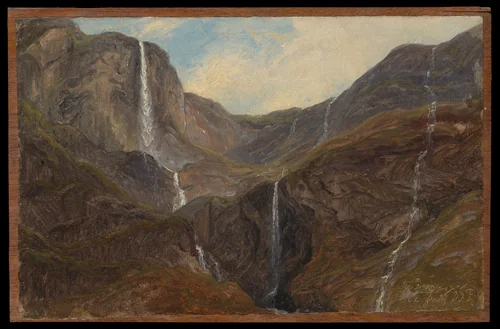
Fearnley was innovative in his use of small-scale oil sketches and drawings made en plein air. Works like Gudvangen and Study of Water and Plants transcend the merely preparatory; they function as precise records of light, weather, and topography, achieving an intensity that secured them museum-quality status. This dedicated practice of capturing momentary environmental effects set him apart from many of his contemporaries and ensured his work’s enduring relevance.
His contributions to the visual arts have long been recognized internationally, with significant examples of Thomas Fearnley paintings held in the permanent collections of institutions such as the Metropolitan Museum of Art and the Art Institute of Chicago. Interestingly, while Fearnley carved out a purely artistic legacy, his son, Thomas Fearnley (1841–1927), redirected the family's ambitions entirely, founding the highly influential Norwegian dynasty of shipping magnates. Today, much of this foundational art, now in the public domain, is widely available, allowing researchers and collectors to access high-quality prints and appreciate the foundational work of this crucial nineteenth-century master.
Source: Wikipedia · CC BY-SA 4.0