Thomas Eakins
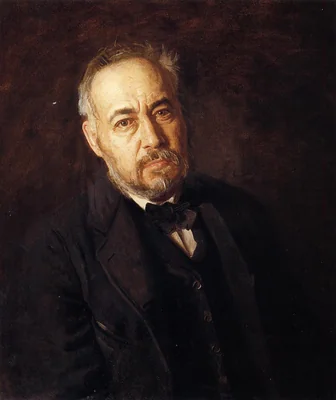
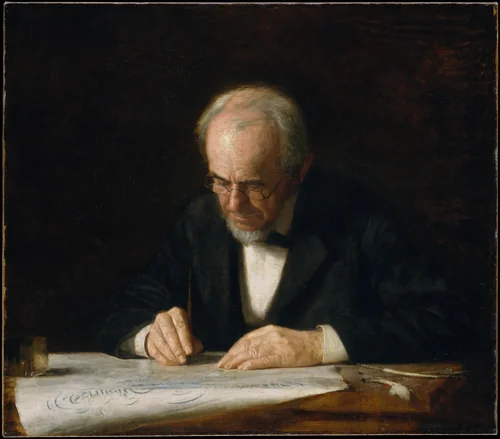
Thomas Cowperthwait Eakins (1844-1916) is universally acknowledged as a foundational figure in American art, establishing a rigorous form of Realism that prioritized scientific observation and psychological honesty. Active across painting, sculpture, and photography, he was also a highly influential fine arts educator who demanded anatomical mastery and precise perspective from his students. Eakins pursued clinical accuracy over romantic sentiment, an uncompromising methodology that distinguishes his oeuvre and solidified his reputation as one of the nation’s most important visual artists.
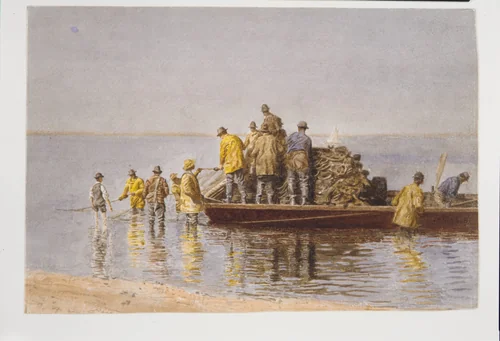
The years between 1869 and 1876 proved instrumental in translating his academic training into distinctly modern American subjects. Following studies abroad, which yielded sophisticated early works like Carmelita Requena and A Street Scene in Seville, Eakins returned to Philadelphia to capture the specificity of local life and leisure. His breakthrough came in elevating contemporary sporting life to high art. Works such as John Biglin in a Single Scull and the iconic The Champion Single Sculls (Max Schmitt in a Single Scull) are triumphs of perspectival engineering, treating ordinary sportsmen with the careful monumentality usually reserved for historical figures. These Thomas Eakins paintings demonstrate a profound ability to render atmosphere, light, and motion simultaneously.
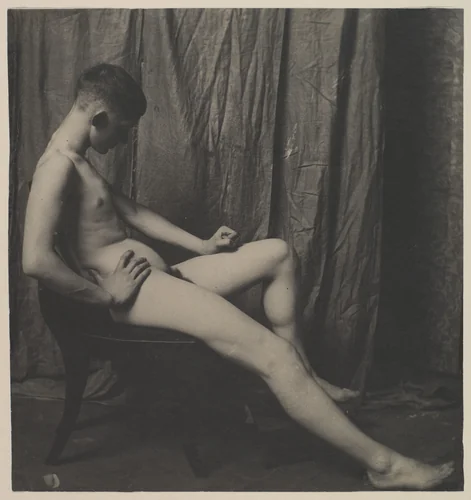
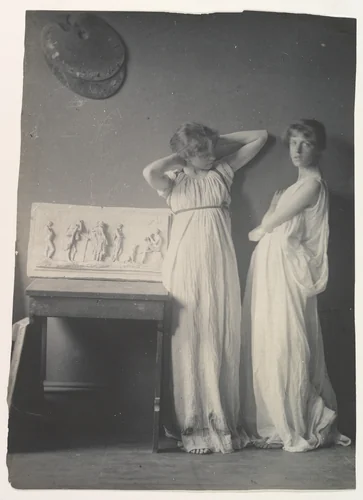
Eakins’ commitment to visual documentation extended beyond traditional media. He was an early and serious adopter of photography, utilizing it not just for anatomical study but as a legitimate art form, as seen in complex studies like [Nude Men in the Garden]. This unwavering insistence on the study of the nude human form and biological truths often put him at odds with the Victorian sensibilities of his time; he simply could not be deterred by institutional prudery.
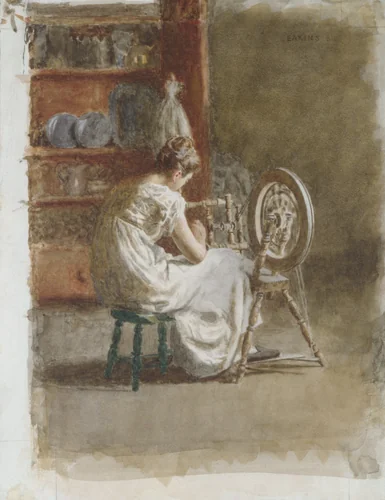
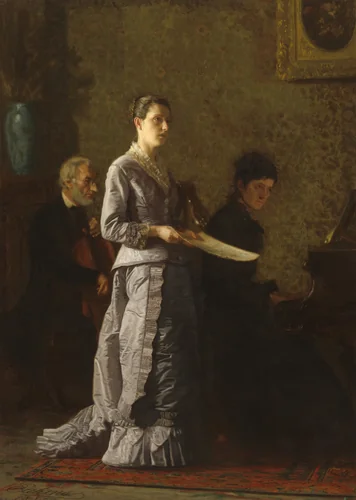
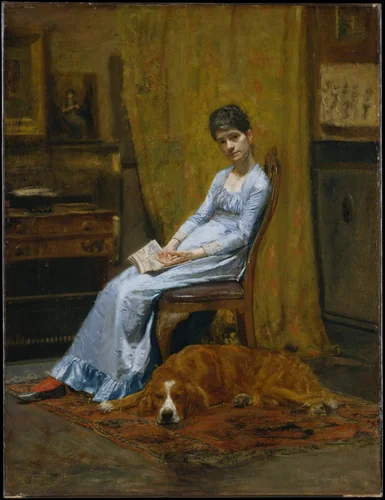
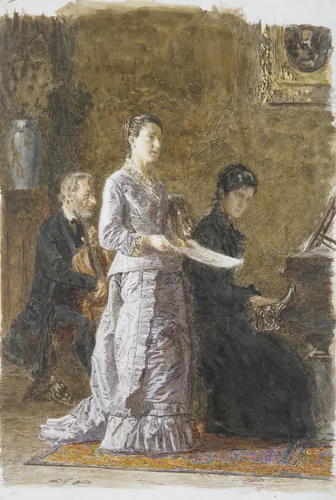
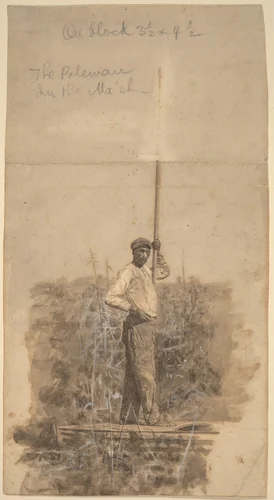
His legacy is sustained through his striking portraits and demanding genre scenes, many of which anchor major American collections, including the Art Institute of Chicago and the Metropolitan Museum of Art. The meticulous detail inherent in his technique ensures that high-quality prints of his seminal output are widely sought after today. Furthermore, as many of Eakins’ most significant works enter the public domain, their accessibility guarantees continued appreciation and study by new generations.
Source: Wikipedia · CC BY-SA 4.0
![[Woman Playing Cello] by Thomas Eakins, photograph, 1880-1889](https://img.artbee.org/427a0bbd-89d4-4712-824e-8187b81c8a1e/small.webp)
![[Woman in White Laced-bodice Dress in Studio of Thomas Eakins] by Thomas Eakins, photograph, 1880-1889](https://img.artbee.org/817362c4-c142-4bbf-8cdb-ca544d9d1097/small.webp)
![[Profile of a Seated African American Man] by Thomas Eakins, photograph, 1882-1886](https://img.artbee.org/10d24d93-ff11-45a0-aab9-a7e00c11919c/small.webp)
![[Thomas Eakins and John Laurie Wallace on a Beach] by Thomas Eakins, photograph, 1882-1884](https://img.artbee.org/b69a6f9b-e47a-4eca-8a8d-3b69b55ce65b/small.webp)
![[Betty Reynolds with Doll on Lap] by Thomas Eakins, photograph, 1883-1887](https://img.artbee.org/8c125610-4f64-4c09-bc00-14efeaba502a/small.webp)
![[Cornfield in Back of the Barn] by Thomas Eakins, photograph, 1883](https://img.artbee.org/6fe53248-2cfd-4fdf-8db4-3231dc32baae/small.webp)
![[Thomas Eakins, Nude, Playing Pipes] by Thomas Eakins, photograph, 1883](https://img.artbee.org/f813f329-524d-499f-b8e5-478c6a8198f3/small.webp)
![[Three Boys Wading in a Creek] by Thomas Eakins, photograph, 1883](https://img.artbee.org/e011afd3-c39a-468a-b4be-cb6bc5d2d6e0/small.webp)
![[Three Children and a Dog Playing in the Creek, July 4, 1883] by Thomas Eakins, photograph, 1883](https://img.artbee.org/c6b666b1-3311-4c31-a0a7-a755812d1289/small.webp)
![[Three Children and a Dog Playing in the Creek, July 4, 1883] by Thomas Eakins, photograph, 1883](https://img.artbee.org/c01cbf1d-189f-477e-9548-bf78e2d1e093/small.webp)
![[Two Boys Playing at the Creek, July 4, 1883] by Thomas Eakins, photograph, 1883](https://img.artbee.org/96c7e21f-73e0-4b21-847b-7584258ffe7e/small.webp)