Thomas Cockson
Thomas Cockson (active 1556-1624), also recorded as Coxon, holds an essential position among the pioneers of English printmaking. Active during the late Elizabethan and early Jacobean periods, Cockson was one of the earliest native engravers whose work achieved widespread distinction and durability. His artistic production, concentrated almost exclusively on portraiture, is characterized by a reliance on pure line engraving, executed entirely with the graver tool. This meticulous technical approach yielded a consistently neat, controlled, and intensely finished surface quality that was highly valued by patrons seeking authoritative likenesses.
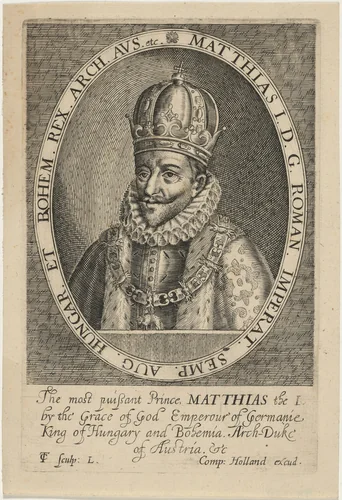
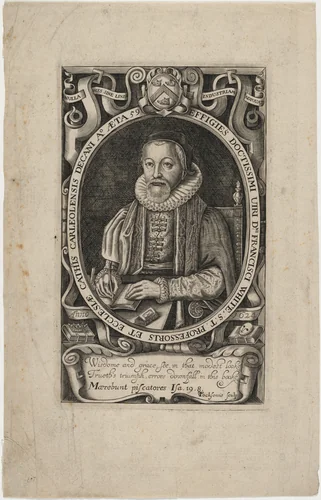
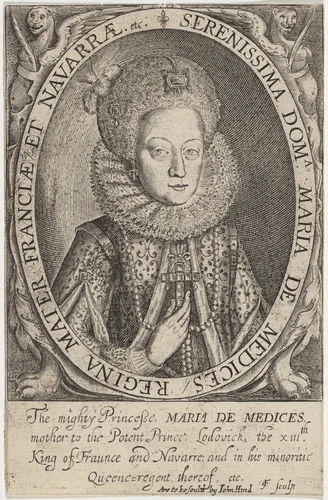
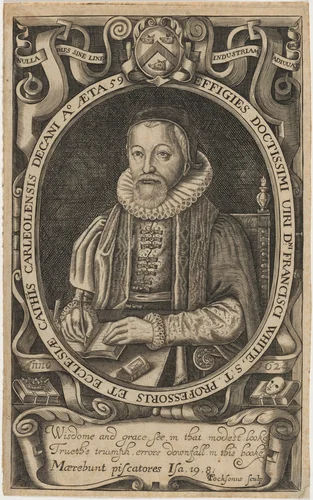
Operating in an environment largely dominated by Continental imports and styles, Cockson helped solidify a distinct English school of copperplate practice. His subjects were drawn from the highest tiers of European power and theology, creating visual records of geopolitical and religious significance. These authoritative likenesses include Emperor Matthias, a key figure in Habsburg politics, as well as several prominent English clerics, notably Francis White, Bishop of Ely, and Samuel David. Furthermore, Cockson documented international royalty, exemplified by his print of Marie de Medici, the wife of King Henry IV of France.
Cockson’s first documented and most recognized contribution is the detailed frontispiece he provided for John Harington’s 1591 English translation of Ludovico Ariosto's epic poem, Orlando Furioso. This commission underscores his connection to the most ambitious literary projects of the era.
While his reputation rests on these stately portraits, Cockson occasionally applied his precise graver technique to unexpected subjects. His final recorded print, for instance, details the practical military science of the era, illustrating musketeers and pike men. (It is perhaps a fittingly pragmatic conclusion for an artist of this period that his last known output documented organizational logistics rather than idealized heroism.) This print is further contextualized by the inclusion of the coats of arms of various contemporary captains etched onto the plate. Today, the small but significant body of Thomas Cockson prints are preserved in museum-quality collections worldwide, including the National Gallery of Art. Many of these important historical images are entering the public domain, making them valuable downloadable artwork for modern scholarly analysis and reproduction.
Source: Wikipedia · CC BY-SA 4.0