Thomas Chippendale
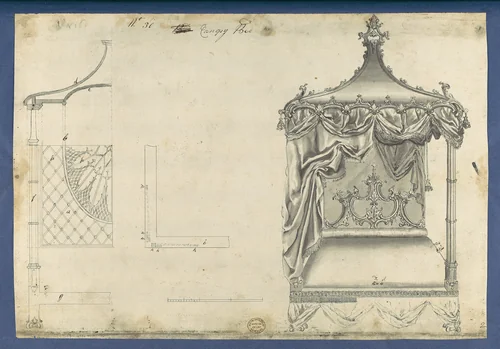
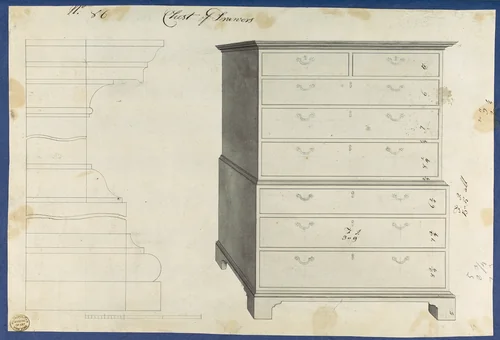
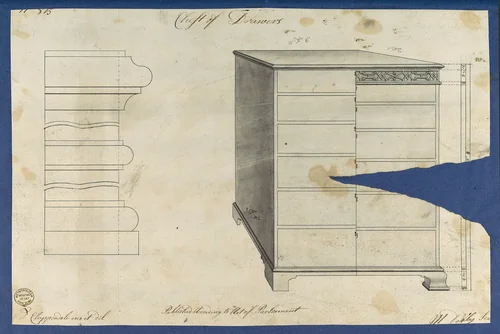
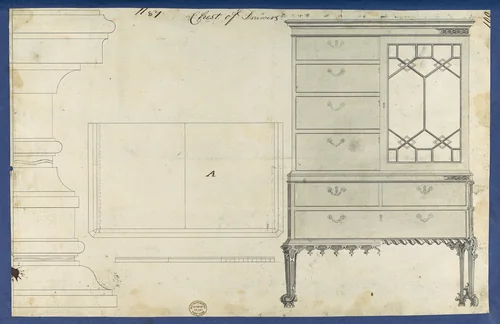
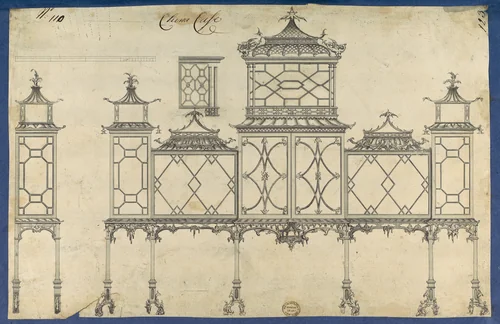
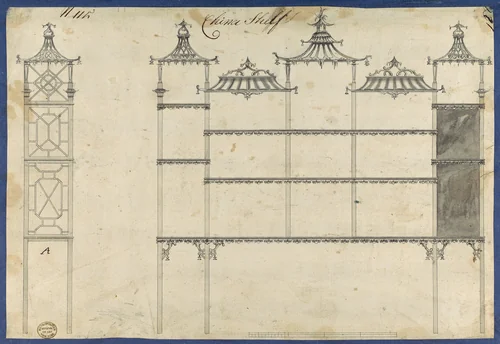
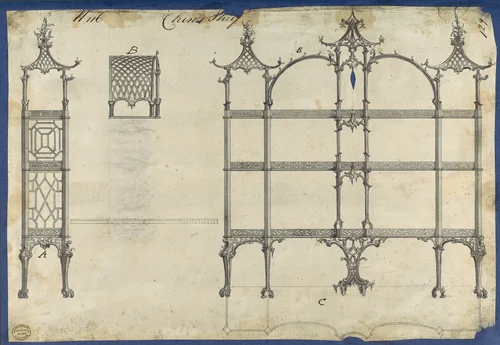
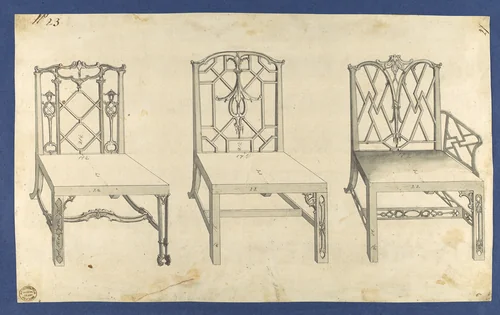
Thomas Chippendale (1718-1779) stands as the defining figure of English furniture design in the mid-eighteenth century. Although an accomplished woodworker operating from his London workshop, his primary significance derives not from individual commissions, but from his success in popularizing and disseminating standardized designs. His singular achievement, and the foundation of his renown, was the publication in 1754 of The Gentleman and Cabinet Maker's Director.
This comprehensive volume was essentially a high-quality trade catalogue of furniture patterns. It immediately became the most important collection of furniture designs published in England up to that point. The Director established a new paradigm for commerce and aesthetics, generating an unprecedented mass market for furnishings designed in the newly evolving styles. Chippendale expertly synthesized the prevailing tastes of the era, producing designs that spanned the sinuous curves of the English Rococo and the emerging, measured symmetry of the Neoclassical movement.
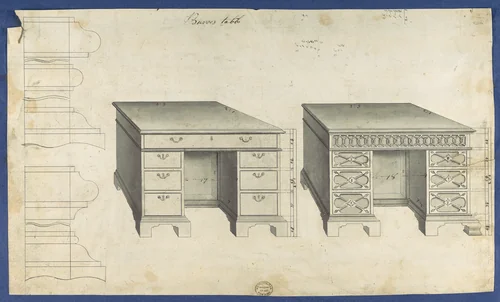
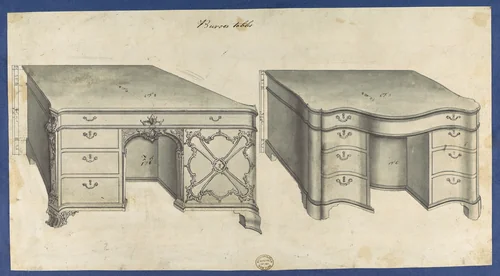
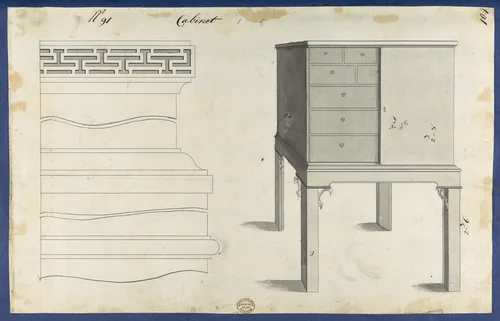
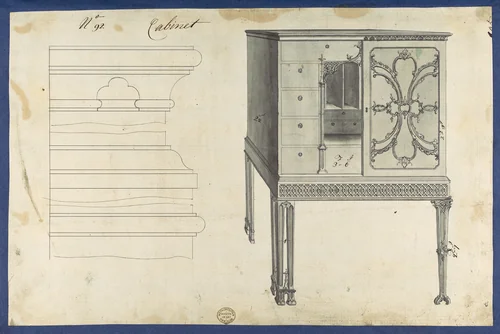
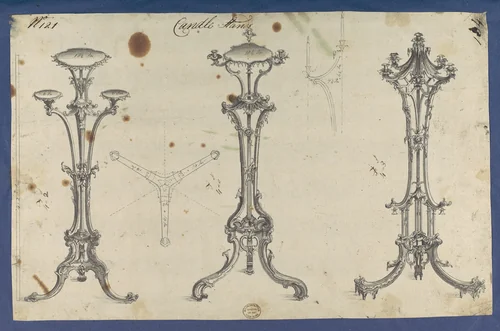
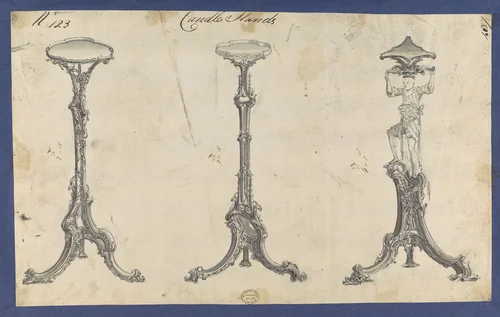
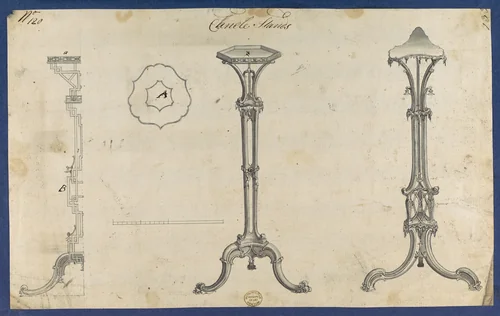
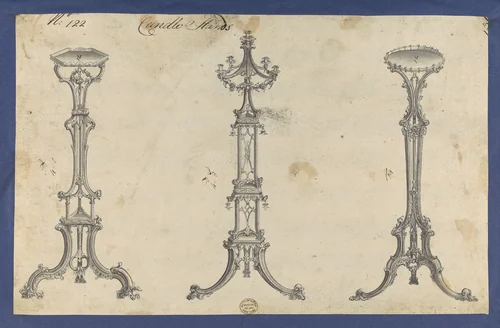
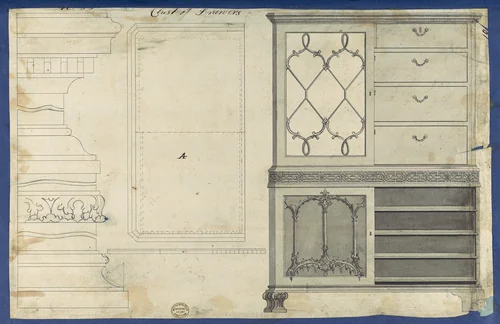
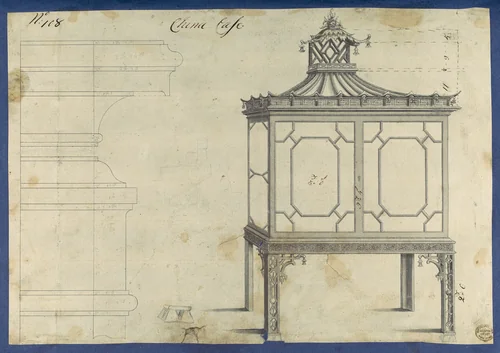
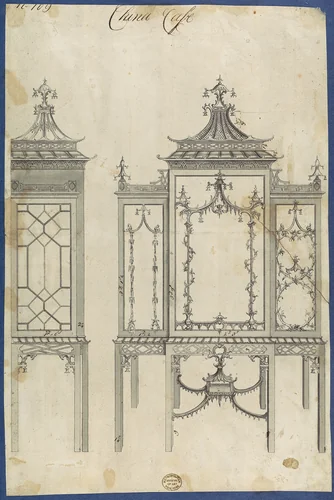
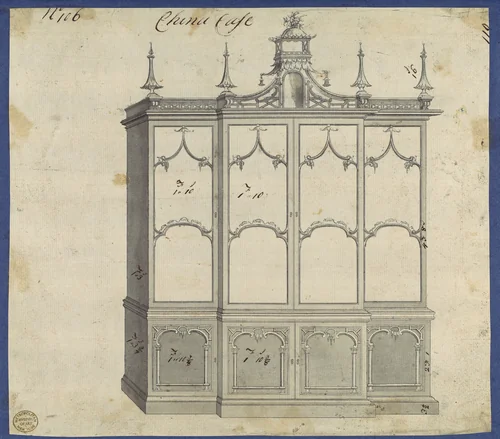
His ability to adapt architectural components to interior furnishings is evidenced in his surviving design materials, such as the numerous variations on the Chimneypiece documented across his collected drawings. These technical sketches, alongside patterns for elements like Cornices, reveal a precise approach to functional luxury.
Chippendale’s genius lay in his mastery of promotion: "Chippendale" quickly transcended the man himself to become the accepted shorthand description for an entire genre of furniture. It is a peculiar historical footnote that a designer became synonymous with a mass-produced look simply by perfecting the promotional catalogue.
So universally influential were his designs, reaching across Britain, Europe, and the American colonies, that museum-quality institutions like the Victoria and Albert Museum recognize his name as the descriptive term for any similar design derived from his templates. Today, his foundational drawings and publications are frequently part of the public domain, offering invaluable resources for historians and designers. Images of his iconic works are often available as high-quality prints, ensuring the continued study and appreciation of his essential design vocabulary.
Source: Wikipedia · CC BY-SA 4.0