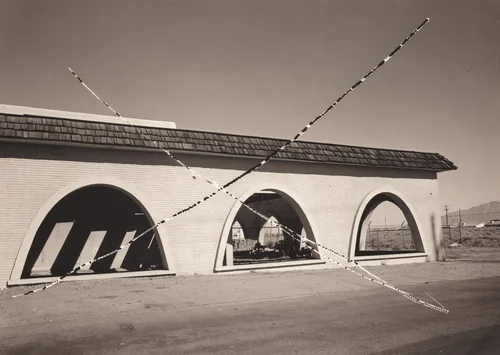
Thomas Barrow
Thomas Barrow (1938–2024) was an American artist and educator whose experimental approach to the photographic object helped define conceptual art practices in the post-war era. While his professional tenure spanned decades, the year 1974 proved particularly active, yielding a concentrated body of work that challenged the medium's supposed veracity and standardized presentation.
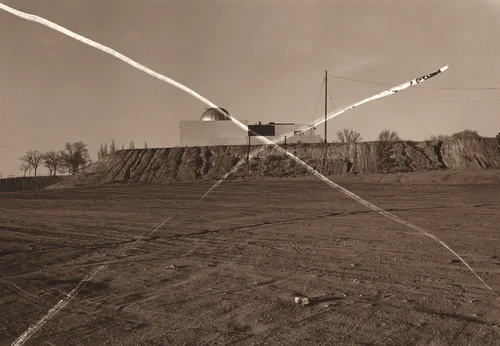
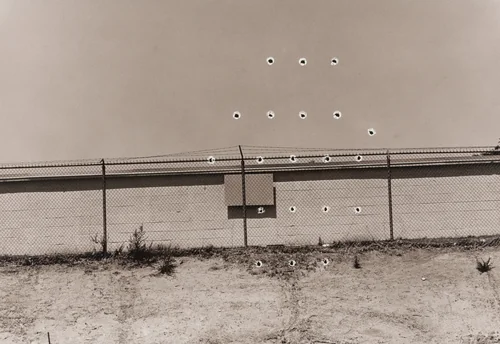
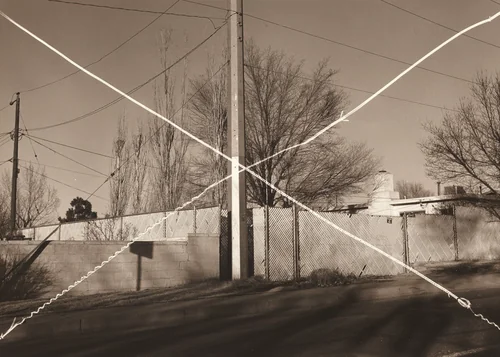
Barrow consistently focused on the intentional destruction or alteration of the print surface, treating the photograph not as a window to reality, but as a physical artifact subject to artistic intervention. He often employed techniques such as abrasive cropping, aggressive scratching, and chemical bleaching directly onto the negative or print. This process transformed potentially conventional subjects, like infrastructure or nature, into conceptual studies concerning decay and visual language.
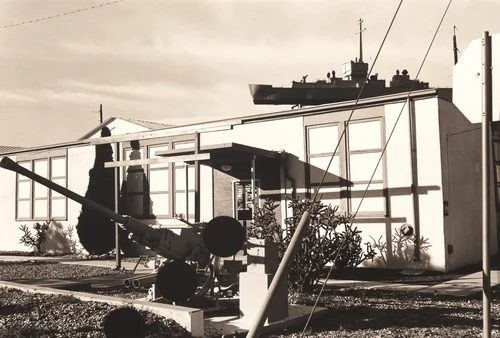
Works from his pivotal 1974 period, including the striking geometrical study Power Poles and the chemically processed H2O Whole Plate, exemplify his willingness to push the boundaries of darkroom technology. The conceptual series (Variant) Homage to L.F. and the spatially ambiguous Tri-arch highlight his deep engagement with the visual syntax of landscape and architecture, typically rendered through non-silver, high-contrast printing methods that emphasized texture and form over traditional pictorial depth. Likewise, the highly manipulated Field-Star demonstrates his commitment to making each print a unique, irreplaceable object.
Barrow’s technical boldness and theoretical rigor cemented his reputation as a key figure in American photographic history. His contributions are recognized by major public institutions, including the National Gallery of Art, which maintains definitive examples of his work. It is perhaps fitting that an artist who spent decades meticulously deconstructing the photographic negative now has several of his most important images preserved as high-quality prints within these institutional archives. While no significant Thomas Barrow paintings are known, his groundbreaking Thomas Barrow prints continue to influence contemporary artists. These museum-quality works, often focused on deconstruction and material manipulation, remain essential references for scholars studying the shift from modernism to conceptual photography.