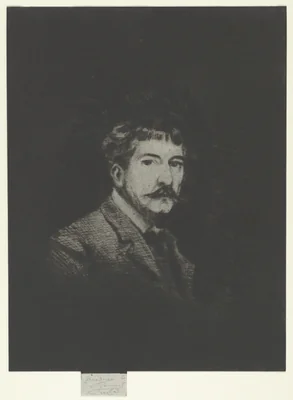
Theodore Roussel
Theodore Casimir Roussel (1847-1926) was a singular figure in Anglo-French art, recognized primarily for his meticulous graphic work executed during a brief, concentrated period in the late 1880s. Though he was a prolific painter, this French-born artist, who settled in England, secured his historical reputation through a small corpus of etchings and drypoints depicting the genre scenes and river views of Chelsea and Battersea. These works place him firmly among the London artists influenced by James McNeill Whistler, particularly in their atmospheric precision and refined tonality.
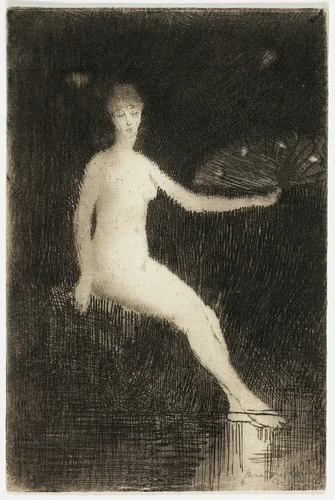
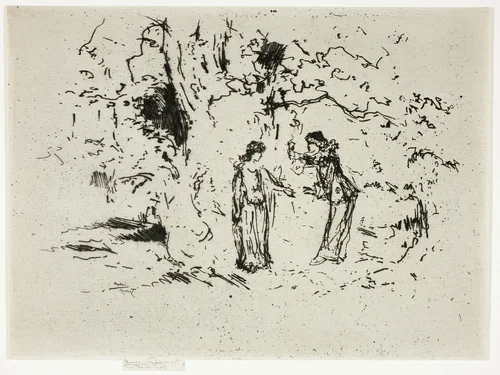
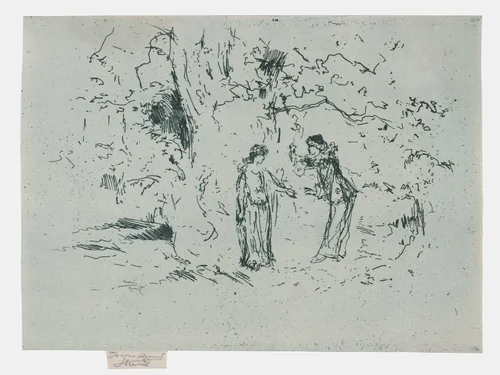
Roussel’s commitment to printmaking was strikingly intense, culminating in approximately fifteen known prints produced between 1887 and 1888. Unlike many contemporaries who treated prints merely as preparatory studies or commercial ventures, Roussel approached the medium with the dedication of a painter, focusing on intimate domestic subjects and the fleeting light of urban life.
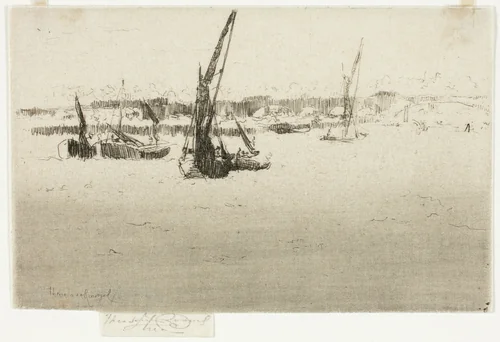
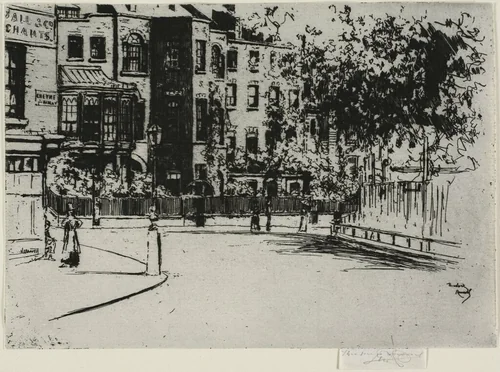
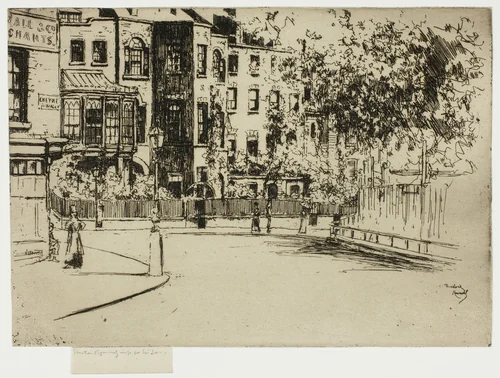
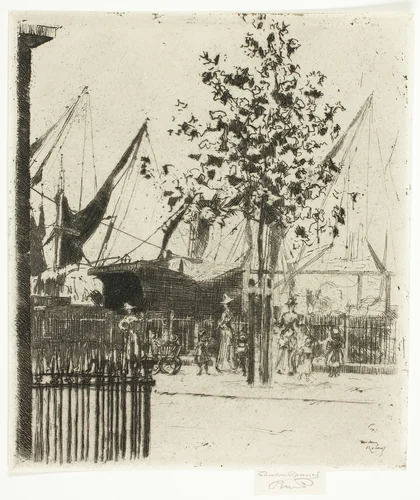
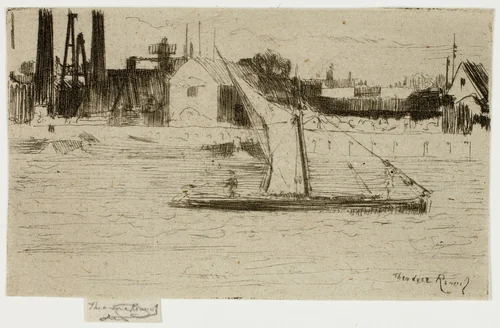
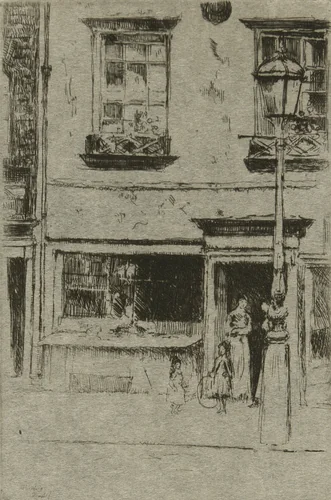
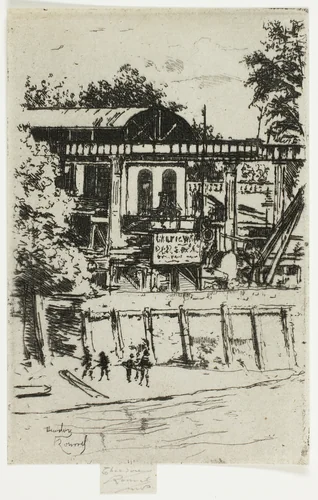
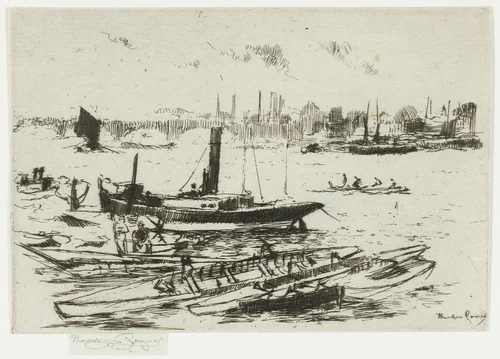
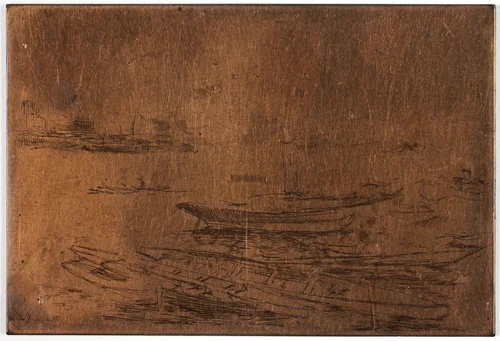
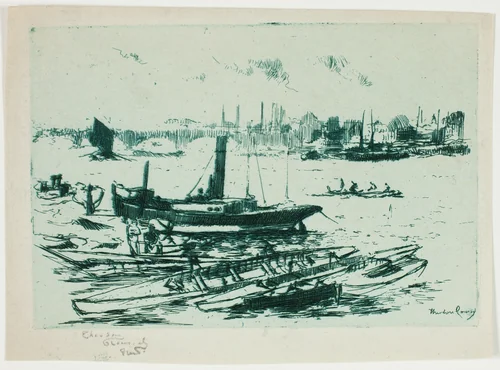
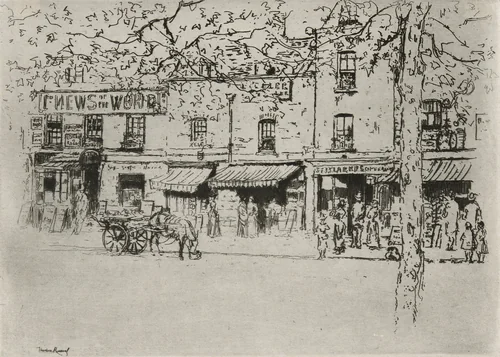
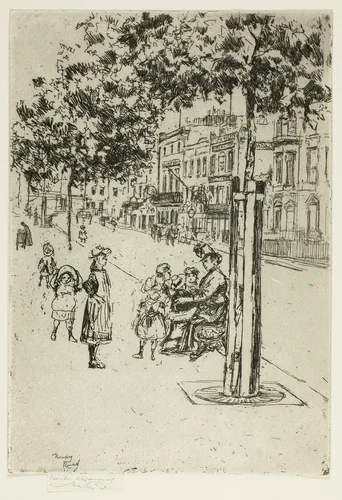
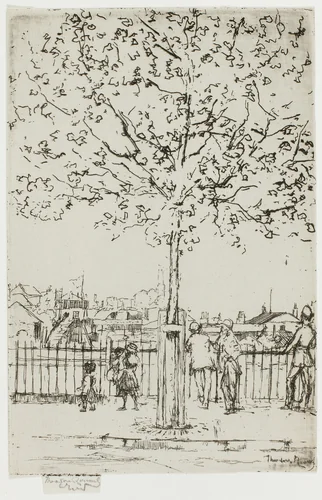
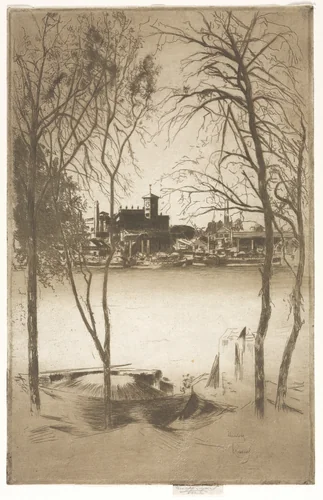
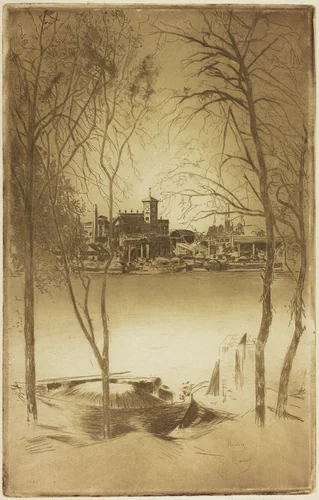
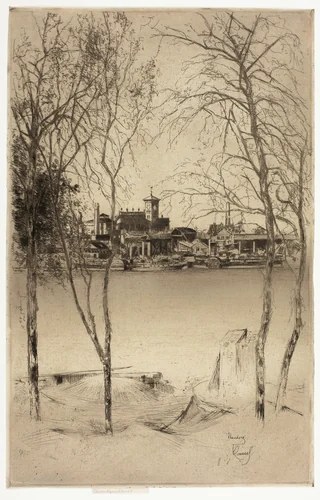
His subjects ranged from poignant portraits, such as his two treatments of Portrait of a Little Spanish Girl and the domestic intimacy of Jeanette, to evocative street scenes like Bank Holiday, Corner of Beaufort Street, Chelsea. His views across the Thames, notably Battersea from Chelsea, capture the industrial lyricism of the Victorian waterfront, achieving a delicate balance between realism and mood. The focused intensity of his output during this brief period suggests a deep, yet quickly satisfied, technical exploration of etching and drypoint processes.
Roussel was noted for his fastidious working habits; it is said that he often required multiple separate sittings just to finalize a sketch, prioritizing exactitude over speed. This dedication to precision is evident in the finished quality of his work, much of which is held in prestigious international institutions like the Art Institute of Chicago and the Cleveland Museum of Art, preserving the museum-quality impressions for posterity. While his original Theodore Roussel paintings are less frequently reproduced, his graphic output remains central to understanding late 19th-century British art. Today, a significant portion of his limited collection is available in the public domain, allowing researchers and enthusiasts ready access to downloadable artwork for study.
Source: Wikipedia · CC BY-SA 4.0