Théodore Rousseau
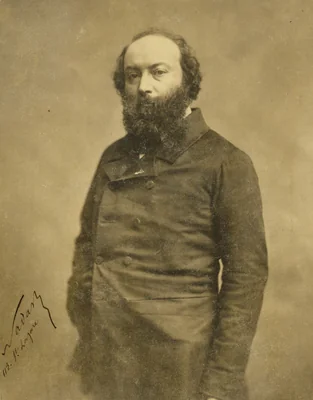
Étienne Pierre Théodore Rousseau (1812-1867) stands as a foundational figure in French landscape painting and a leading proponent of the Barbizon school. Operating primarily out of the village near the Forest of Fontainebleau during the mid-nineteenth century, Rousseau, alongside artists like Camille Corot and Jean-François Millet, decisively rejected the academic emphasis on mythological or historical themes. Instead, he pioneered a philosophy centered on direct, observed nature, a profound shift that laid essential groundwork for the subsequent rise of Impressionism.
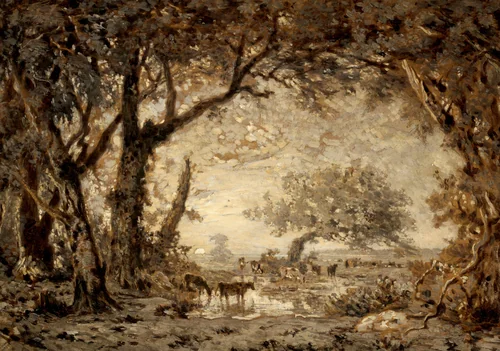
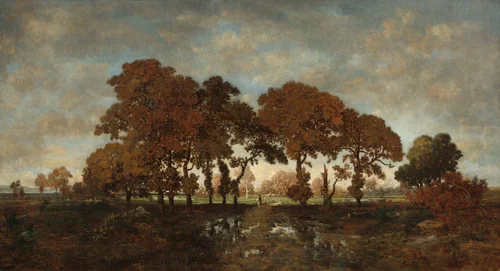
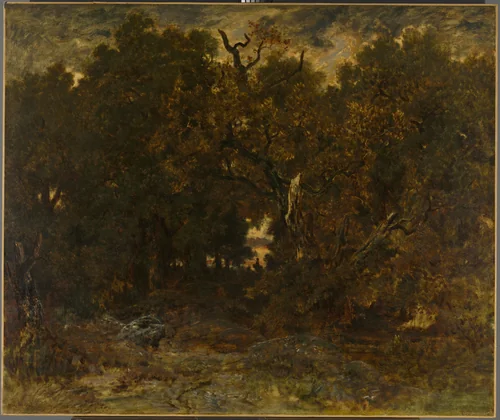
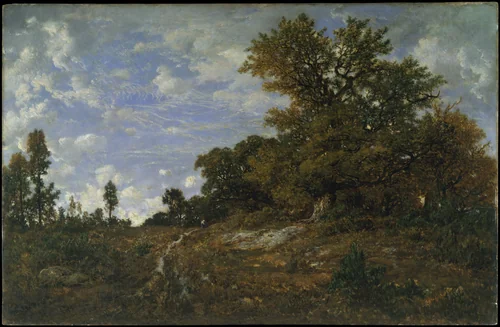
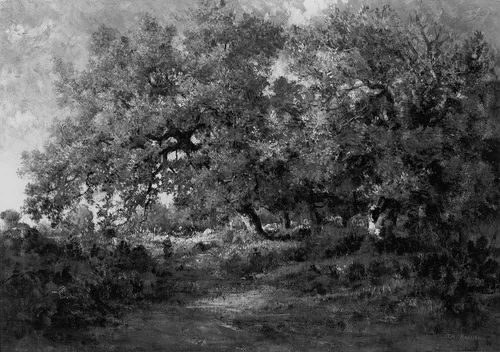
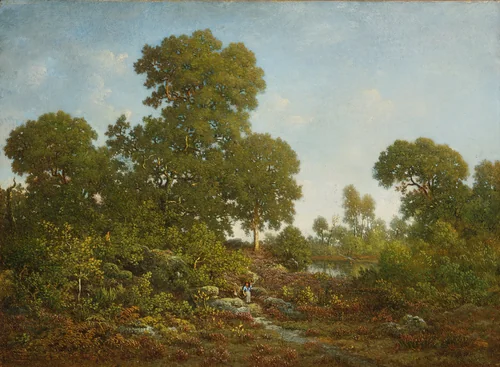
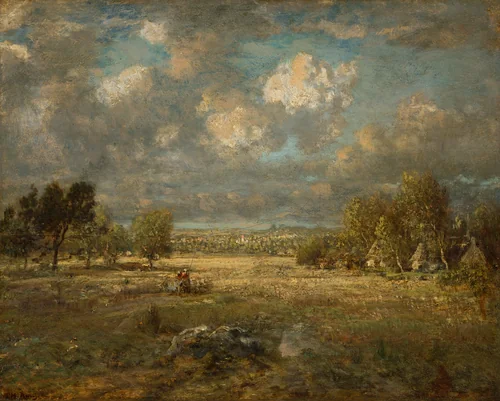
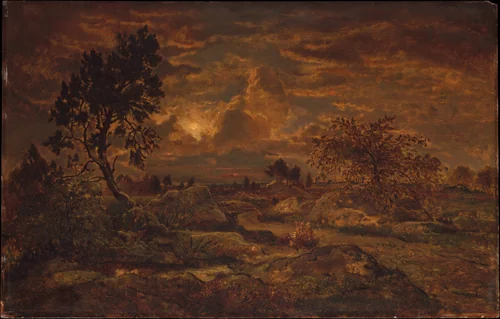
Rousseau’s oeuvre is characterized by its meticulous attention to texture, dramatic use of light, and an overwhelming sense of natural density. He drew heavily on 17th-century Dutch landscape traditions, yet applied this historical grounding to the specific, rugged topography of the French countryside. His style employed a dark, rich palette and a highly textural surface achieved through vigorous impasto, techniques that distinguished his work from the smoother finish favored by the French Academy.
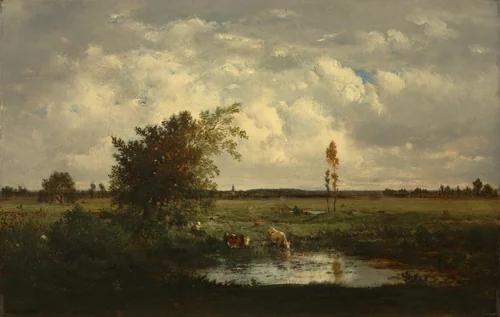
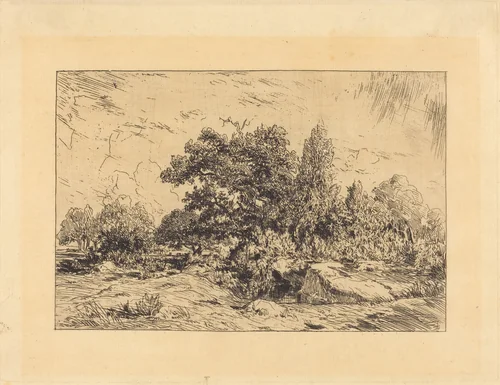
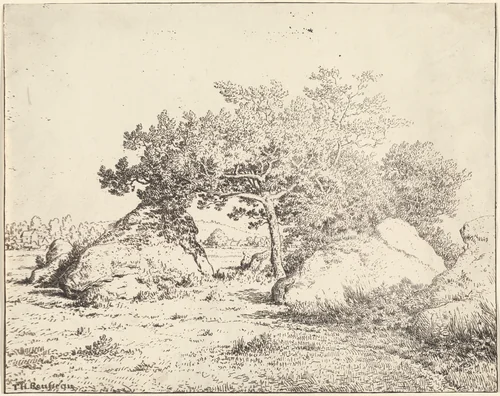
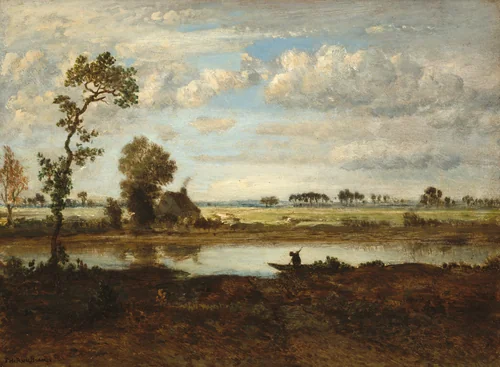
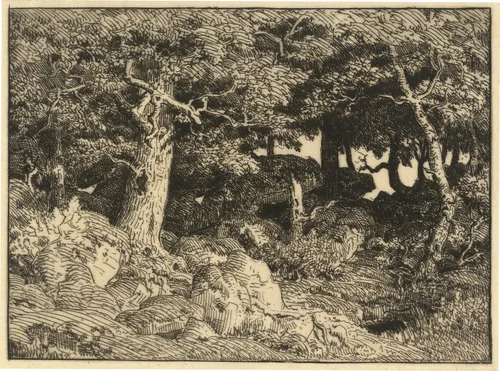
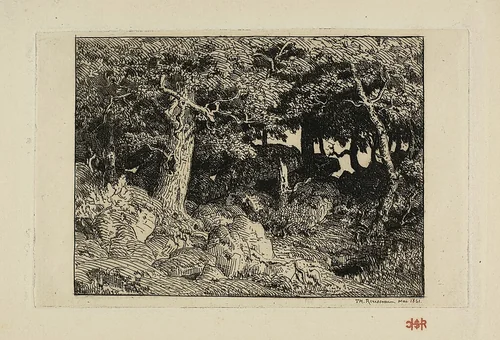
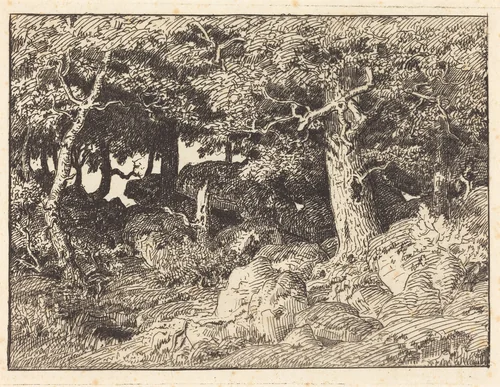
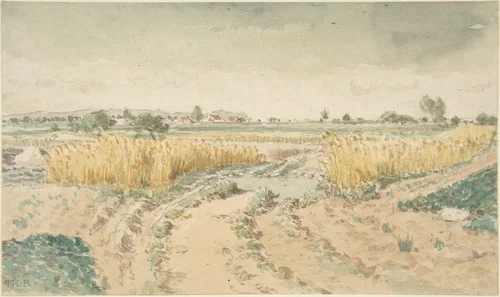
He was uniquely fascinated by the individuality of trees and geological formations, often depicting them with a powerful, almost portrait-like intensity, exemplified by works such as The Oak Tree. His commitment to capturing transient atmospheric effects in pieces like The Pond (La Mare) demonstrates an artistic rigor that elevates simple pastoral scenes, such as A Flock of Sheep before a Farmhouse or A Landscape with Three Figures and a Dog, to moments of quiet drama. The resulting Théodore Rousseau paintings are recognized not merely as scenery, but as deeply felt meditations on the wilderness.
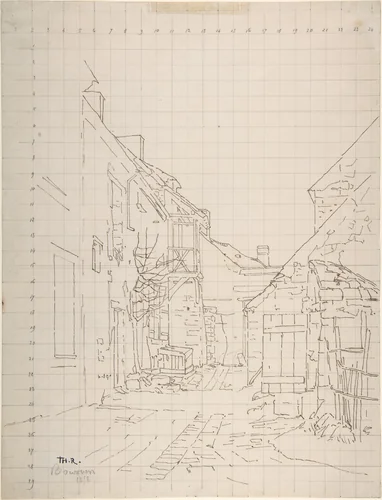
The dedication Rousseau showed to this particular region bordered on fixation; he rarely allowed narrative figures to dominate the composition, choosing instead to focus on the specific character of the trees themselves, perhaps implying that the raw natural world held more inherent dignity than man. Despite early resistance from the Parisian Salon, his foundational role secured the future of realistic landscape painting. Today, his enduring importance is reflected in major institutional holdings, including the Rijksmuseum, the Metropolitan Museum of Art, and the Art Institute of Chicago. Much of his output, including exquisite studies like Cottages Near Larchant, is now considered public domain, allowing students and enthusiasts unparalleled access to downloadable artwork for detailed study and appreciation, ensuring the moody, atmospheric depth of Théodore Rousseau prints remains fully accessible.
Source: Wikipedia · CC BY-SA 4.0