Theodore Robinson
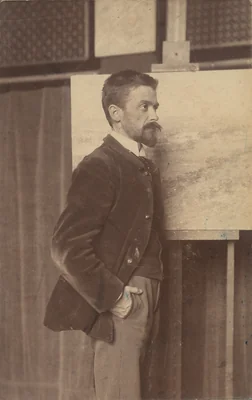
Theodore Robinson (1852-1896) stands as a foundational figure in American Impressionism, celebrated as one of the first native artists to fully embrace the movement’s principles in the late 1880s. Though his active career spanned little more than a decade (1881-1894), his output was instrumental in translating the light-infused aesthetics of French painting onto the American canvas.
Robinson’s commitment to the new style was cemented by his sustained periods of work abroad, particularly in France. Beginning in 1887, he frequently visited Giverny, the village home of Claude Monet. This proximity evolved into a close professional and personal friendship, granting Robinson a unique position of access and study. He observed firsthand Monet’s shifting methods of capturing temporal light effects, rapidly assimilating these innovations into his own burgeoning style. Unlike many contemporaries who merely adopted the look of Impressionism, Robinson engaged directly with its philosophical underpinnings concerning perception and the outdoor plein air methodology. However, while he pioneered these French methods, Robinson himself occasionally admitted that working so closely with a figure as revolutionary as Monet was, at times, intimidating.
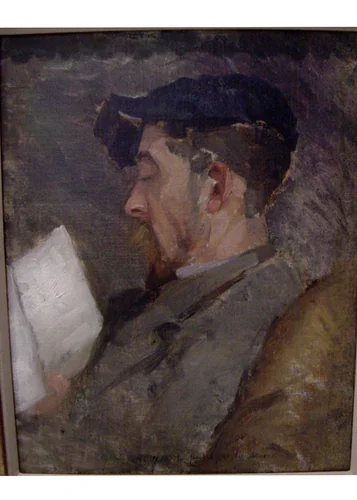
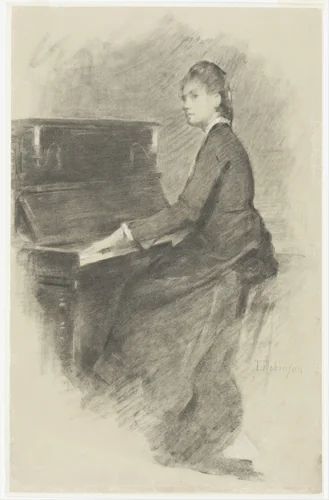
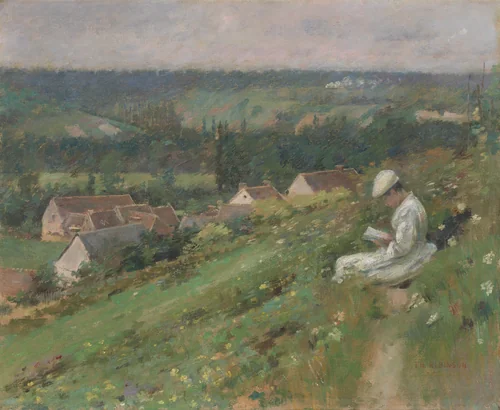
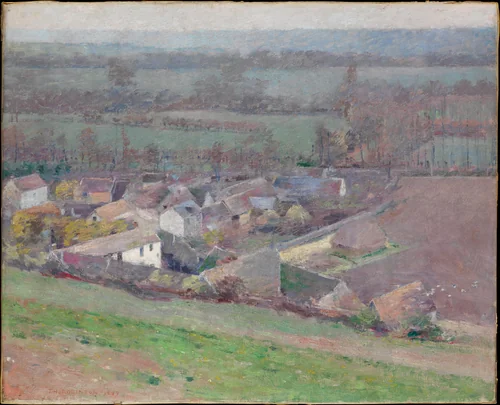
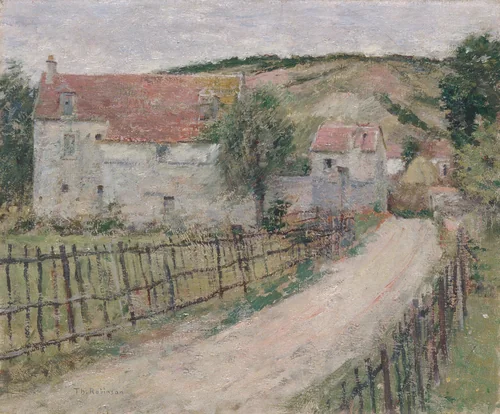
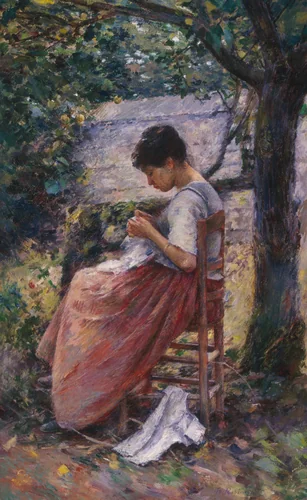
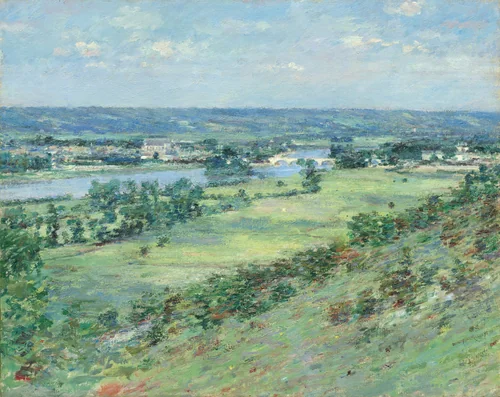
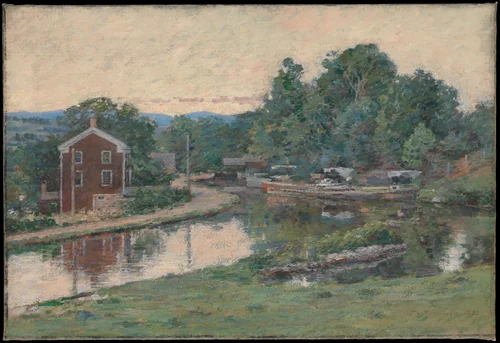
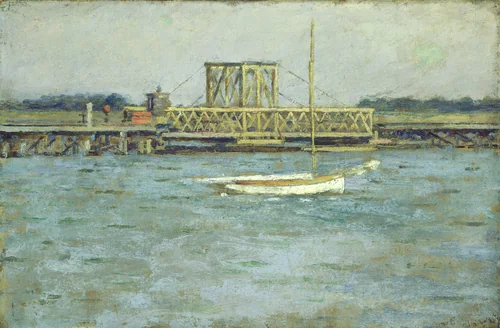
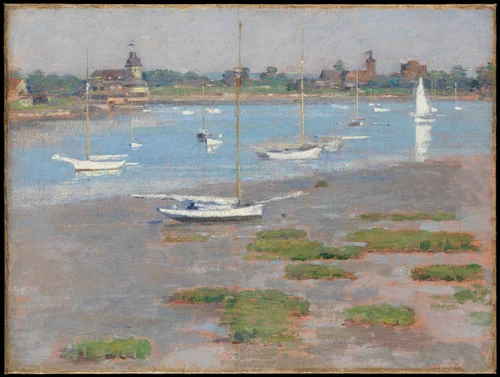
Upon returning to the United States, Robinson applied the Giverny lessons to distinctly American subjects, though the echoes of French structural rigor, particularly in his early works, remain clear. His paintings, such as the luminous The Valley of Arconville, At the Piano, and his telling Self-Portrait, balance compositional strength with a delicate, high-keyed palette. Works like A Bird's-Eye View and The Old Mill (Vieux Moulin) showcase the confidence he gained in handling broken color and atmosphere.
Robinson’s short but impactful life resulted in a body of work widely regarded as masterpieces of American Impressionism. Major institutions, including the National Gallery of Art, the Metropolitan Museum of Art, and the Art Institute of Chicago, hold significant Theodore Robinson paintings. As many of these formative American works are now in the public domain, they are increasingly accessible. Scholars and enthusiasts can easily find high-quality prints and downloadable artwork derived from these seminal pieces, ensuring the continued study and appreciation of one of America’s most important transitional painters.
Source: Wikipedia · CC BY-SA 4.0