Theodore Lane
Theodore Lane (1800-1828) was a noteworthy English painter and engraver whose brief but impactful career contributed significantly to the visual satire of the Georgian and early Regency periods. Documented activity spanning 1819 to 1830 places his key works at a transitional moment in British graphic arts, just before the full flowering of Victorian illustration. Lane specialized in creating narrative prints that captured the social foibles, ephemeral fashions, and minor scandals of metropolitan life. His distinctive visual records are held in prestigious institutional collections, including the Metropolitan Museum of Art and the Art Institute of Chicago, confirming their enduring museum-quality relevance.
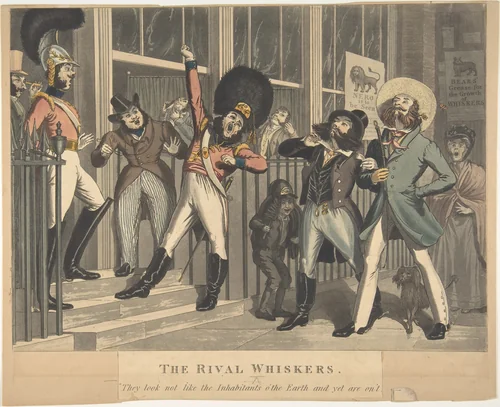
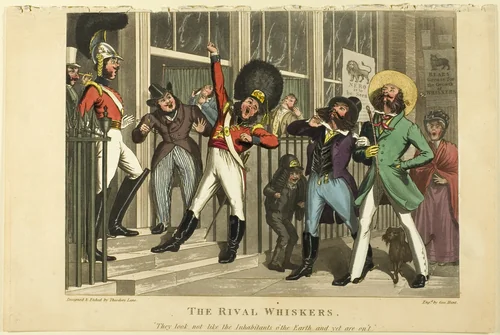
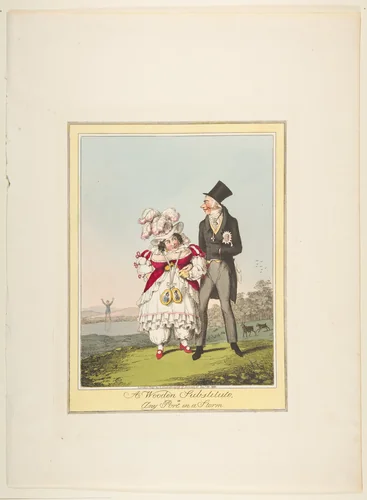
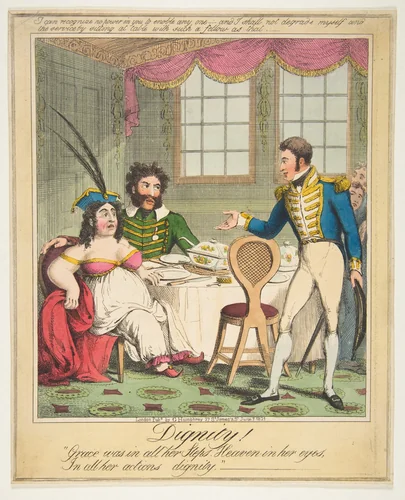
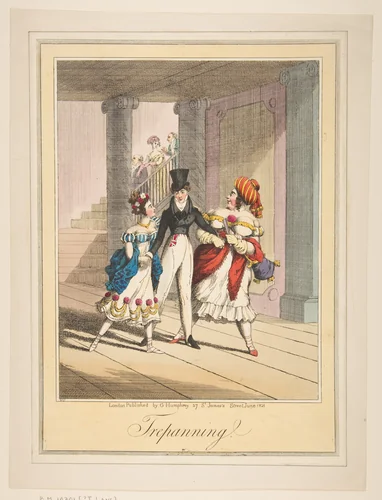
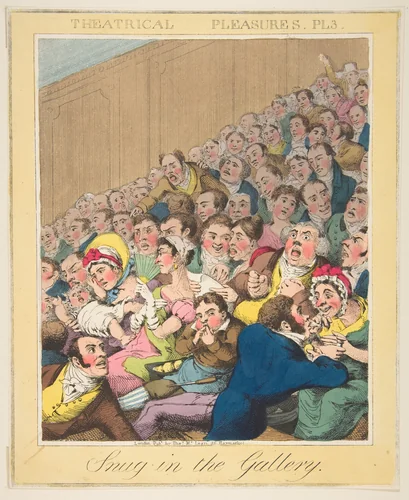
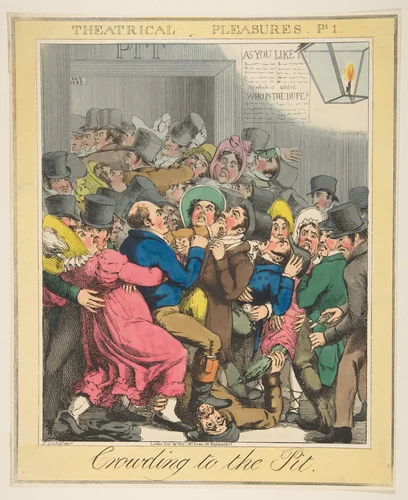
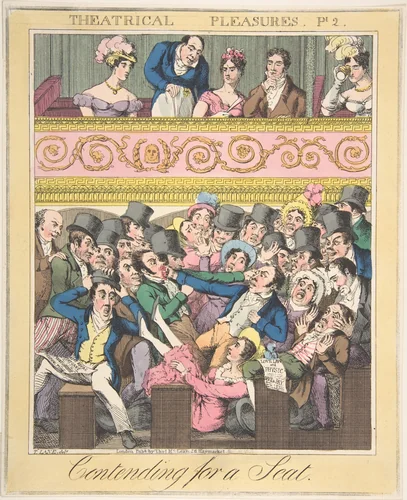
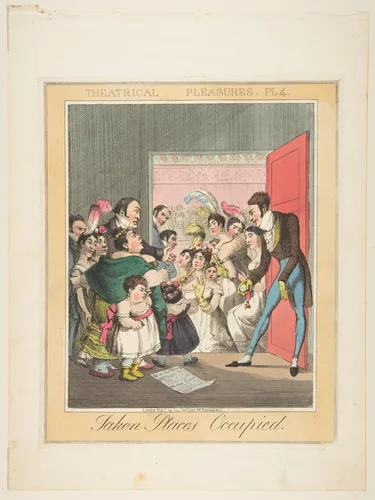
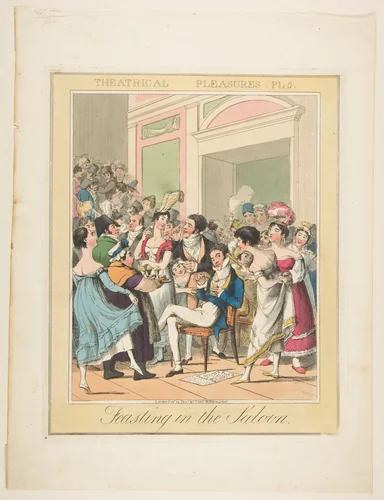
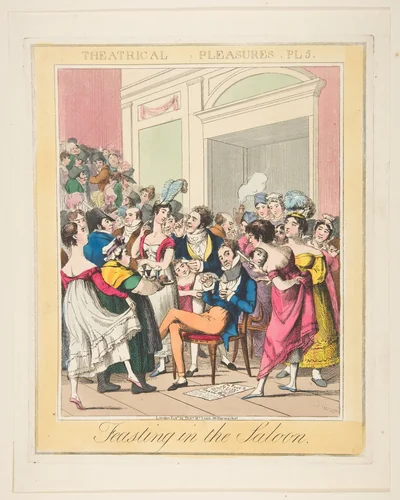
Lane’s artistic contribution lay in his keen eye for social observation, often delivered through precise engraving techniques that allowed for maximum detail and controlled humor. Unlike the broader political savagery often associated with contemporaries like Gillray, Lane often focused his satire on domestic comedy and the anxieties surrounding social ascent. Titles such as The Rival Whiskers and the highly theatrical A Wooden Substitute, or Any Port in a Storm illustrate his preoccupation with the meticulous details of emerging middle-class behavior, exaggerated fashion, and the constant striving for dignity. His Theodore Lane prints function as highly effective visual documents, illuminating contemporary mores with clarity and wit, rendering them invaluable resources for cultural history.
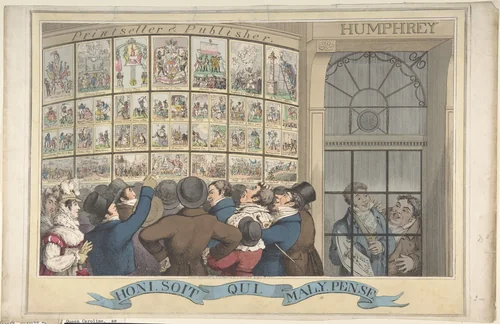
A singular achievement in Lane’s catalogue is the densely detailed print, Honi. Soi. Qui. Mal. Y. Pense: The Caricature Shop of G. Humphrey, 27 St. James's Street, London. This complex scene not only demonstrates Lane’s impressive skill as an engraver but also serves as a rich, self-referential commentary on the commercial world of graphic satire itself. By depicting the busy, bustling shop where prints were sold and displayed, Lane created a sophisticated work about caricature marketed as caricature, offering a nuanced view of the public consumption of visual humor in the era.
While his life was tragically short, cut off at age 28, Lane successfully established a robust presence in print history through his distinctive compositions. These works balance strong narrative staging with meticulous draftsmanship, ensuring their lasting appeal. Today, many of these important historical visual records are in the public domain, making high-quality prints easily accessible worldwide for study and appreciation.
Source: Wikipedia · CC BY-SA 4.0