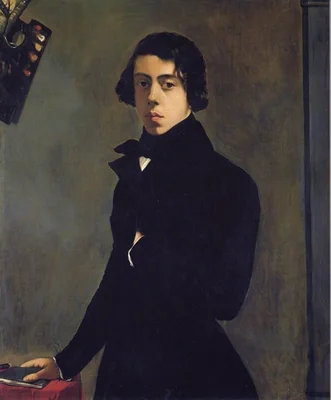
Théodore Chassériau
Théodore Chassériau (1819-1841) occupies a critical, if brief, juncture in 19th-century French painting, serving as a highly influential bridge between the disciplined linearity of Neoclassicism and the dramatic passion of Romanticism. Born in the Dominican Republic, he received early training under the rigorous master Jean-Auguste-Dominique Ingres, whose precise technique and polished finish informed Chassériau’s early canvases, particularly in his formal portraiture, exemplified by works like Count Philibert-Oscar de Ranchicourt. Chassériau’s precocity was notable; his portrait of Prosper Marilhat, painted at the age of fifteen, secured his distinction as the youngest artist ever exhibited at the Louvre Museum.
While Ingres provided the foundational structure, Chassériau deliberately shifted his allegiance in later years to the expressive vitality of Eugène Delacroix. This transition aligned him firmly with Romanticism, marked by a dramatic infusion of color, dynamic composition, and heightened emotional content. This stylistic evolution allowed him to tackle a diverse range of subjects, moving easily between historical and religious narratives, such as the mythological study The Nursing of Jupiter and the devotional scene Mass.
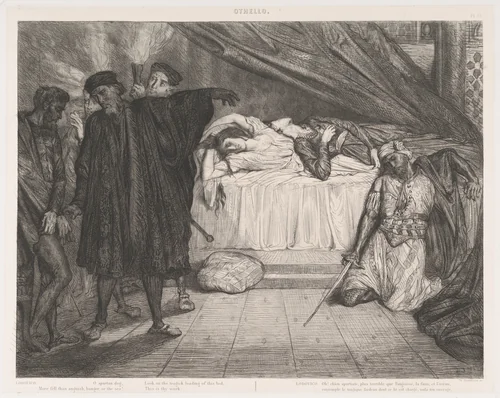
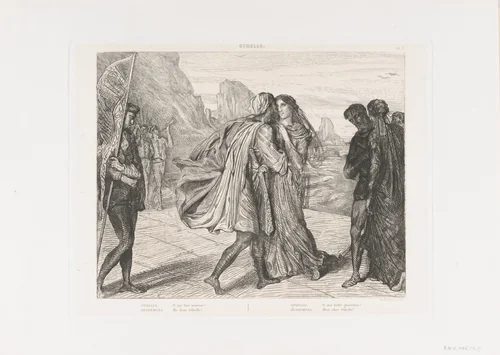
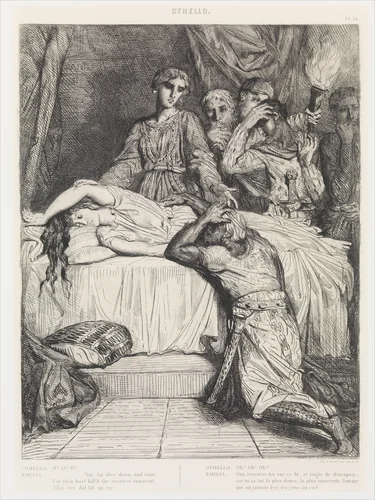
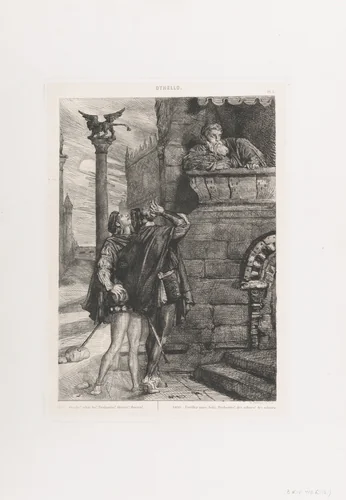
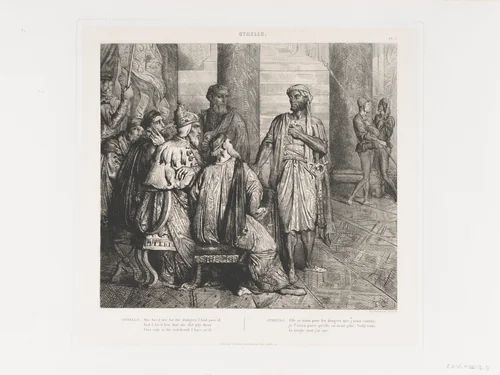
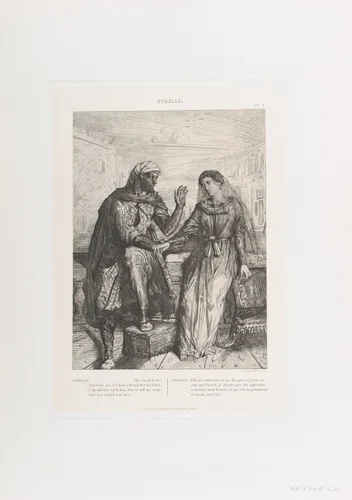
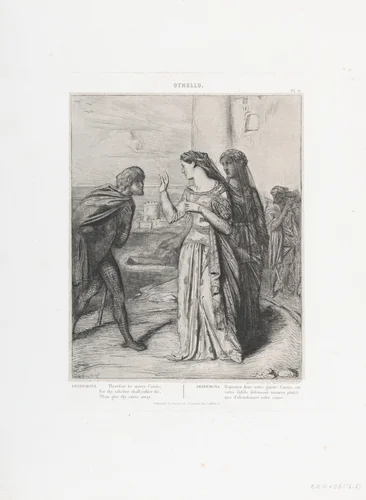
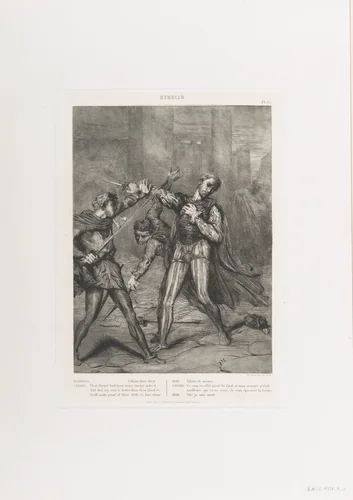
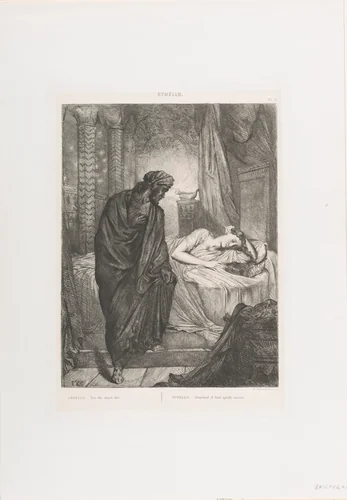
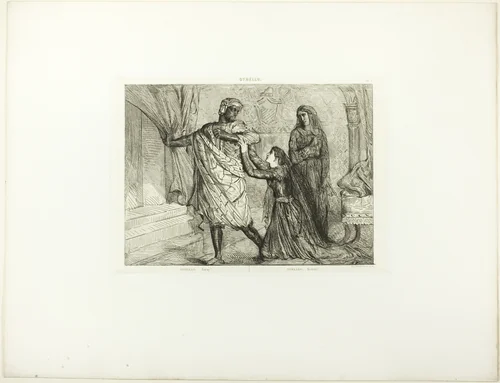
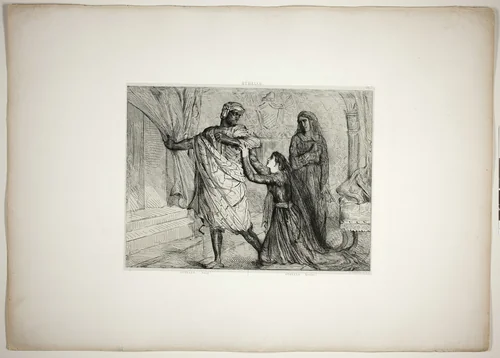
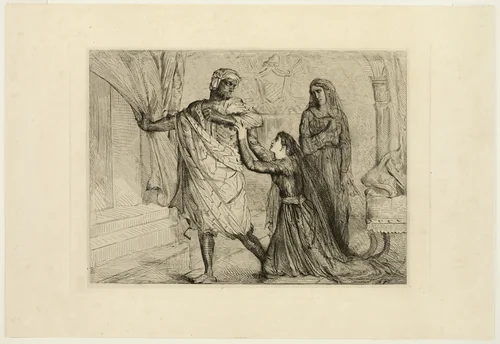
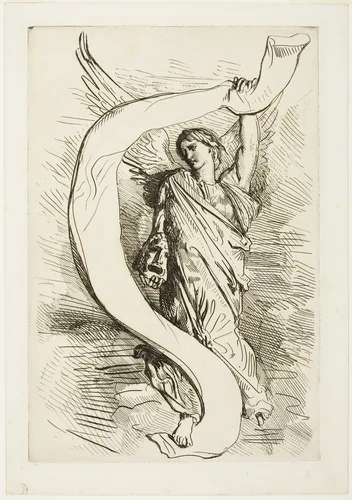
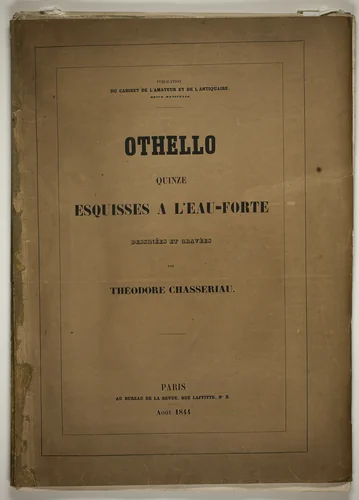
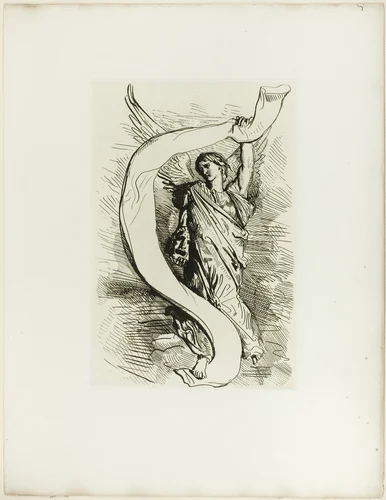
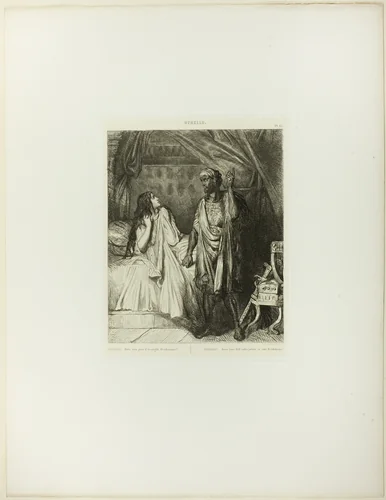
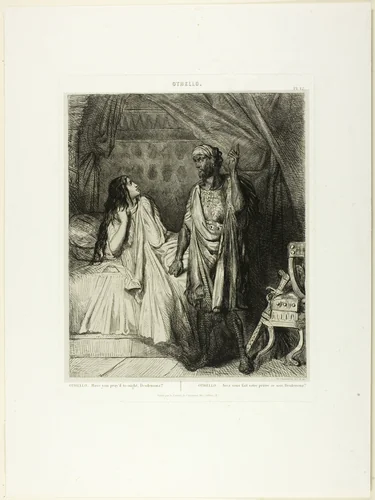
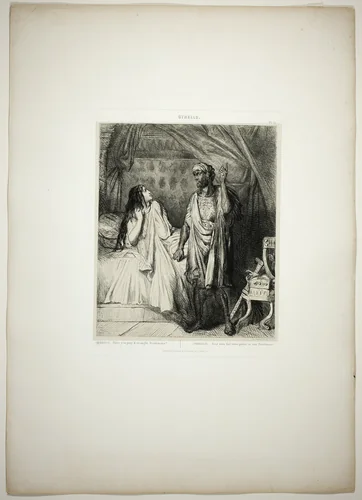
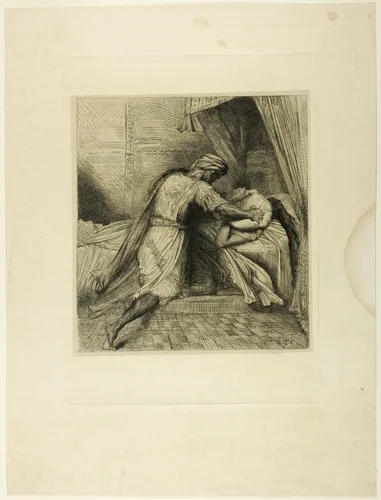
Chassériau’s interests extended beyond academic boundaries. Following his travels to Algeria, he became a celebrated exponent of Orientalist imagery, introducing evocative settings and figures into his repertoire. His skills as a draftsman were prodigious, yielding preparatory studies like Auguste Ottin and finished pieces such as Portrait of Jennins. He channeled this expertise into graphic arts, notably creating a distinguished suite of high-quality prints illustrating Shakespeare’s Othello.
Though his career spanned only a few decades, Chassériau’s artistic output was substantial. Today, his substantial body of work, including nine known drawings, three paintings, and three major prints, confirms his status as a key transitionary master. His work is held in major international collections, including the Art Institute of Chicago, the Metropolitan Museum of Art, and the Cleveland Museum of Art. Many of these important Théodore Chassériau paintings and drawings are now available in the public domain, offering researchers and enthusiasts royalty-free access to his complex and pivotal artistic legacy.
Source: Wikipedia · CC BY-SA 4.0