Théodore Caruelle d' Aligny
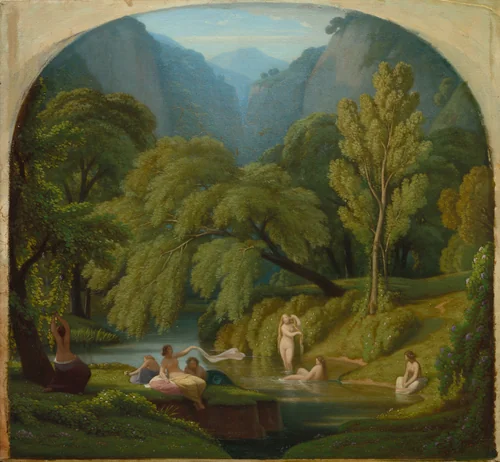
Claude François Théodore Caruelle d' Aligny (1798–1871) occupies an essential, if often understated, position within the history of French landscape painting. Active across the first half of the 19th century, d'Aligny was a pivotal figure who helped shift the focus of landscape from idealized, studio-bound compositions toward a direct, rigorous engagement with nature, a practice that preceded and influenced the Barbizon School.
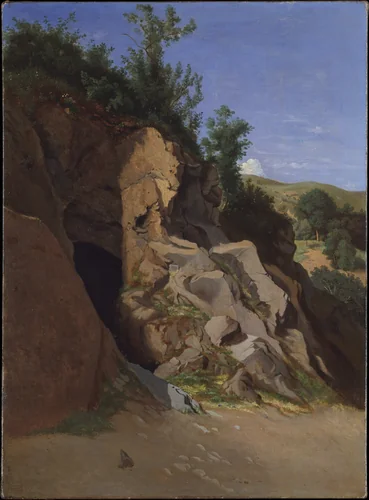
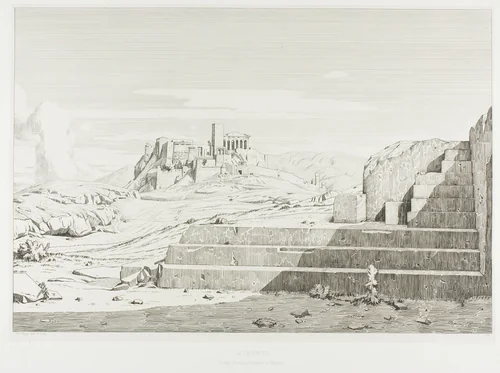
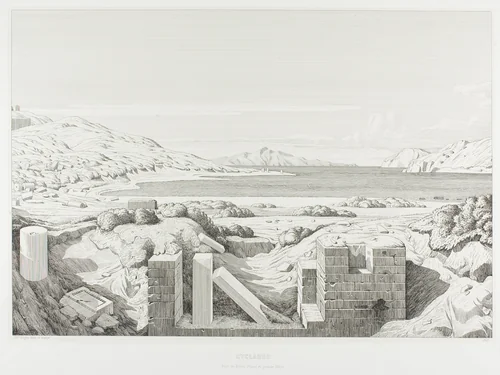
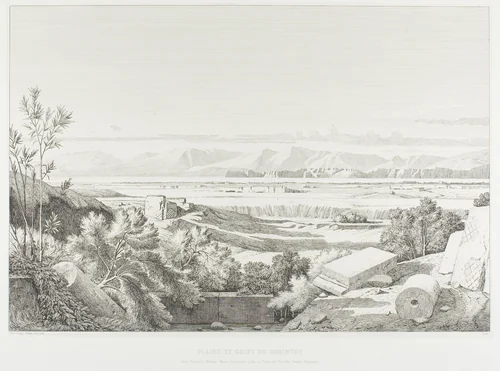
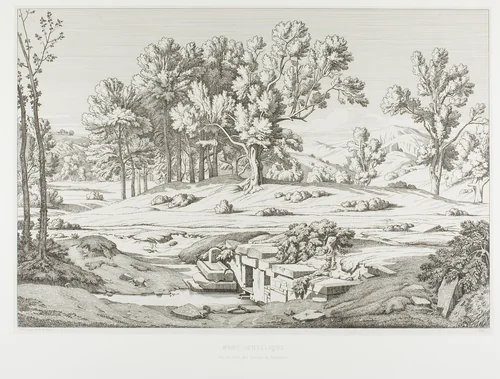
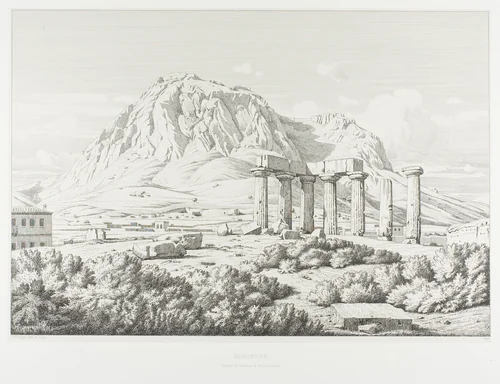
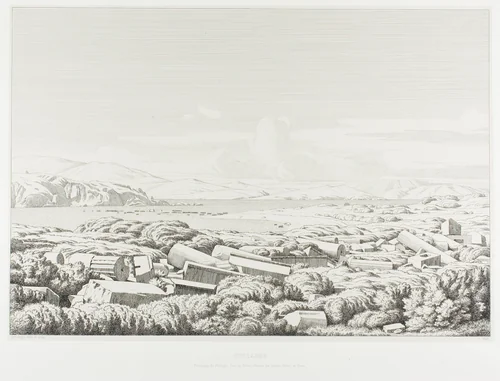
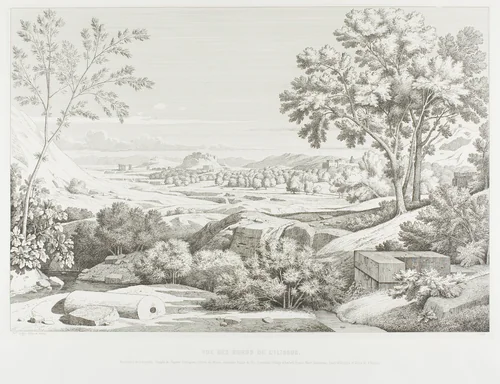
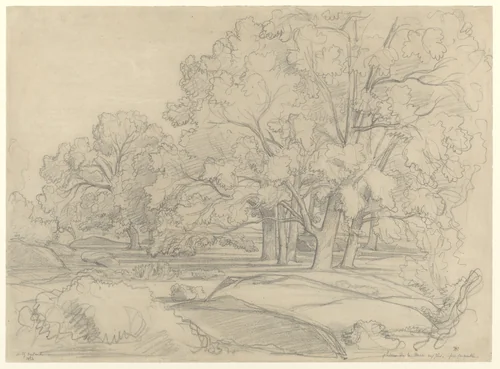
While stylistically rooted in the prevailing Neoclassicism of Paris, d’Aligny’s most celebrated and influential period was spent working in Italy, primarily in the vicinity of Rome. This extended residency, during which he acted as both observer and chronicler, yielded a profound body of work spanning ten prints, three drawings, and two extant paintings. His etchings and drawings, often executed en plein air, capture the Roman campagna and the surrounding hill towns with a rigorous clarity. Unlike contemporaries focused purely on topographical rendering, d’Aligny infused his scenes with structural weight and atmospheric light, transforming natural subjects into dignified, almost architectural compositions.
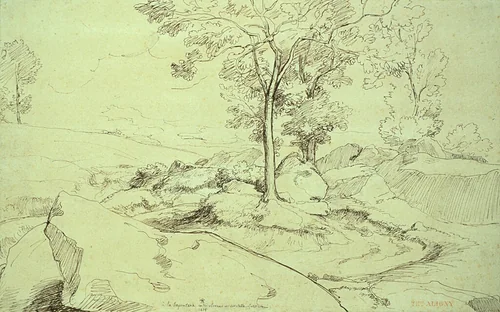
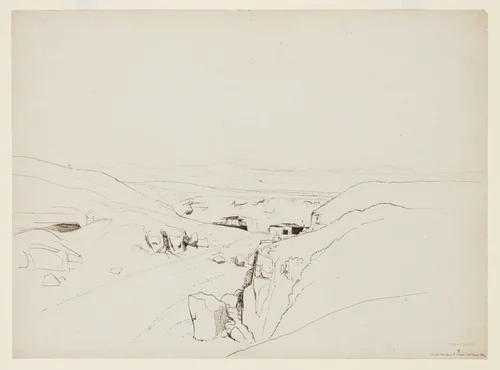
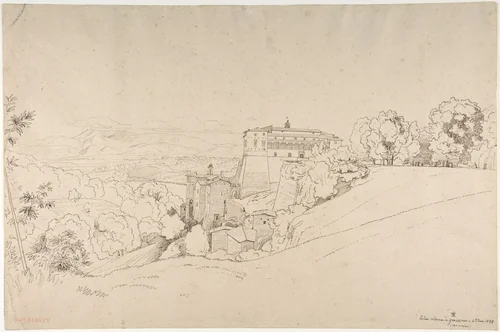
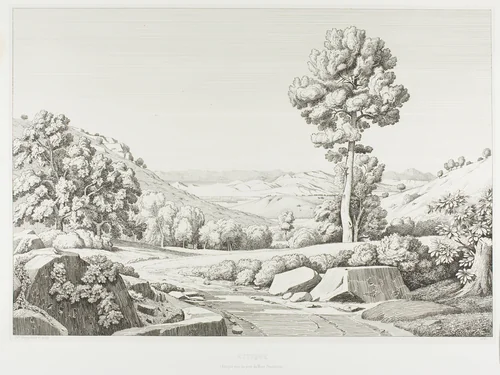
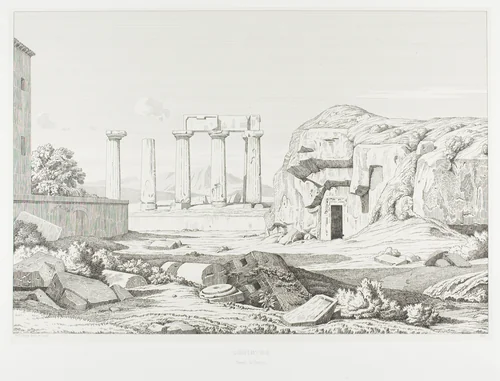
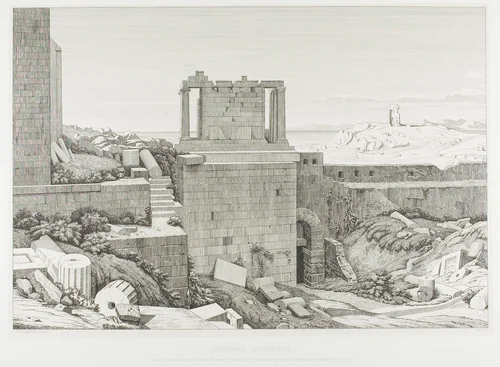
This approach is evident in works such as View of the Serpentara Between Olivano and Civitella and the strikingly formal View of the Quarries at Cervara. One might observe that he viewed every excavated ruin and rustic village, like Castello Colonna at Genazzano, Italy, not as picturesque decay, but as a ready-made classical stage. His dedication to capturing structural elements and precise observation of the relationship between light and terrain, evident even in his detailed documentation of distant locations like Attica Viewed from Mount Pentéli, ensured his influence extended throughout the emerging landscape movement.
Aligny’s contribution is preserved in major international collections, including the Metropolitan Museum of Art and the Art Institute of Chicago, confirming the lasting significance and museum-quality nature of his work. Furthermore, the accessibility of Théodore Caruelle d' Aligny prints and drawings in the public domain ensures that scholars and collectors alike can study these seminal preparatory pieces, often available as high-quality downloadable artwork.
Source: Wikipedia · CC BY-SA 4.0