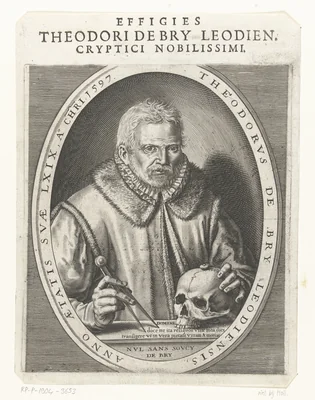
Theodor de Bry
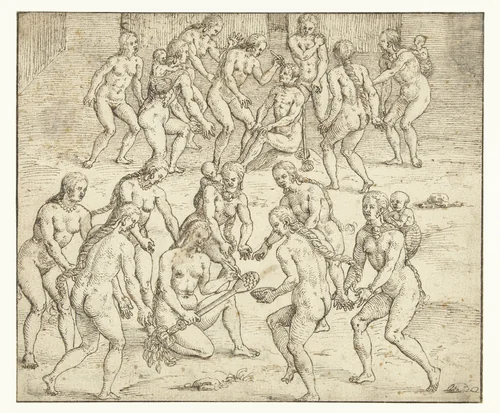
Theodor de Bry (1528-1598) holds a singular and crucial place in the history of early modern printmaking, primarily renowned as the editor and engraver whose ambitious publishing enterprise first provided a broad European audience with visual representations of the Americas. A native Walloon, de Bry was a versatile artisan, mastering the complex roles of goldsmith, master engraver, and entrepreneurial publisher. His fame rests upon his systematic efforts to compile, translate, and illustrate the nascent narratives of European expeditions and colonial encounters, effectively becoming the visual chronicler of the Age of Exploration.
De Bry’s prodigious career was fundamentally shaped by the religious upheavals of the sixteenth century. As a Protestant operating within the Spanish-controlled Southern Netherlands, he was compelled by the force of the Inquisition to seek refuge elsewhere. This exile necessitated a life defined by movement, beginning in his birthplace of Liège (then the Prince-Bishopric of Liège) and progressing through Strasbourg, Antwerp, and London, before he ultimately established his permanent base of operation in Frankfurt. This itinerancy proved critical, allowing de Bry to cultivate an extensive, cross-continental publishing network essential for distributing his massive projects. It is perhaps ironic that an artist compelled to flee political oppression became the central figure documenting the world's burgeoning empires.
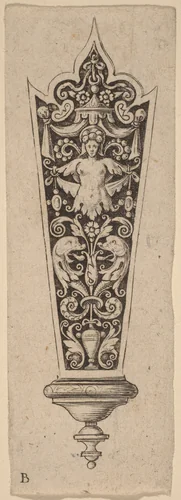
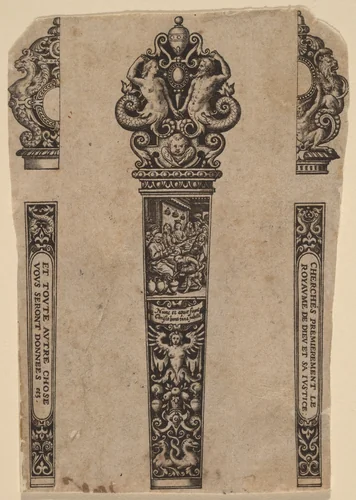
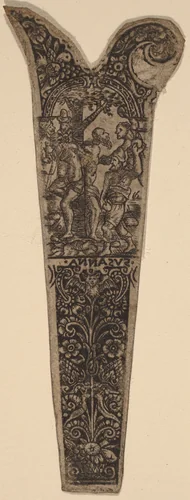
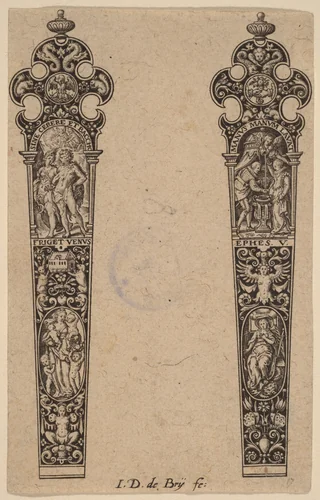
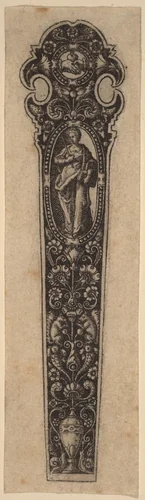
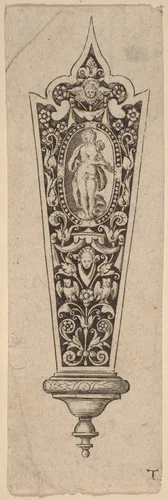
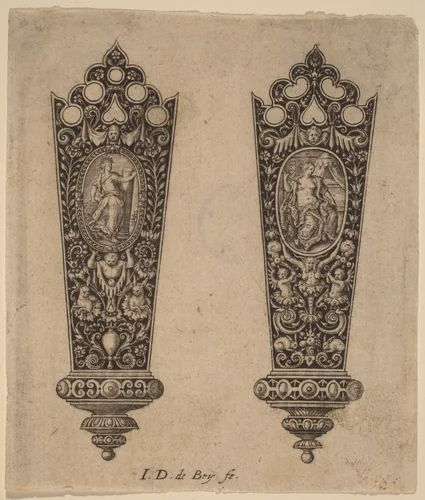
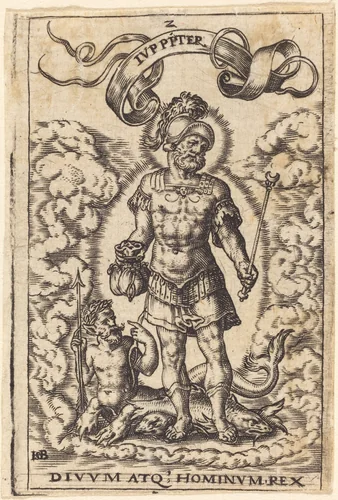
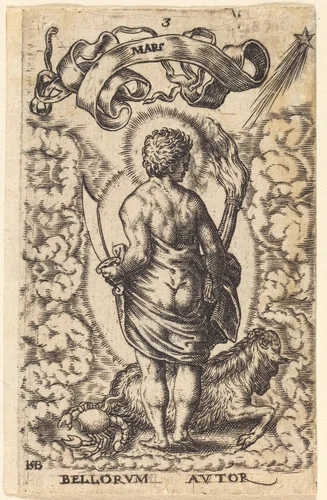
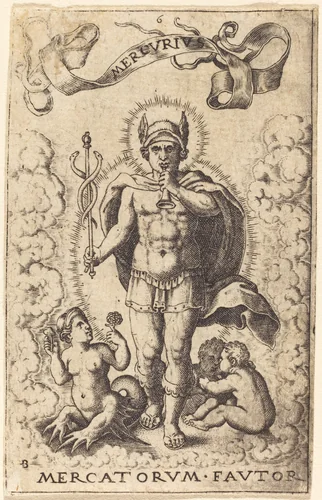
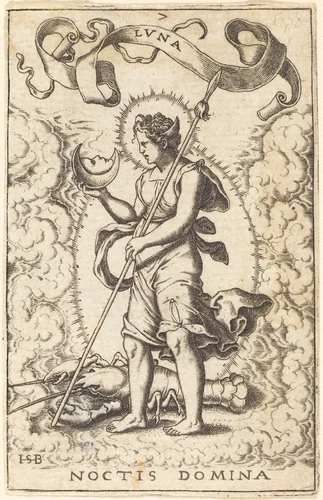
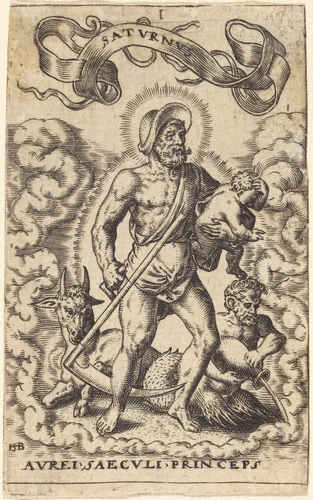
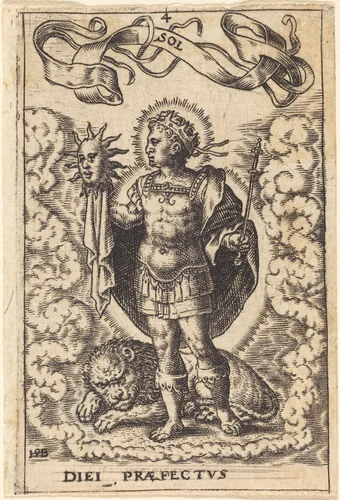
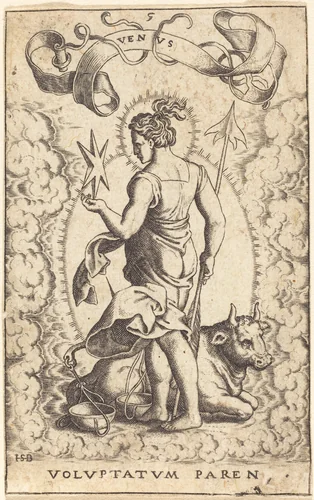
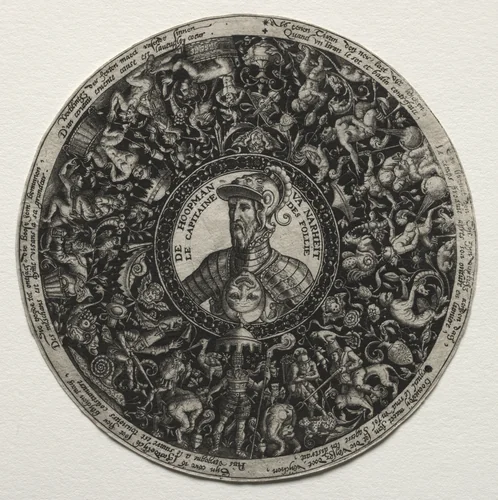
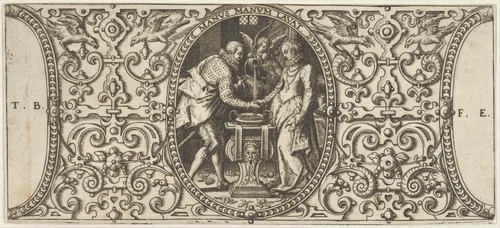
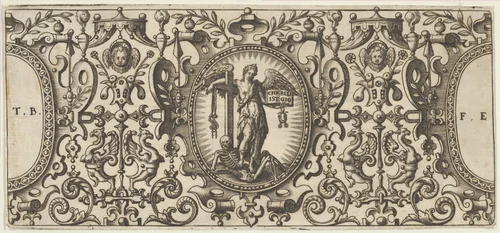
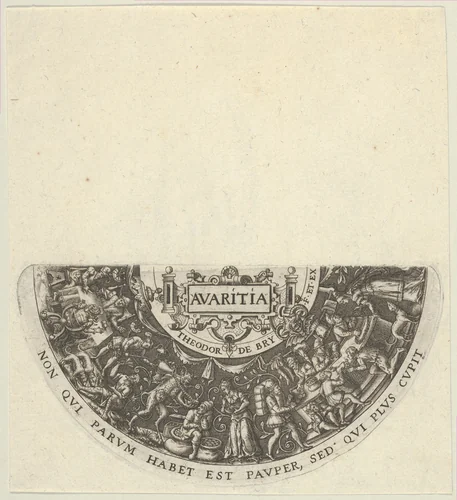
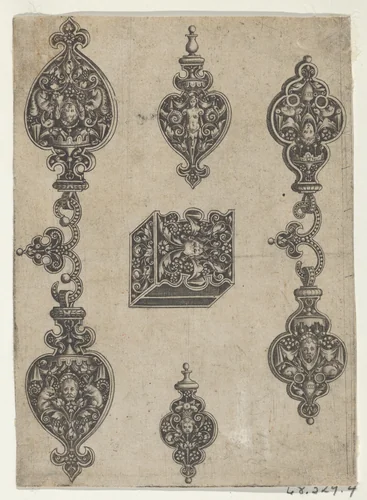
Beyond his monumental editorial series, such as The Great Voyages, de Bry demonstrated sophisticated skill as a decorative artist, rooted in his background as a goldsmith. His facility with the burin is evident in his intricate, detailed ornamental designs, often used for jewelry or architectural motifs. Works preserved in collections, such as the fifteen individual prints held by the National Gallery of Art, attest to the high standard and museum-quality of his engraving technique. Though often focused on small, reproducible elements like the Jewelry Ornament series, their technical precision underscores the high standard of craftsmanship he maintained across his entire output.
The wide dissemination of his visual records makes Theodor de Bry prints indispensable to the study of sixteenth-century exploration. His compelling, albeit often biased, imagery laid the foundation for Europe’s understanding of the New World. Today, historians and enthusiasts benefit from the fact that much of his output is recognized as public domain, allowing for free art prints and widespread accessibility to this foundational body of downloadable artwork.
Source: Wikipedia · CC BY-SA 4.0