The input text does not contain an artist's name.
The body of textile work produced during the extensive period of 1701 through 1776 represents a significant contribution to 18th-century fabric design. This seventy-five year span of documented activity suggests the sustained output of a major workshop or atelier specializing in decorative and dress materials, rather than the lifetime of a single individual. The known examples focus specifically on high-quality woven and painted applications intended for furnishings and period costume.
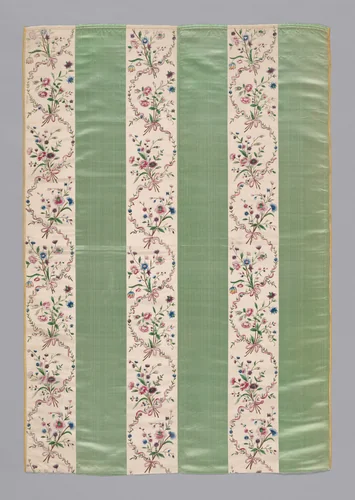
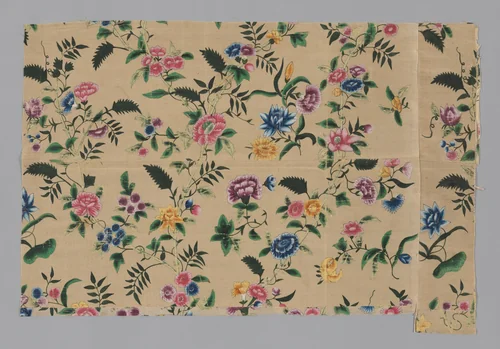
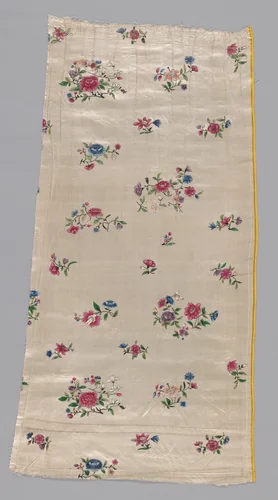
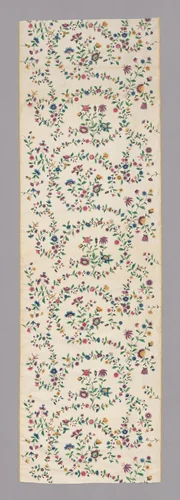
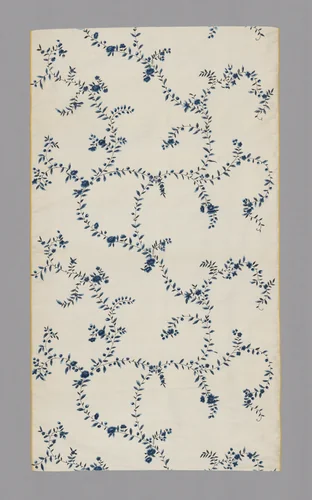
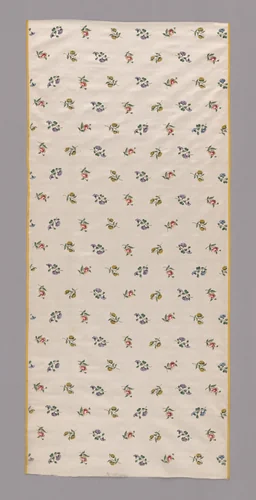
Six definitive examples of this artistic production are preserved in major American institutions, establishing the historical and technical importance of the studio’s output. The Art Institute of Chicago holds these textiles, which include diverse forms such as the general Panel, the technically specific Painted Silk, and pieces designed for clothing, noted as Panel (Dress Fabric) and Panel from a Skirt. These works demonstrate mastery of the scale and material treatments necessary for the production of museum-quality textiles used in high-end 18th-century fashion.
Although individual attribution remains absent, the extensive documentation of these pieces allows researchers to study early methods of fabric production and decorative application. The works held in museum collections provide essential insight into the standards of textile artistry during this long period of sustained output. Today, high-quality prints and photographic documentation of these historical fabric designs are often available to scholars, ensuring that the legacy of this 18th-century production remains accessible for continued study.