Telemaco Signorini
Telemaco Signorini (1835-1901) was a pivotal figure in the development of 19th-century Italian modernism, recognized primarily as a co-founder and leading theorist of the Macchiaioli. This group, based in Florence from the 1850s, sought to dismantle the stifling traditions of academic art by focusing intensely on the immediate rendering of light, color, and shadow, achieved through broad, vigorous 'patches' (macchie) of paint. Signorini was instrumental in formulating the group’s radical aesthetic principles, often functioning as the movement’s intellectual standard-bearer and most astute critic.
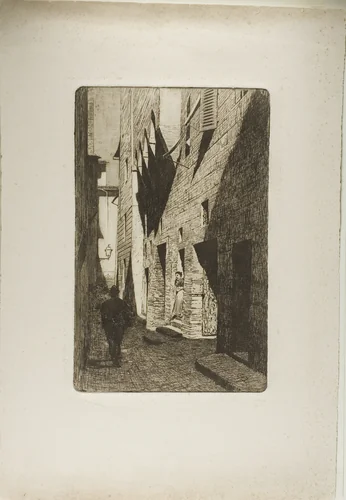
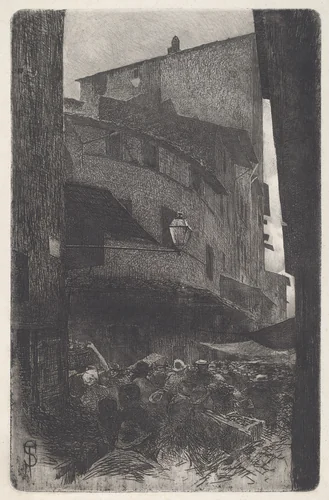
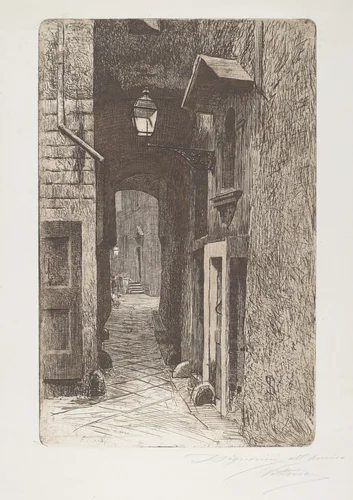
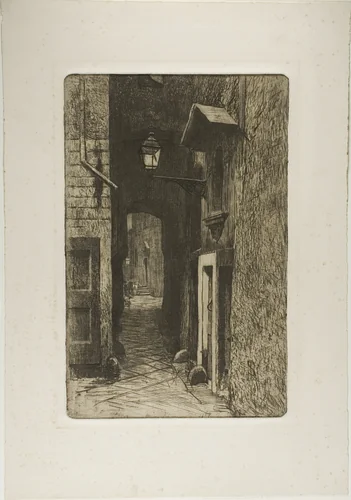
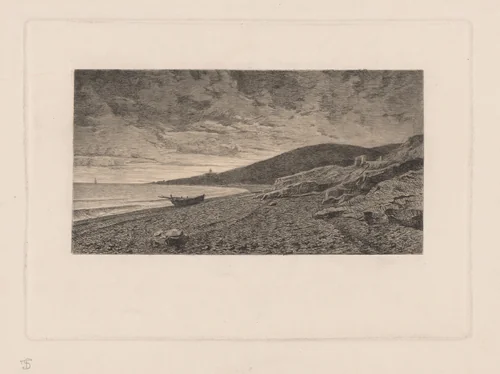
While celebrated for his intense, luminous oil studies, Signorini also produced a significant body of graphic work, specifically etchings, during the height of his career. These prints, active between 1870 and 1886, provide a crucial counterpoint to his painting, employing linear clarity and stark tonal contrasts to translate the Macchiaioli’s focus on light into monochrome form. This dedication to direct observation is evident in subjects ranging from the rugged coastline shown in The Coast of Elba to the intimate architectural studies found in Casa di Dante da Castiglione and Santa Maria della Tromba.
Signorini was a ruthless observer of place, often depicting the intense, unvarnished daily life of Italian villages and military barracks rather than the idyllic country scenes favored by some of his contemporaries. His prints, such as A Pistoia [In Pistoia], capture the profound effects of natural light on aging stone structures and ancient urban spaces with a remarkable sense of atmosphere.
The continued scholarly interest in his work is underscored by the presence of his graphic arts in prestigious international collections, including the Art Institute of Chicago and the National Gallery of Art. While original Telemaco Signorini paintings are held exclusively in major institutions, confirming the lasting historical value of his contributions, many of his key graphic works are now in the public domain, making high-quality prints and downloadable artwork widely accessible for critical study and appreciation.
Source: Wikipedia · CC BY-SA 4.0
![A Pistoia [In Pistoia] by Telemaco Signorini, print, 1872](https://img.artbee.org/51e6aba7-545d-4eae-9434-52c11decfd78/small.webp)
![House of Dante da Castiglione [Casa di Dante da Castiglione] by Telemaco Signorini, print, 1878-1888](https://img.artbee.org/ce042d78-35d0-4ebf-a0fb-bae178496889/small.webp)