Tako Hajo Jelgersma
Tako Hajo Jelgersma (active 1712-1741) occupies a significant, if narrowly focused, place within 18th-century Dutch art. Emerging in the decades following the Dutch Golden Age, his practice centered primarily on the meticulous art of drawn portraiture. While his documented output is relatively small, the preservation of his works, notably six drawings held in the permanent collection of the Rijksmuseum, solidifies the museum-quality standard of his artistic achievements.
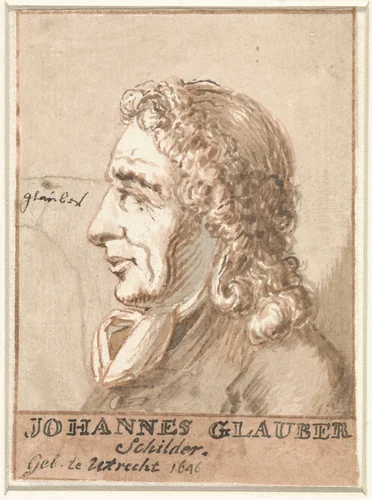
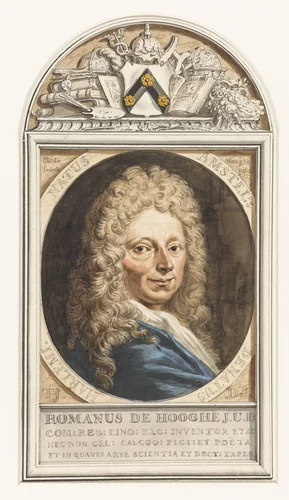
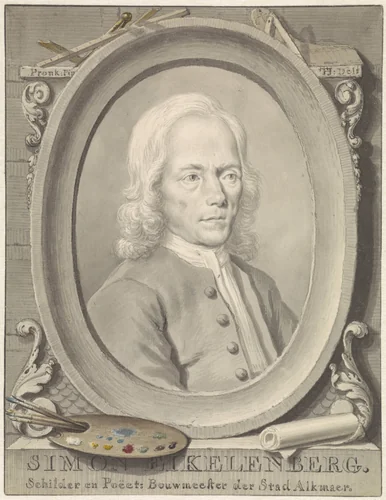
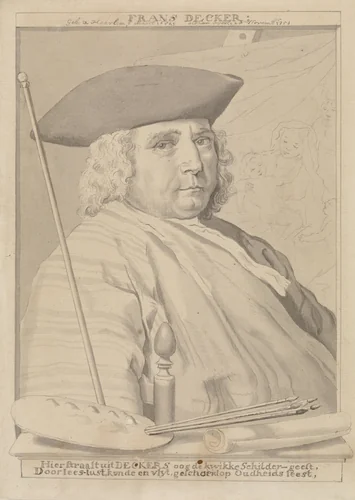
Jelgersma’s professional period reflects an era where artistic patronage often prioritized intimate studies and documentation over grand historical narratives. His surviving body of work demonstrates a consistent dedication to clarity of character and observational precision, particularly in capturing the likenesses of contemporary figures, many of whom were intellectuals, writers, or fellow artists. Portraits such as Portret van Johannes Glauber and Portret van Romeyn de Hooghe are rendered with sharp, economical line work, etching the sitter’s presence onto the page and providing valuable records of influential figures active during the early Dutch Enlightenment.
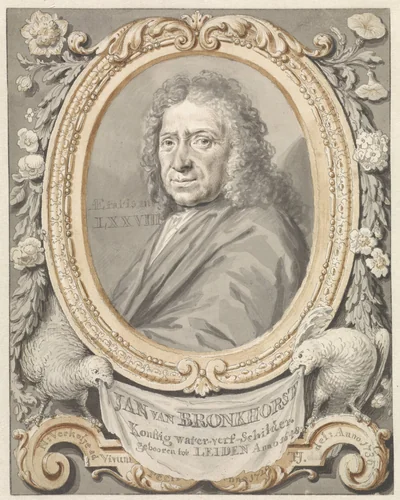
The collection, however, reveals a specific deviation from this severe formalism. The highly decorative Portret van Johannes (Jan) van Bronkhorst in omlijsting met bloemen en twee vogels offers a charming insight into the period’s decorative interests. Here, the traditional head-and-shoulders study is framed by an elaborate assemblage of flowers and avian motifs, suggesting Jelgersma was attuned not only to the face of the sitter but also to the lighter, Rococo-inflected tastes emerging across Europe. This attention to presentation, not just likeness, elevates the drawing from simple documentation to a sophisticated piece of visual design.
Although the scarcity of verifiable Tako Hajo Jelgersma paintings places greater emphasis on his graphic work, his drawn portraits remain essential documents of the time. Because many of these detailed studies now reside in the public domain, their images are frequently accessed and reproduced globally. Enthusiasts can readily download high-quality prints, ensuring that Jelgersma’s careful observations continue to circulate and inform our understanding of early 18th-century Dutch portraiture well beyond institutional walls.
Source: Wikipedia · CC BY-SA 4.0