Taddeo Zuccaro
Taddeo Zuccaro (1529-1566) stands as a pivotal figure in the evolution of Italian art, defining the character and ambition of Roman Mannerism during the mid-sixteenth century. A painter of extraordinary facility and commercial popularity, he quickly ascended to become the leading chronicler of papal and aristocratic life in Rome following the deaths of Raphael and Michelangelo. His work is characterized by dramatic narrative scale, an intense focus on anatomical dynamism, and the sophisticated complexity required by his powerful patrons, making him essential viewing for understanding the prevailing aesthetic of the period.
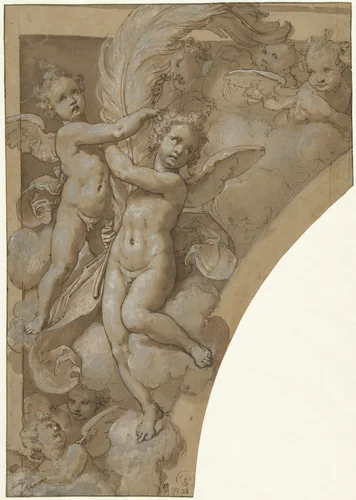
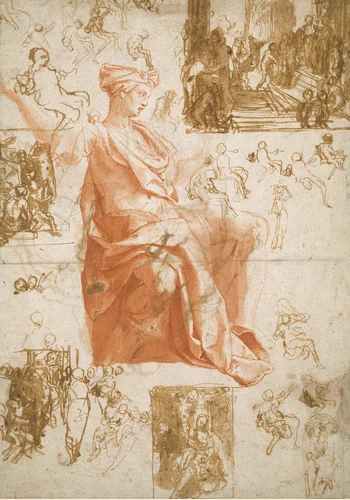
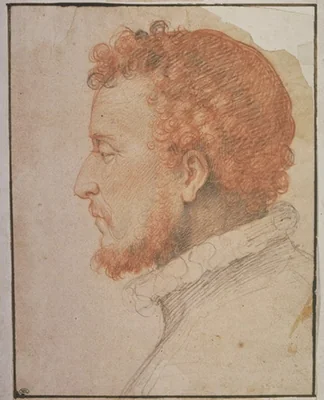
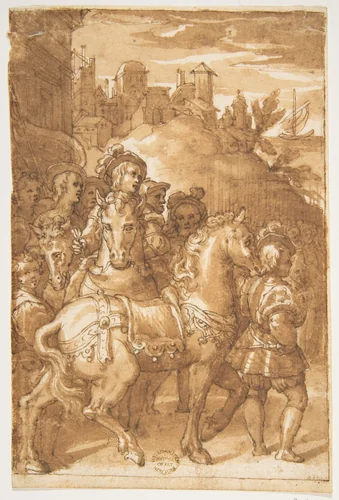
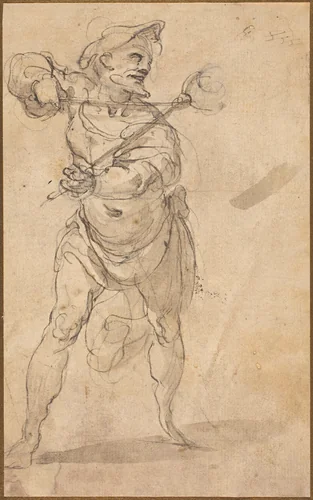
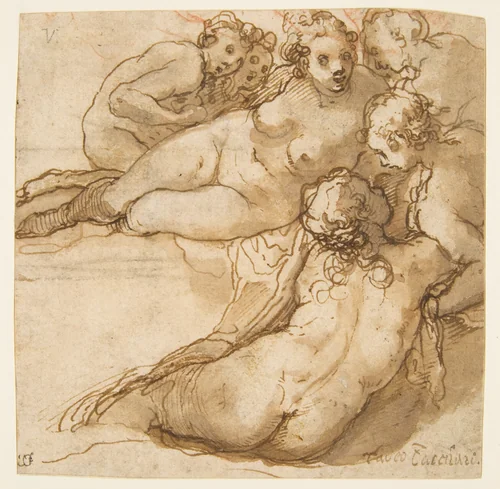
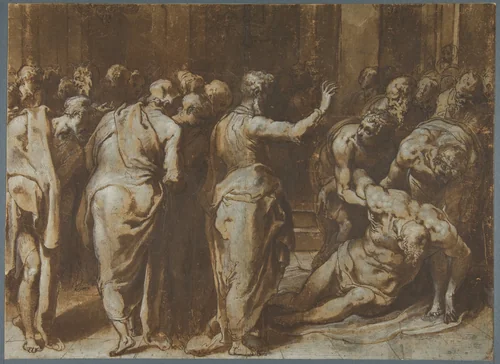
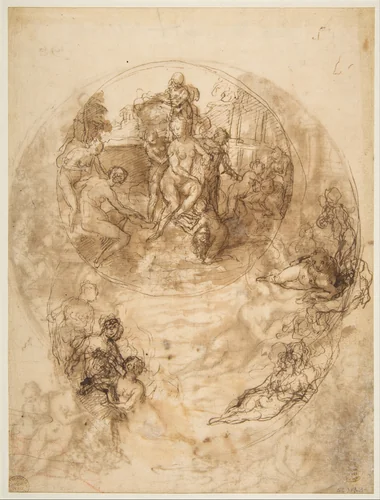
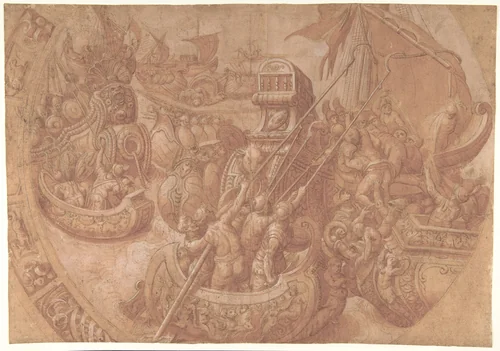
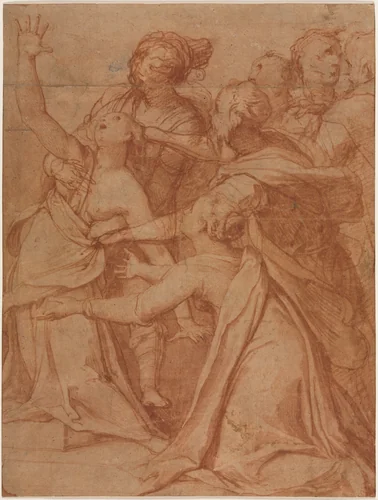
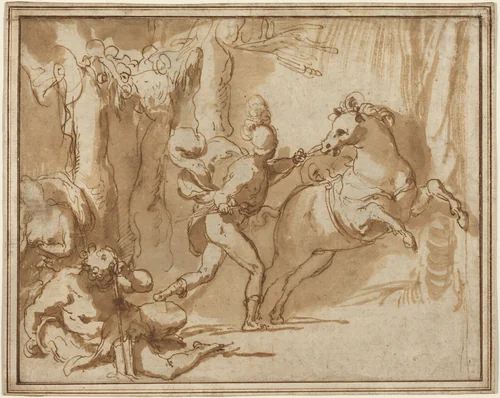
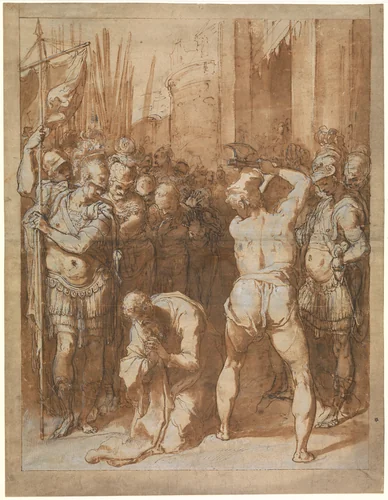
While Zuccaro’s contemporary fame rested upon monumental fresco cycles, it is through his extensive body of preparatory drawings that his artistic ingenuity is most clearly observed. These sheets reveal the speed, confidence, and sheer invention of a true master draughtsman. Studies like A Tormentor With Tongs display the high dramatic tension required for religious scenes, while the elaborate organization necessary for his public commissions is evident in the Study for the Armistice between King Francis I of France and Emperor Charles V, a piece planning the vast decorations at the Palazzo Farnese in Caprarola. Yet, amidst these grand historical and political compositions, Zuccaro maintained a distinct, almost playful command over allegorical and mythological subjects, such as Group of Six Reclining Nude Women (Nymphs Bathing), demonstrating his versatility across the entire Mannerist spectrum.
The sheer volume and ambition of his output secured Zuccaro’s legacy, establishing a stylistic lineage that profoundly influenced subsequent generations of Roman artists. His works, encompassing both Taddeo Zuccaro paintings and scores of highly finished drawings, are preserved in prestigious international collections, including the Cleveland Museum of Art, the Art Institute of Chicago, and the Metropolitan Museum of Art. Due to the historical age and institutional provenance of this material, many preparatory sheets and sketches are now available as downloadable artwork, allowing scholars unprecedented access to high-quality prints for meticulous research into his process. This broad accessibility ensures Zuccaro’s continued study as a foundational contributor to the visual culture of the Italian Renaissance.
Source: Wikipedia · CC BY-SA 4.0
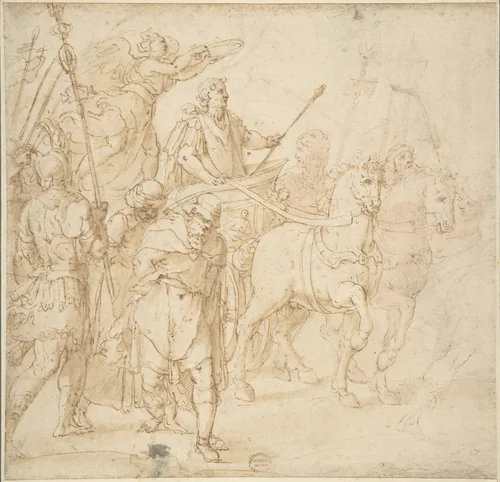
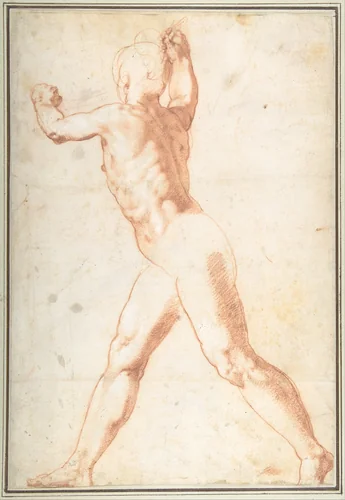
![A Man Seen from Behind [recto] by Taddeo Zuccaro, drawing, 1555](https://img.artbee.org/13249bd8-87dc-41f4-8da2-c6efc02863c6/small.webp)
![A Man Seen from Behind [verso] by Taddeo Zuccaro, drawing, 1555](https://img.artbee.org/e53b36b8-b7ba-4d8f-a41b-7b298a92d654/small.webp)