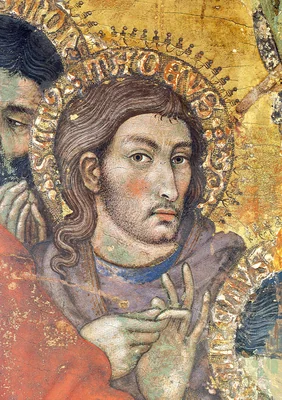
Taddeo di Bartolo
Taddeo di Bartolo, sometimes documented as Taddeo Bartoli, was a significant master of the Sienese School, contributing directly to the evolving visual language of the early Renaissance in Italy. Active across the close of the fourteenth and the beginning of the fifteenth century (c. 1394-1401), his meticulous production embodies the deep devotional sensibilities and inherent sophistication that characterized Sienese painting traditions. Though often obscured by the monumental output of his predecessors, Taddeo’s work remains internationally distributed, with notable examples residing in the Metropolitan Museum of Art and the Art Institute of Chicago.
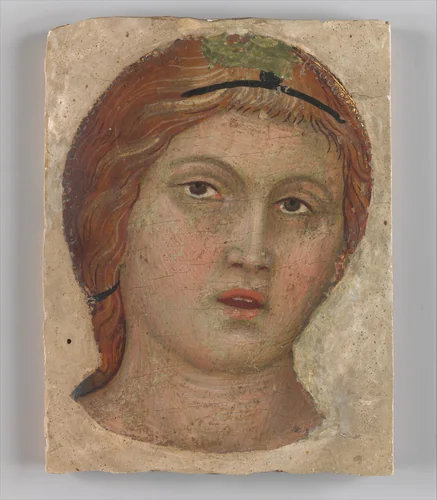
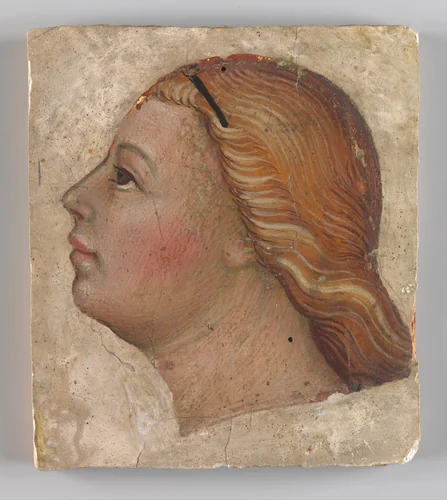
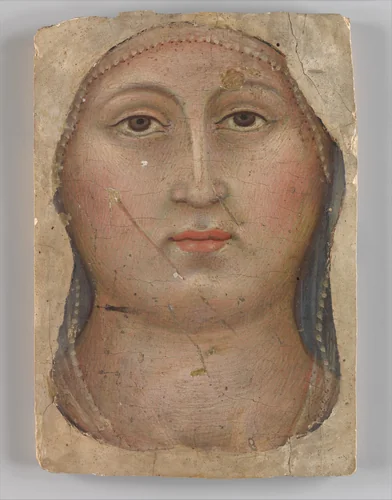
Taddeo’s surviving oeuvre primarily consists of highly detailed panel fragments, suggesting that much of his known output derives from larger, ambitious altarpieces dismembered over the centuries. Works such as Head of the Virgin, Head of an Angel in Full Face, and Head of an Angel in Left Profile demonstrate the artist’s characteristic refinement in rendering idealized, sacred forms. These fragments reveal a precise mastery of line, color, and gilding—techniques utilized to maximize spiritual resonance and craft museum-quality details within the figures.
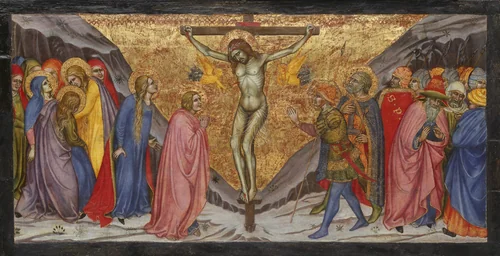
Other documented Taddeo di Bartolo paintings, including the multi-figure compositions Christ and the Twelve Apostles and The Crucifixion, confirm his dedication to executing traditional narrative themes with careful, systematic craftsmanship. While his style remained firmly rooted in the Sienese Gothic tradition, it also subtly anticipated the increased naturalism that would soon define the quattrocento.
Taddeo’s historical legacy is closely tied to the pioneering efforts of Renaissance art history, particularly the writings of Giorgio Vasari. The artist’s biography appears in Vasari’s seminal 1550 collection, Lives of the Most Excellent Painters, Sculptors, and Architects (Vite). While providing essential primary documentation, Vasari’s account included a slight familial aside, claiming Taddeo was the uncle of the younger Sienese painter Domenico di Bartolo—a relationship modern scholars generally view with skepticism. This minor historical confusion only highlights the difficulty inherent in tracing artistic lineages across the late Middle Ages. Fortunately, the enduring technical brilliance of Taddeo’s panels ensures his permanent significance. Many of these important historical images are now entering the public domain, making high-quality prints accessible for global scholarly examination and public appreciation.
Source: Wikipedia · CC BY-SA 4.0