Sugimura Jihei
Sugimura Jihei occupies a foundational position in the history of Japanese art, flourishing primarily during the transitional period of ukiyo-e printmaking, approximately 1681 to 1703. Active in the early Edo period, a time when the "floating world" aesthetic was rapidly crystallizing, Sugimura was instrumental in defining the technical and thematic conventions of the genre. His work, consisting primarily of single-sheet prints, pioneered the use of the woodblock medium for subjects of daily life and popular culture, shifting ukiyo-e away from exclusive reliance on hand-painted scrolls.
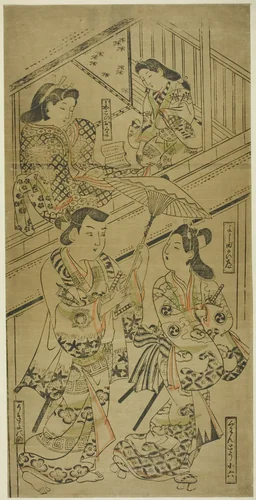
Jihei’s surviving oeuvre, characterized by bold, robust lines and sophisticated compositions, provides critical insight into the aesthetics of the late seventeenth century. While early ukiyo-e often relied on simple sumizuri-e (black ink prints), Sugimura’s works often featured delicate hand-coloring, lending a vibrant immediacy to his figures. He mastered both bijinga (pictures of beautiful women) and intimate genre scenes, capturing the fashionable social movements and domestic realities of the capital.
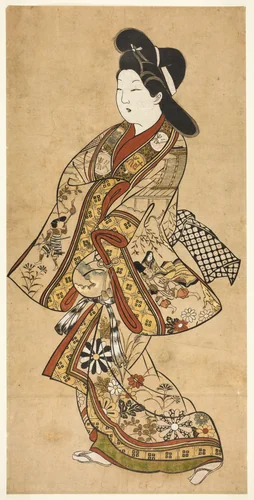
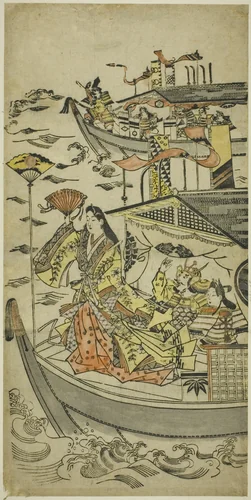
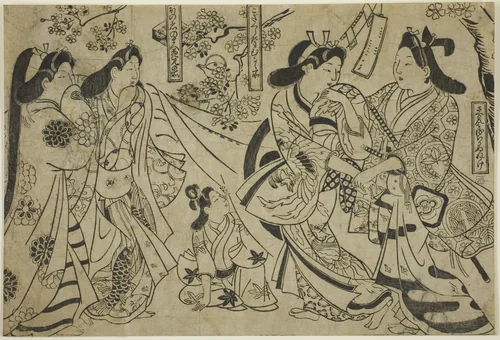
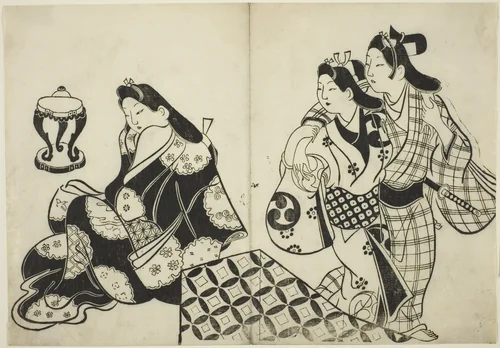
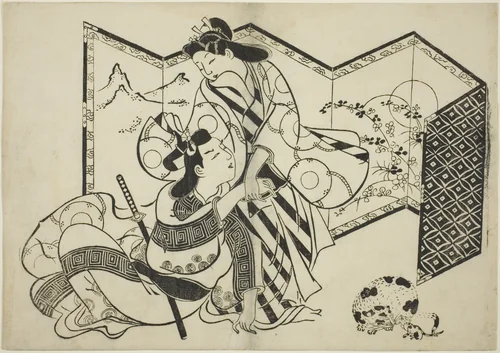
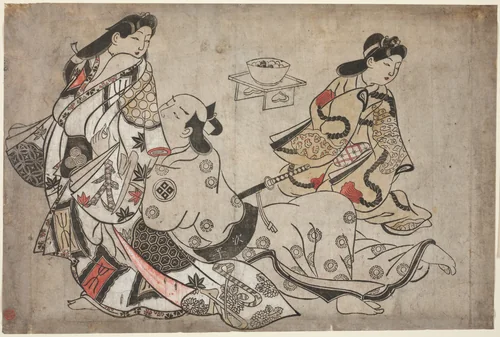
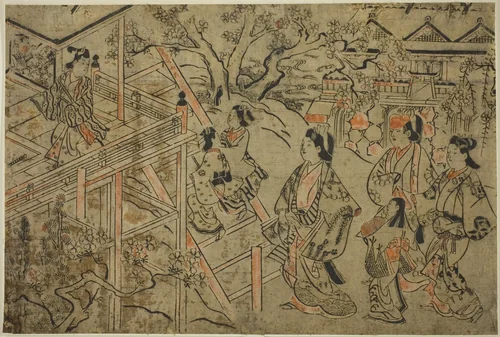
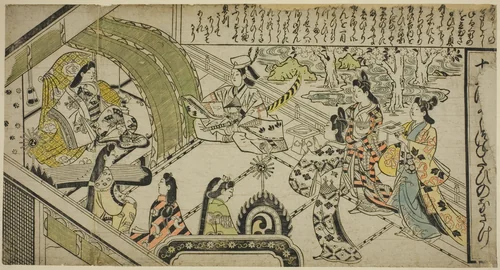
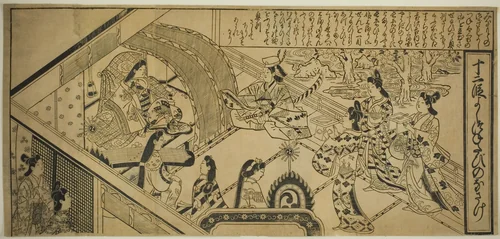
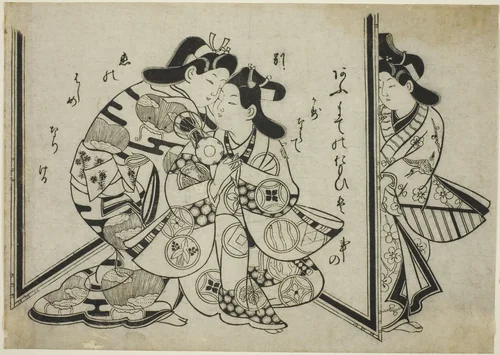
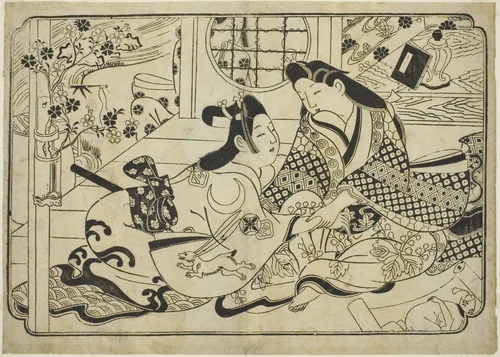
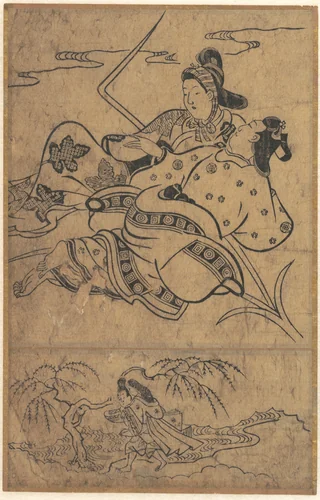
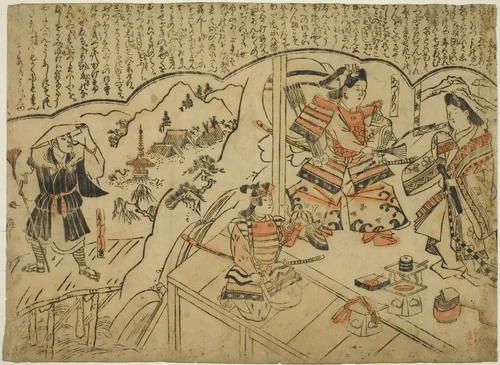
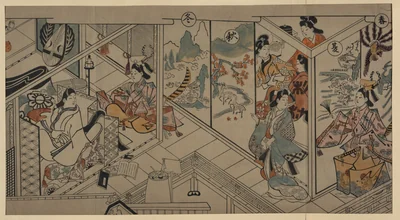
Thematically, his work explores the dynamism of human relationships and the subtle drama of everyday encounters. His technical proficiency is evident in compositions like A Beauty Walking, which focuses on movement and drapery, and the engaging narrative of Lady Tamamushi raising a fan target. Other noteworthy Sugimura Jihei prints delve into intimate domestic settings, often with a playful, erotic undercurrent. The complexities of attraction and intrigue are perfectly encapsulated in Flirtation under the Cherry Tree and Lovers Leaving a Room. A particularly charming detail is found in Lovers, a Cat, and a Mouse in front of a Folding Screen, where the high drama of human intimacy unfolds alongside a minor domestic chase, perhaps a subtle commentary on the fleeting nature of desire and pursuit.
The scarcity and quality of his work ensure that he remains highly revered. These museum-quality works are housed in prestigious international collections, including the Metropolitan Museum of Art and the Art Institute of Chicago, confirming his enduring historical importance. As an early master, Sugimura Jihei’s legacy endures, and many of his significant contributions to printmaking are now available in the public domain for study and appreciation, offering clear access to the origins of this uniquely Japanese artistic tradition.
Source: Wikipedia · CC BY-SA 4.0