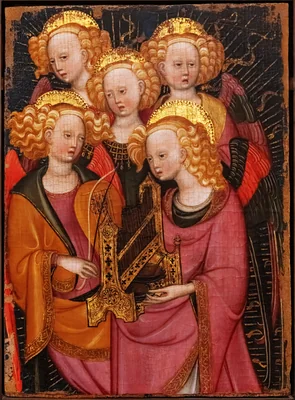
Stefano da Verona
Stefano da Verona (c. 1370-1436) stands as a foundational master of the early 15th century Veronese school, distinguishing himself as a pivotal figure operating within the highly decorative and sophisticated vocabulary of the late Gothic period. His active career, stretching from approximately 1370 to his death, cemented his reputation in Northern Italy as a painter and, perhaps more significantly, a superb draftsman.
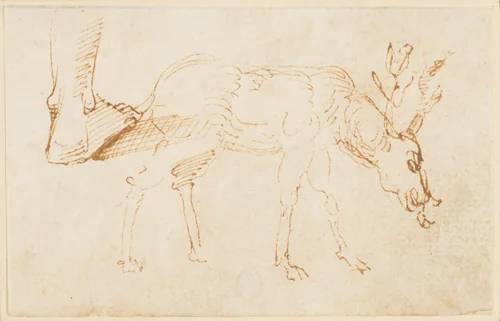
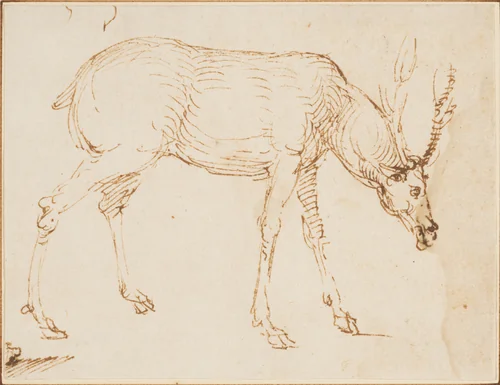
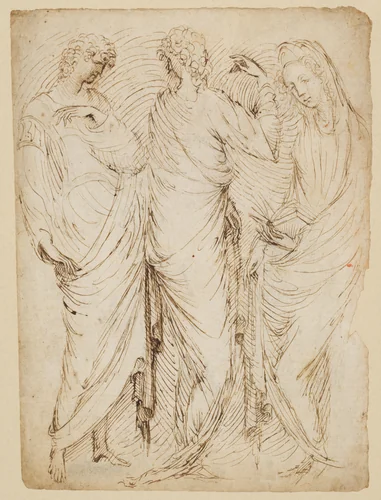
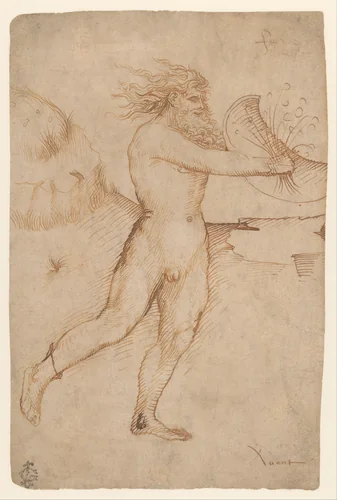
While many of his contemporaries are known for monumental fresco cycles or grand altarpieces, Stefano’s surviving corpus points toward a crucial focus on graphic preparation and the intimacy of line. The scarcity of major Stefano da Verona paintings, contrasted with the survival of eight meticulous drawings and one manuscript illumination, underscores the importance of his graphic work in understanding the era's artistic transition. His precise application of pen and ink reveals an artist intensely dedicated to capturing distinct physiognomy and narrative detail, characteristics that prefigure elements of the burgeoning Renaissance style.
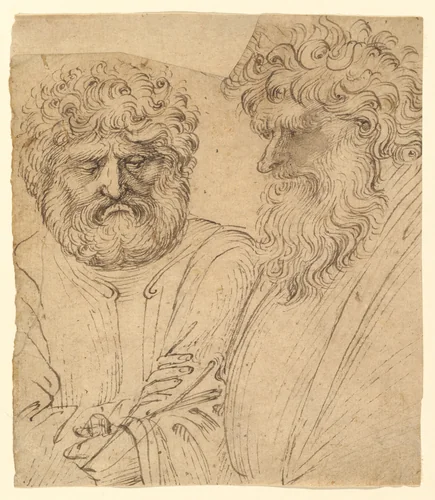
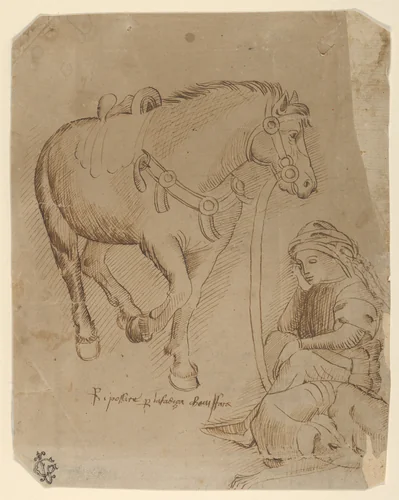
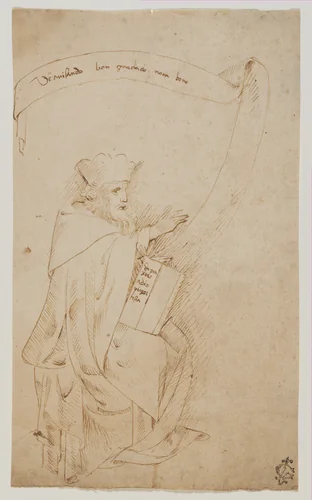
Stefano’s drawings reveal a fascinating range of subjects. Studies such as Two Heavily Bearded Men demonstrate a technical skill capable of rendering the weight of expression and texture, while the narrative drawing A Man Asleep Alongside a Dog and a Horse offers an intimate, almost anecdotal glimpse into late medieval domestic life. This ability to pivot smoothly between the intensely pious and the subtly observational suggests an artist who kept one eye on the spiritual demands of his patrons and the other firmly on the palpable reality of the street.
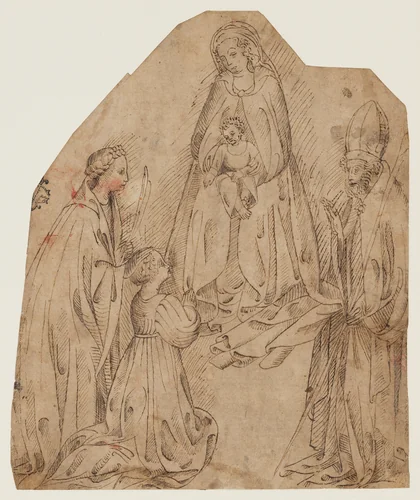
His major surviving painted work, The Madonna and Child with a Female Martyr Saint, a Bishop Saint, and a Female Donor, showcases his command of complex religious iconography and rich coloration typical of the refined International Style prevalent across Europe during his lifetime. This painting, alongside other surviving works, confirms that Stefano excelled at blending ornamental grace with clear volumetric construction.
Stefano da Verona’s enduring significance is evidenced by the preservation of his delicate, museum-quality works in leading global collections, including the Metropolitan Museum of Art and the Cleveland Museum of Art. For scholars studying the origins of drawing in the Italian tradition, these works are invaluable resources. Today, much of the documented Stefano da Verona prints and studies, now considered public domain, are widely available as high-quality prints, ensuring that his legacy as a master draftsman continues to be scrutinized and appreciated by a modern audience.
Source: Wikipedia · CC BY-SA 4.0
![Initial M[issus est] Excised from an Antiphonary: The Annunciation by Stefano da Verona, manuscript, 1430-1438](https://img.artbee.org/708aa421-c6db-4c0d-8d09-0b9b1409eed5/small.webp)