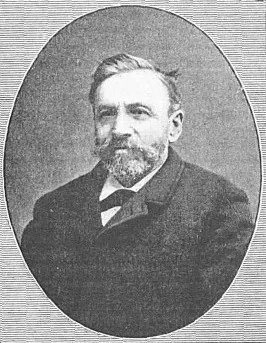
Stanislas Lépine
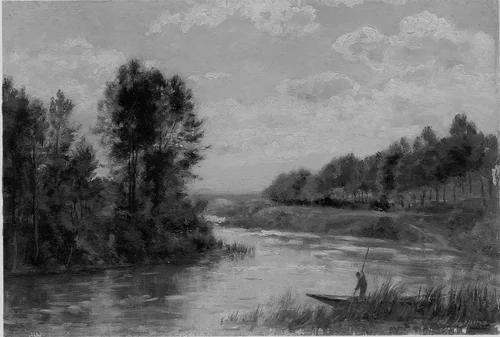
Stanislas Victor Edouard Lépine (1835-1892) was a pivotal French painter whose career, primarily active between 1862 and 1880, established him as a master of atmospheric landscape. Known almost exclusively for his evocative studies of light and water, Lépine dedicated his practice to rendering the subtle interplay of nature across French scenery. His lasting significance is affirmed by the consistent inclusion of his work in esteemed American collections, including the Art Institute of Chicago and the National Gallery of Art.
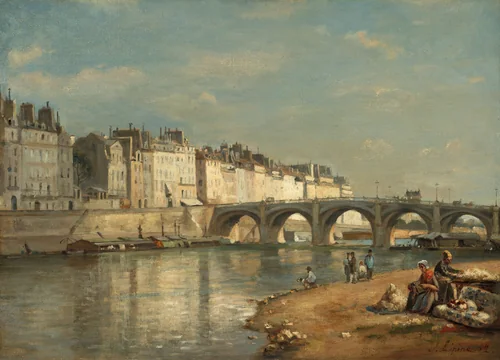
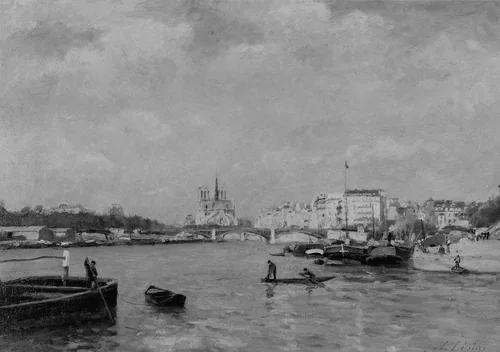
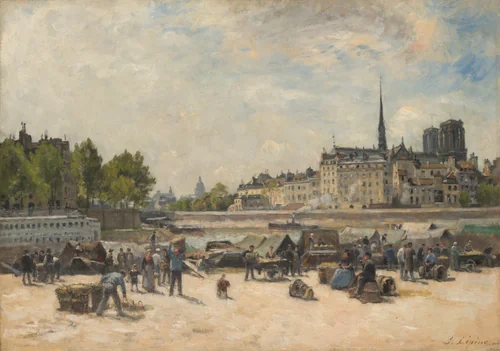
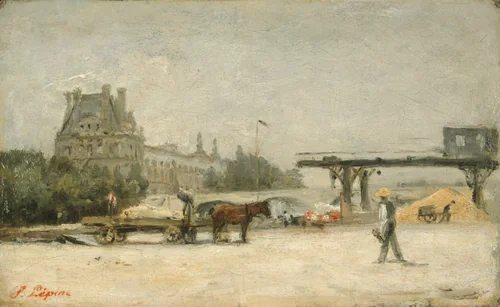
Lépine’s signature motif was the topography of the Seine River. Unlike the broad, energized urban panoramas favored by many of his contemporaries, Lépine often captured intimate, quiet moments along the riverbanks and quays of Paris. Works like Pont de la Tournelle, Paris and View on the Seine, Paris exemplify his measured approach to composition. His technique involved a delicate, silvery palette and soft brushwork that prioritized mood and atmosphere over highly defined detail. While chronologically placed during the height of early Impressionism, Lépine maintained a quieter, more classical structure, preferring tranquil scenes over the energetic modernism of the boulevards.
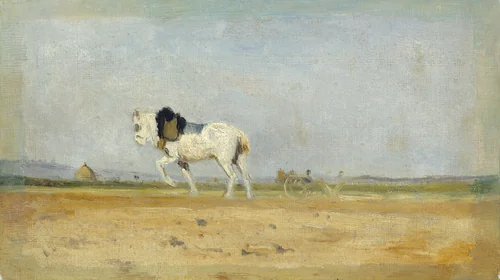
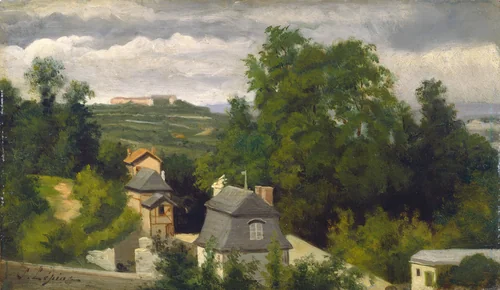
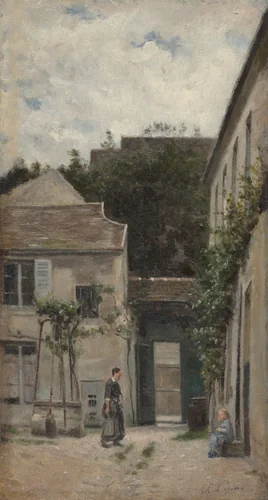
Although Paris remained central, Lépine’s exploration extended to rural subjects beyond the capital’s environs, capturing the texture of provincial life in works like View on the Outskirts of Caen and the robustly painted A Plow Horse in a Field. It is an interesting observation that Lépine, despite operating in the heart of the Parisian avant-garde during the 1870s, remained largely aloof from the intense stylistic debates that defined the Salons and early Impressionist exhibitions. His professional identity was characterized by a persistent, unassuming focus on the technical craft of landscape painting.
Lépine produced a focused body of work that continues to appeal for its elegant execution and profound sense of stillness. Today, many fine examples of Stanislas Lépine paintings are held in global institutions, offering historians a unique view of late 19th-century French scenery. Through increasing accessibility via digital archives, much of his original oeuvre is now in the public domain, ensuring high-quality prints and downloadable artwork remain readily available for study and appreciation.
Source: Wikipedia · CC BY-SA 4.0