Stanford White
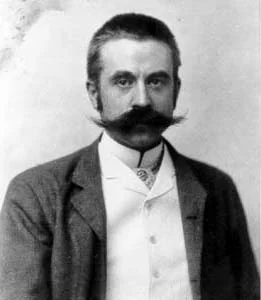
Stanford White (1853-1906) was among the most consequential American architects of the late nineteenth century, principally recognized as a pivotal partner in McKim, Mead & White. This influential firm became the preeminent champion of the Beaux-Arts style in the United States, defining the aesthetic of the "American Renaissance" period. White’s mastery of classical proportion and monumental scale shaped the look of institutional buildings and established the architectural benchmark for the Gilded Age elite.
His active career spanned nearly five decades, during which he excelled in versatility, designing numerous religious, civic, and institutional structures alongside sophisticated private residences. White’s architectural philosophy was characterized by a sophisticated understanding of historical precedent blended seamlessly with the practical demands of the modern urban environment. A celebrated early example of his ability to elevate a temporary design into a permanent urban icon is the Washington Square Arch in New York City. Initially conceived as a short-term structure, its overwhelming popularity immediately led to the commission for White to execute the enduring version in marble.
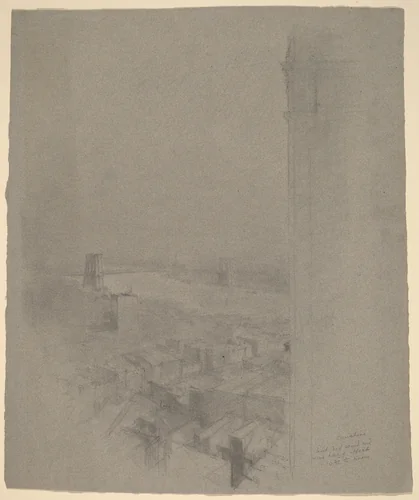
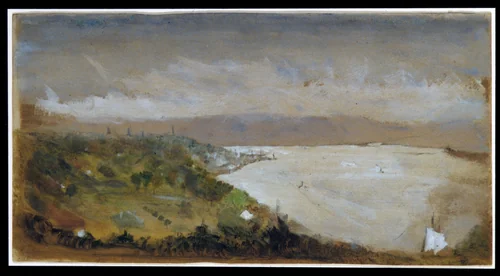
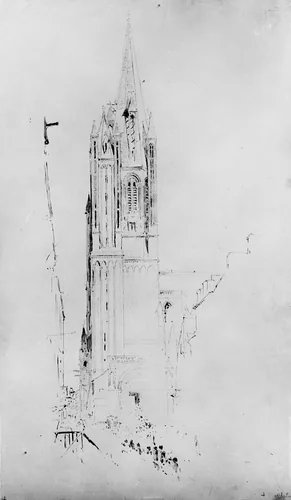
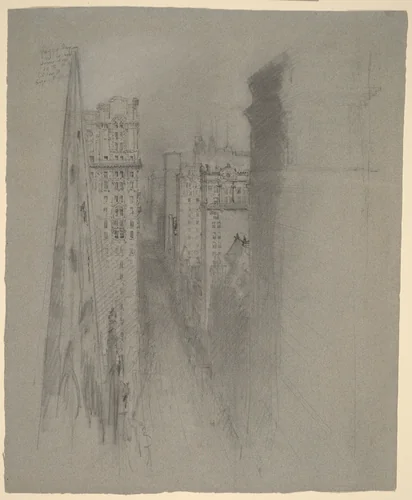
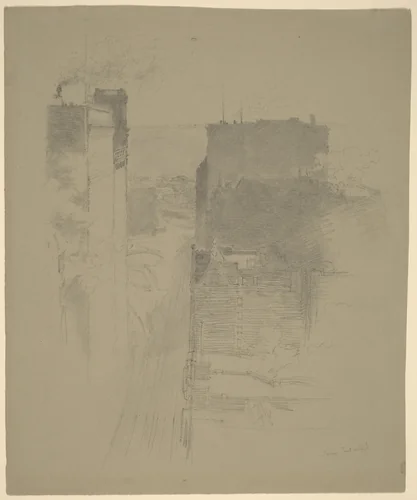
White's skills as a draftsman are evidenced today by his surviving drawings and sketches held in major museum collections. These works on paper offer a private glimpse into his formal interests, revealing an architect keenly attuned to both monumental scale and intimate detail. His sketches range widely, documenting European architectural studies, such as Coutances Cathedral, alongside evocative American scenes like the Blue Ridge Mountains and technical preparatory drawings, including studies for the Manhattan Bridge.
While primarily known for his large-scale public buildings, the breadth of his private work remains noteworthy. White, unlike some of his more reserved contemporaries, possessed an infectious, high-spirited personal charm that often manifested in the vibrancy and eclectic exuberance of his interior design work. Today, those interested in acquiring quality copies of his surviving preparatory drawings can find downloadable artwork or high-quality prints sourced directly from major repositories such as the Metropolitan Museum of Art and the National Gallery of Art, ensuring the continued study of his essential contributions to American architectural history.
Source: Wikipedia · CC BY-SA 4.0