Spanish or Spanish Colonial
The designation "Spanish or Spanish Colonial" refers to an unidentified metalsmith, workshop, or regional tradition active across a vast period spanning 1499 through 1700. This broad chronological and geographic scope suggests the designation encompasses a specific style of object production rather than the output of a single artisan. The specialization of this provenance was fine metalworks, primarily encompassing devotional jewelry and small ceremonial objects crafted for personal piety or religious statuary.
Six documented metalworks attributed to this tradition are represented in museum collections, specifically held by the Art Institute of Chicago. These objects illustrate the fusion of sacred iconography and intricate craftsmanship characteristic of the Iberian world during the Renaissance and Baroque eras.
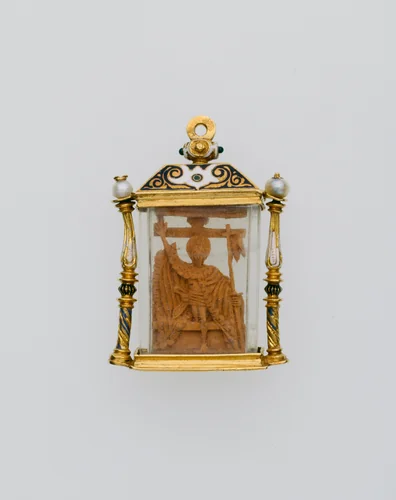
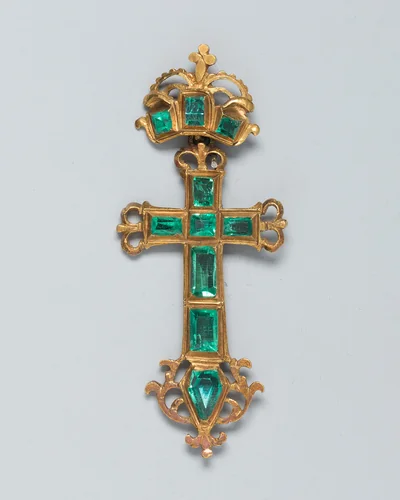
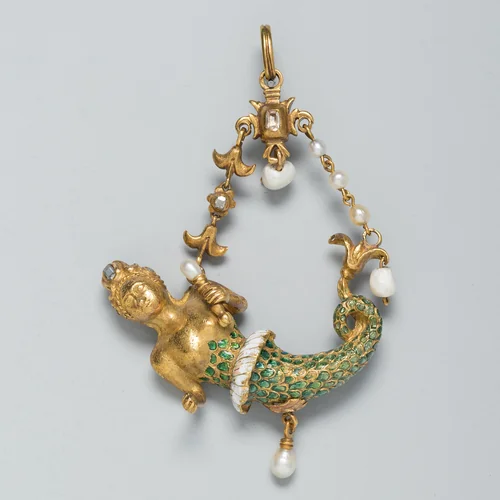
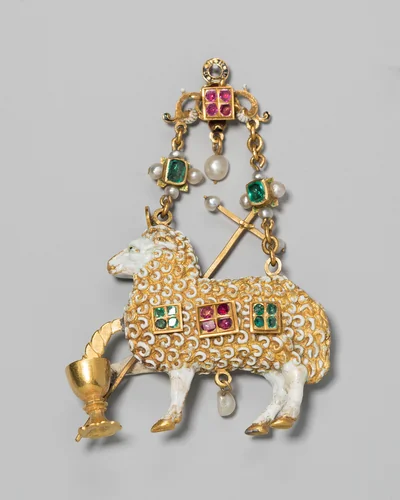
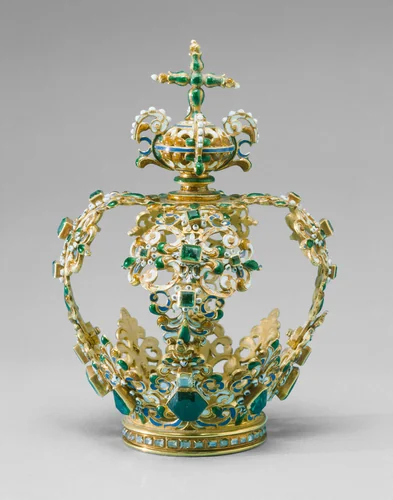
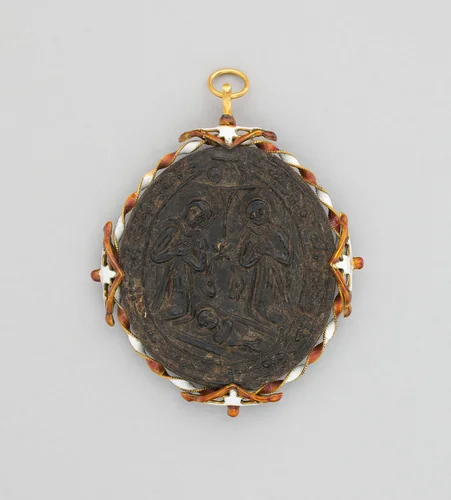
The known inventory includes the substantial devotional piece Double-Sided Pendant with the Deposition and the Resurrection, the sacred Pendant with Agnus Dei (Lamb of God), and the simple Pendant Cross. The collection also features highly functional ceremonial objects, such as the Crown, Probably for a Statue of the Christ Child, which contrasts with the more secular and ornamental Pendant Shaped as a Mermaid.
The surviving body of work confirms the sophisticated metalwork traditions prevalent in the Spanish or Spanish Colonial sphere, establishing these pieces as museum-quality artifacts crucial for studying religious and cultural exchange. Images of these important historical pieces are often available as downloadable artwork for research purposes, sometimes falling into the public domain depending on institutional agreements.