Sonia Delaunay
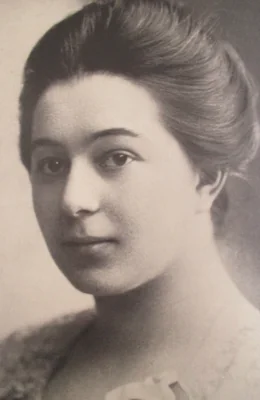
Sonia Delaunay stands as a pivotal figure in the development of transnational modernism, distinguished by her pioneering synthesis of abstraction and applied arts. Born in the Russian Empire and formally trained in Russia and Germany, she settled in Paris, where she became a central creative force within the School of Paris. Her historical significance was definitively established in 1964 when she became the first living female artist to receive a retrospective exhibition at the Louvre Museum.
Delaunay’s early, productive period, spanning 1913 to 1923, was marked by radical experimentation. She co-founded Orphism alongside her husband, Robert Delaunay, an art movement defined by its rigorous use of strong, geometric color relationships intended to evoke rhythm and depth, often likened to musical composition. Rather than confining these chromatic principles to easel painting, Delaunay immediately applied them to functional objects and graphic design.
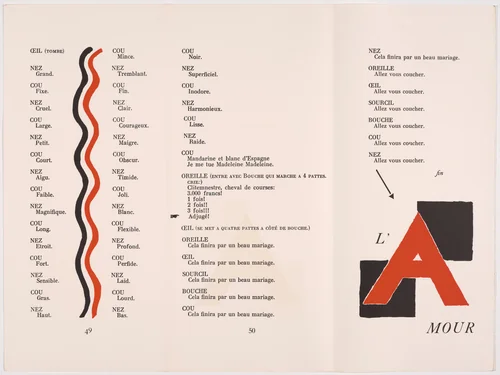
This commitment is powerfully evident in her illustrated book works, such as the seminal 1913 collaboration, La Prose du Transsibérien et de la Petite Jehanne de France, which transformed the traditional book form into a vertically unfolding, abstract mural. Similarly, works like Portuguese Market demonstrate her facility for conveying texture and movement through purely abstracted forms.
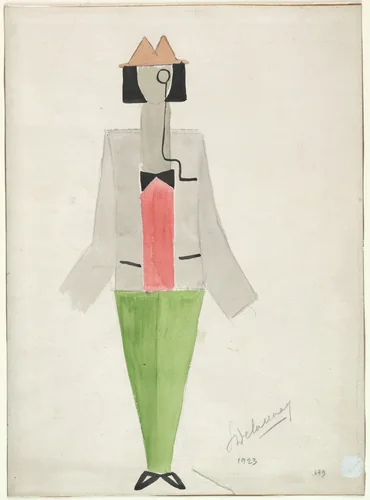
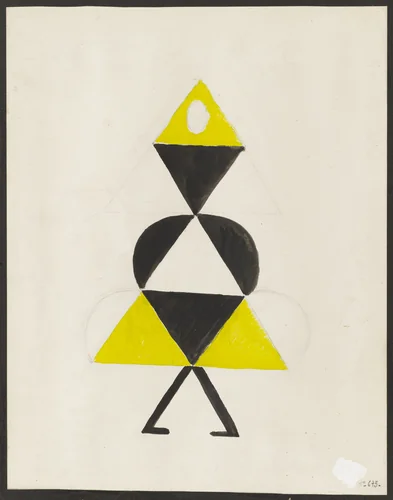
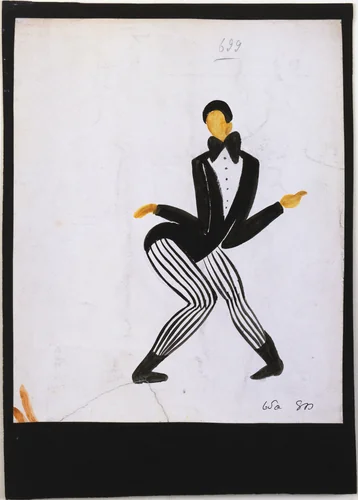
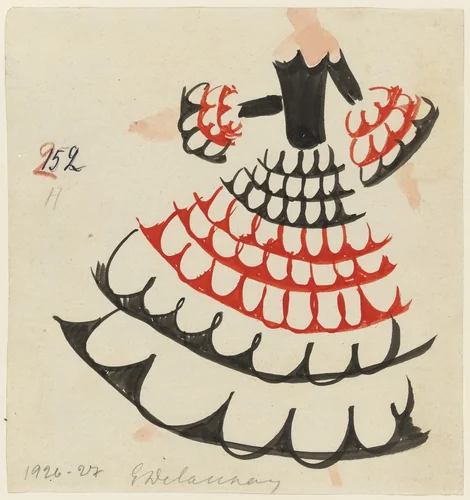
Delaunay famously refused to adhere to the rigid early 20th-century divide between fine art and industrial design. She seamlessly extended her exploration of simultaneous contrasts across diverse mediums, including set design, home furnishings, and, most famously, fashion. Pieces such as Robe Poeme No. 688 exemplify her vision of a fully integrated artistic environment, where the body itself became a canvas for pure color theory. Her groundbreaking work in textiles and fashion—treating them with the same conceptual gravity as painting—not only influenced subsequent generations of designers but also made Sonia Delaunay prints widely accessible. Today, the foundational drawings and high-quality prints that document this innovative period are essential to understanding the evolution of 20th-century abstract art. Her profound influence on visual culture was later recognized when she was named an officer of the French Legion of Honor in 1975.
Source: Wikipedia · CC BY-SA 4.0