Soga Nichokuan
Soga Nichokuan was an artist active during the early Edo period in Japan, with recorded activity spanning the years 1600 to 1634. Known primarily for painting, Nichokuan’s work adheres to the tradition of classical East Asian ink painting, often featuring strong lines and dynamic, focused compositions.
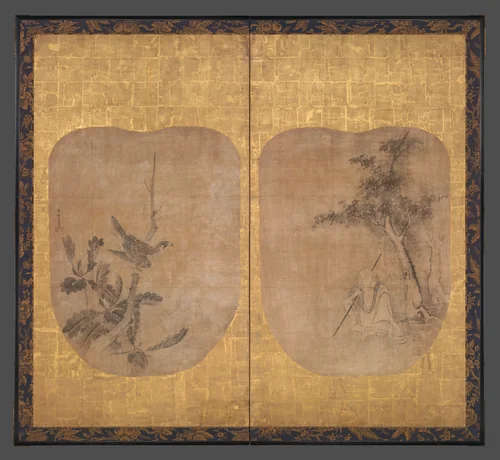
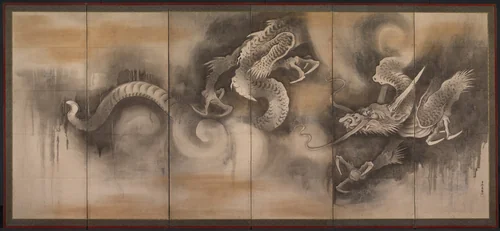
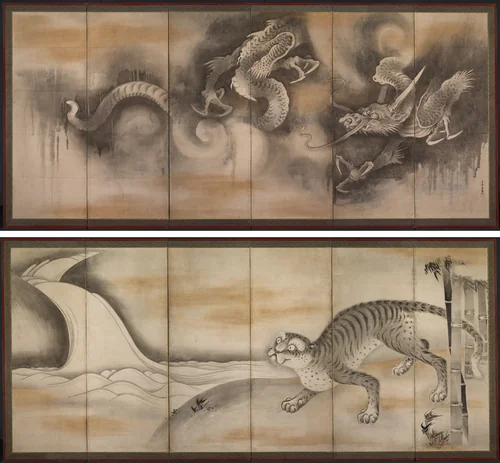
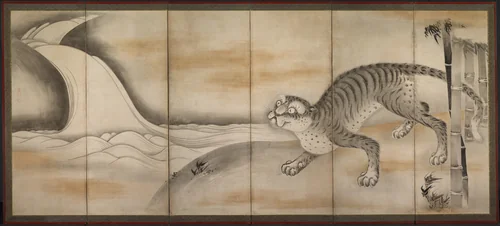
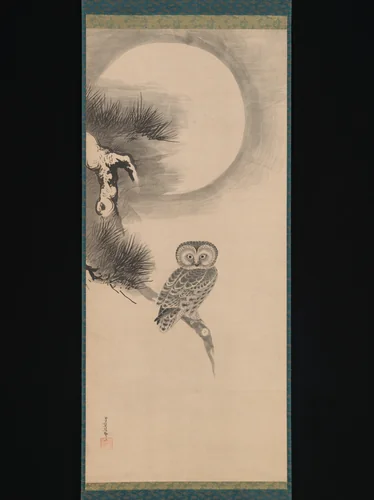
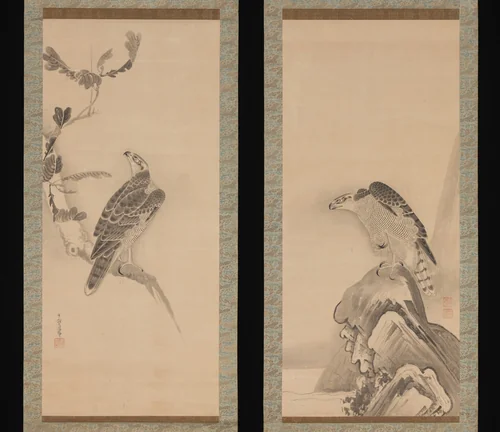
The six known paintings represented in Western museum collections demonstrate a thematic focus on traditional iconography, including powerful studies of mythical and naturalistic subjects. Notable documented works include the iconic paired compositions Dragon and Tiger, as well as the composite piece Dragon and Tiger. Other recognized pieces, such as Daoist Sage and Hawk and Owl on a Pine Branch, underscore a thematic interest in both nature studies and religious figures.
The artist’s historical significance is established by the presence of Soga Nichokuan paintings in major institutional collections, including the Metropolitan Museum of Art and the Cleveland Museum of Art. Six paintings are currently preserved in these museum collections. Because many classical works from this era eventually transition to the public domain, high-quality prints reproducing Nichokuan's distinctive 17th-century style remain a point of interest for curators and collectors.