Sir Godfrey Kneller
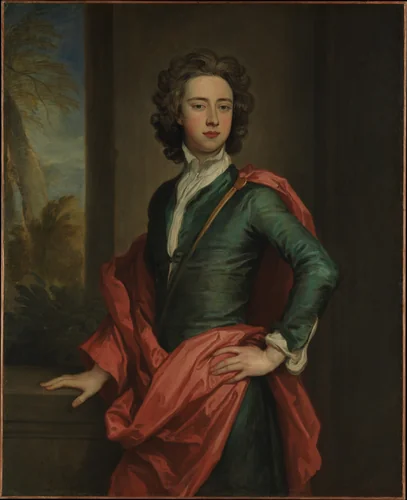
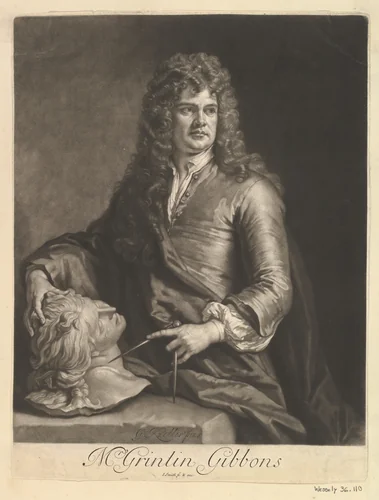
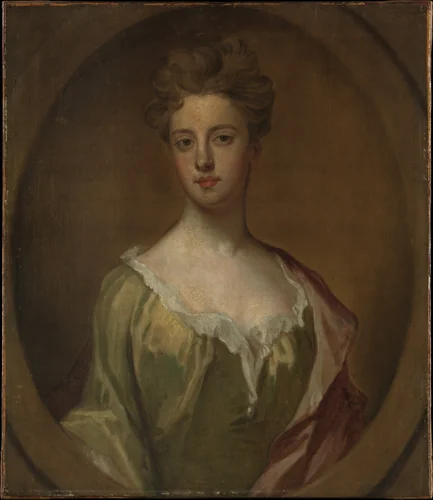
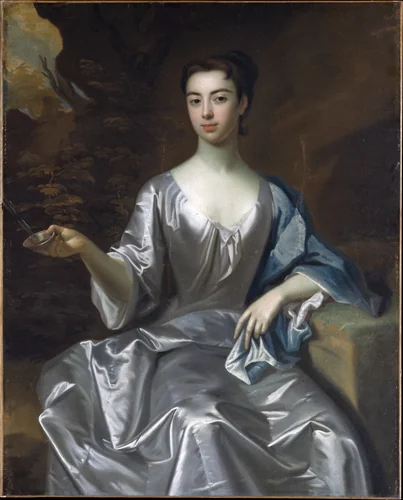
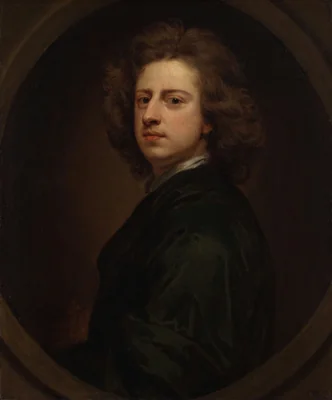
Sir Godfrey Kneller (1646-1723), a German-born artist who became the preeminent portraitist of late 17th and early 18th-century England, holds a singular and dominant position in British art history. His longevity and political acumen allowed him to serve as principal painter to four successive monarchs, from Charles II to George I, effectively defining the visual aesthetic of the aristocracy and intelligentsia for fifty years. Kneller's prolific output, spanning paintings, drawings, and prints, chronicled the transition between the late Stuart and early Georgian eras with remarkable consistency. His works, including notable portraits such as Charles Beauclerk (1670–1726), Duke of St. Albans and Grinling Gibbons, are fundamental to major institutions, including the Metropolitan Museum of Art and the National Gallery of Art.
Kneller's importance stemmed not merely from court favor, but from his capacity to capture figures across the spectrum of influence. His sitters ranged from visiting foreign dignitaries, notably Louis XIV of France and Michael Shen Fu-Tsung, to foundational figures in science, such as Isaac Newton. An influential early innovation was his pioneering of the ‘kit-cat’ portrait, a canvas size approximately 36 by 28 inches. This format was large enough to include the sitter's hands while maintaining a distinctive intimacy, lending the works a particular character widely adopted by his peers.
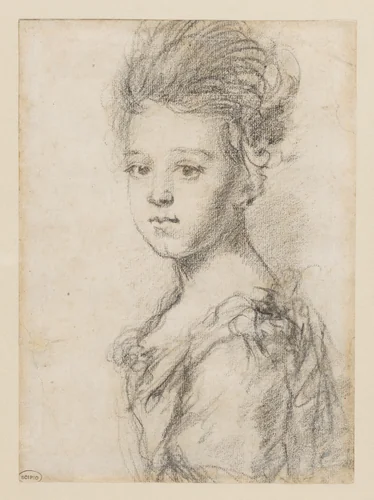
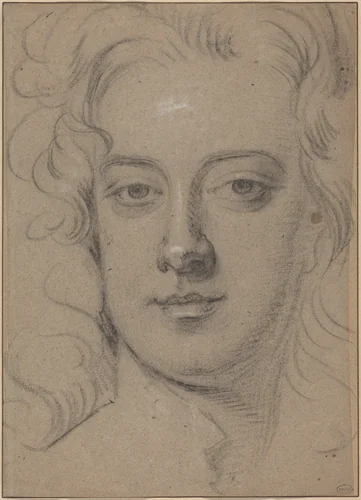
The artist’s most celebrated commissions included the definitive series of eight “Hampton Court Beauties,” painted for William III. This project intentionally matched the earlier series of “Windsor Beauties” executed by Kneller's predecessor, Peter Lely, firmly cementing Kneller's status as the undisputed visual authority of the realm. His output, which included sensitive drawings like the Study of a young girl, demonstrated a versatile facility that extended beyond grand official oil paintings. It is perhaps the most remarkable achievement of Kneller’s long career that he managed to serve two different political dynasties without ever incurring the displeasure of either, a testament to diplomatic finesse matched only by his artistic consistency. Today, due to the volume and scope of his work, many significant Sir Godfrey Kneller paintings and high-quality prints are in the public domain, ensuring this comprehensive visual record remains accessible for scholarly appreciation.
Source: Wikipedia · CC BY-SA 4.0