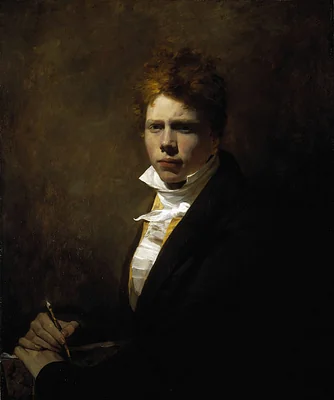
Sir David Wilkie
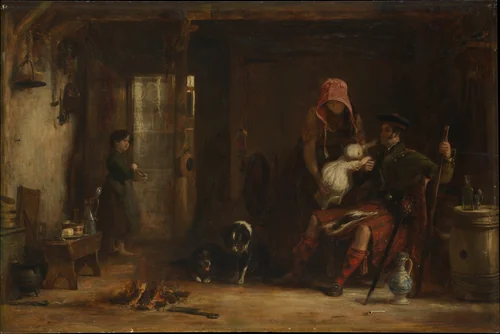
Sir David Wilkie (1785-1841) stands as one of the most significant British painters of the early nineteenth century. Renowned as a leading figure in the popularization of genre painting, his meticulously detailed canvases offered sympathetic and often humorous depictions of Scottish domesticity and tradition. Born in Cults, Scotland, his career was marked by rapid acclaim; he was quickly dubbed "the Scottish Teniers," a direct reference to the influential 17th-century Dutch master David Teniers the Younger, whose precise technique and focus on common life Wilkie clearly inherited.
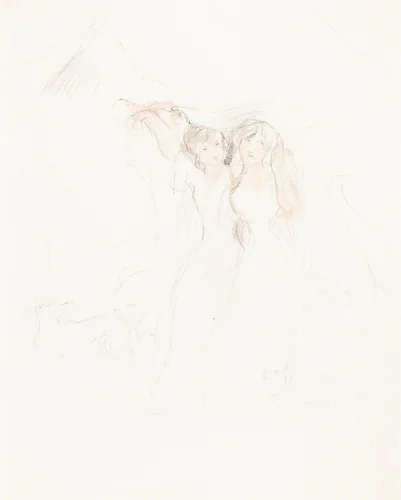
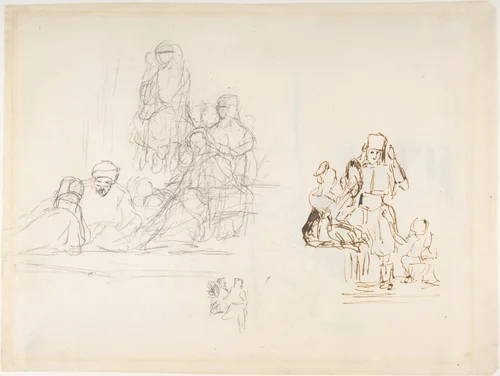
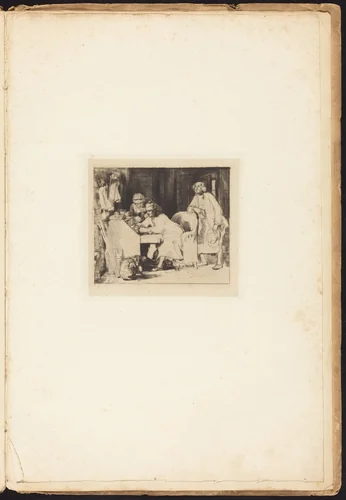
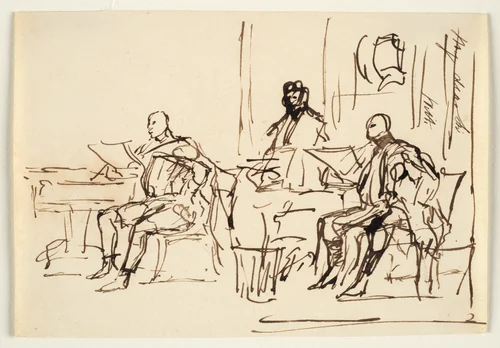
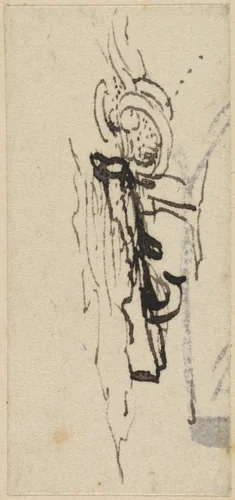
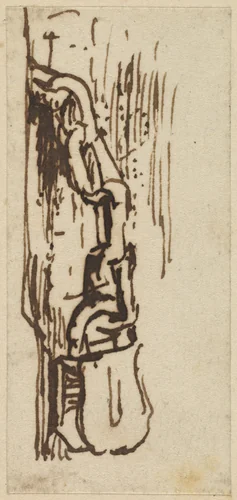
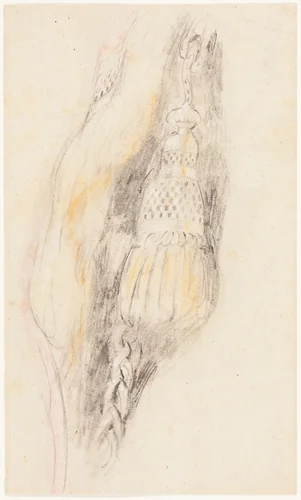
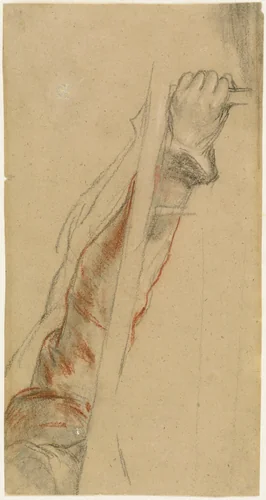
Wilkie’s early success was predicated on his technical mastery of composition and narrative detail. He worked extensively in graphite and ink before finalizing his large oil paintings. Preparatory studies demonstrate an exacting commitment to capturing precise material reality. Studies such as the mechanical rendering A Lock and its counterpart A Padlock, or the focused rendering of fabric in A Tassel, reveal the artist’s acute focus on texture and structure. Similarly, the careful positioning explored in studies like An Upraised Arm underscores his dedication to anatomical veracity. This foundational commitment to highly structured realism paved the way for his ascension in the Royal hierarchy, culminating in his appointment as Painter in Ordinary to King William IV in 1830, and later serving Queen Victoria.
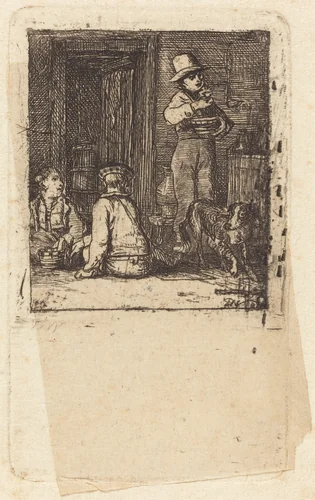
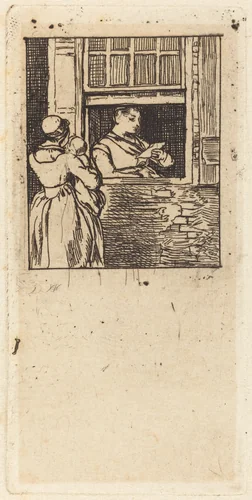
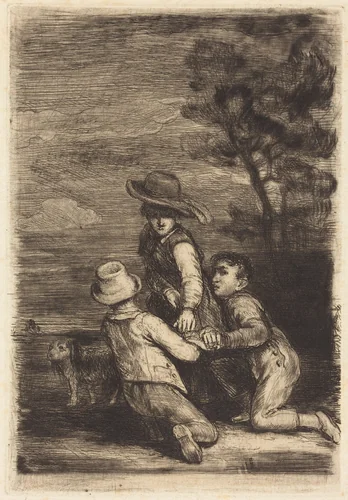
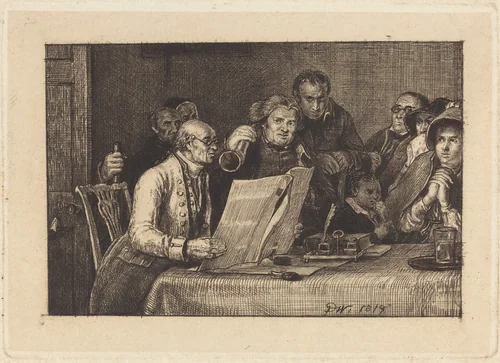
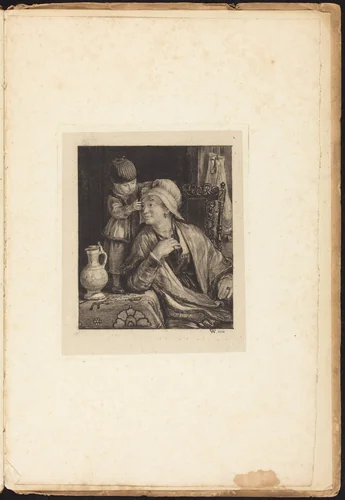
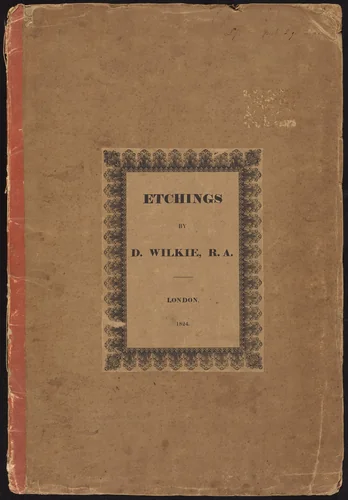
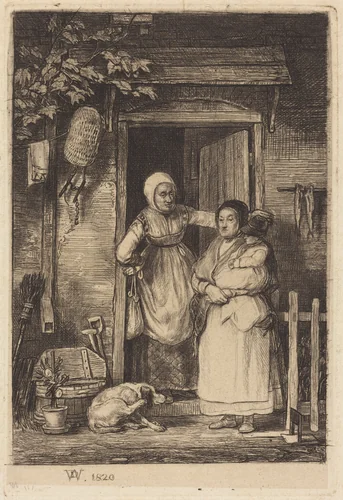
Following extensive travel through Europe and the Near East, Wilkie’s subject matter shifted toward grander historical scenes and portraits. Nevertheless, his enduring legacy rests firmly upon his warm, observational genre scenes, which established a powerful precedent for narrative art in the Victorian era. A prolific draftsman, much of his preliminary work, including five known Sir David Wilkie prints and numerous studies, is held in preeminent institutions such as the Metropolitan Museum of Art and the National Gallery of Art. The accessibility of these works is often facilitated by institutional digitization efforts, allowing high-quality prints to enter the public domain for study. It is an interesting footnote that Wilkie, famous for illustrating the subtle complexities of social interaction, was often described by contemporaries as profoundly shy and intensely uncomfortable in the very social situations he so brilliantly depicted.
Source: Wikipedia · CC BY-SA 4.0
![An Ornate Ewer [recto] by Sir David Wilkie, drawing, 1785-1841](https://img.artbee.org/29fc5e19-d948-4c82-b9c0-aa94f458a31c/small.webp)
![Study of a Mother and Child [verso] by Sir David Wilkie, drawing, 1785-1841](https://img.artbee.org/529fcb28-f461-4ba6-bcb1-5687c309b21e/small.webp)