Simon Marmion
Simon Marmion (active 1460-1468) occupies a pivotal, if chronologically brief, position in the history of Early Netherlandish painting and manuscript illumination. Though his sphere of activity lay within what is now modern-day France, his career flourished under the direct and discerning patronage of the powerful Duchy of Burgundy, meaning that for most of his working life, he was considered an artist of the Southern Netherlands. This political alignment placed him stylistically within the Northern tradition, integrating the atmospheric realism and refined detailing pioneered by artists like Jan van Eyck with the more delicate color schemes associated with French courtly painting. Marmion’s sophisticated amalgamation of these styles helped define the visual standard for luxurious commissions at the close of the fifteenth century.
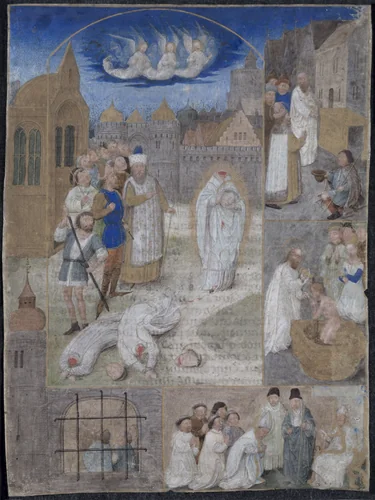
Though his documented active period spans fewer than ten years, Marmion produced works of exceptional refinement for elite clients, comprising five known illuminated manuscripts, a preparatory drawing, and a single surviving panel painting. His technique exemplifies the precision required by the Burgundian court, characterized by vibrant color palettes and careful attention to volumetric space, particularly evident in folios such as The Martyrdom of Saint Denis, excised from a breviary commissioned by Charles the Bold and Margaret of York. Today, these seminal works are held in leading global institutions, including the Metropolitan Museum of Art and the Rijksmuseum, ensuring their status as museum-quality examples of late medieval art.
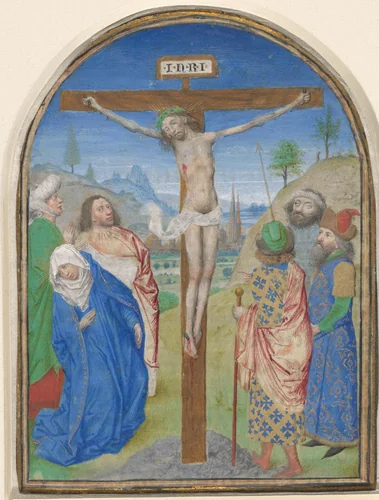
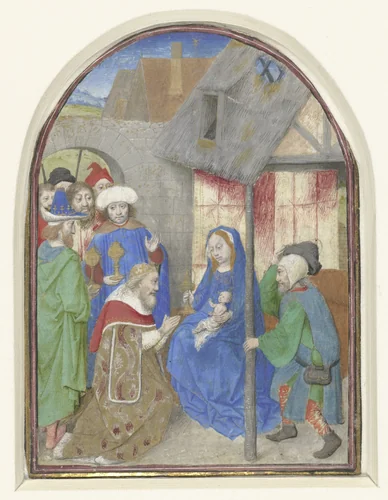
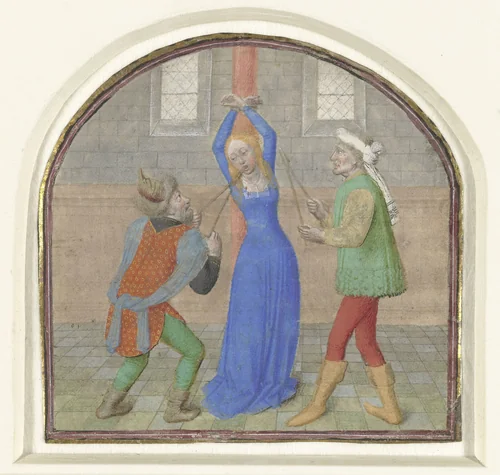
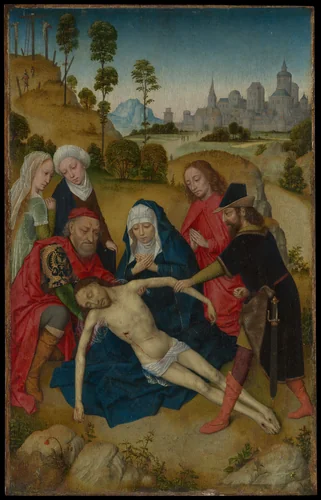
His versatility is further underscored by the varied nature of his surviving corpus, which includes the drawing Het martelaarschap van H. Appolonia and the devotional painting Christus aan het kruis. This ability to move fluently between the intimate scale necessary for illumination in pieces like De aanbidding der koningen and the grander demands of larger Simon Marmion paintings suggests a highly adaptable master, capable of translating complex compositions across different media without sacrificing detail. Many of these historically significant images are now in the public domain, making high-quality prints and downloadable artwork widely available for scholarly study and appreciation, allowing Marmion’s distinctive contribution to late medieval Northern European art to persist far beyond his short, impactful career.
Source: Wikipedia · CC BY-SA 4.0