Simon Denis
Simon-Joseph-Alexandre-Clément Denis was a Flemish painter whose career, spanning the late eighteenth and early nineteenth centuries, was decisively shaped by his long residency in Italy. Arriving in Rome around 1786, Denis quickly became a significant figure in the international community of neoclassical and pre-Romantic landscape painters, eventually serving as the official court painter to King Ferdinand I of the Two Sicilies.
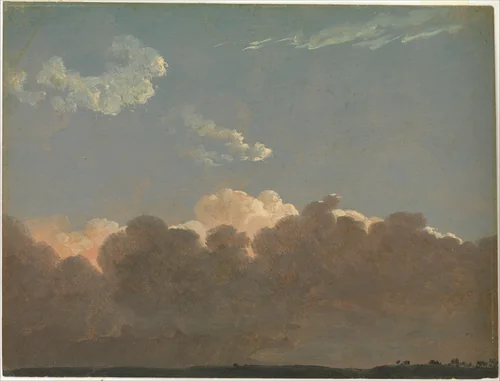
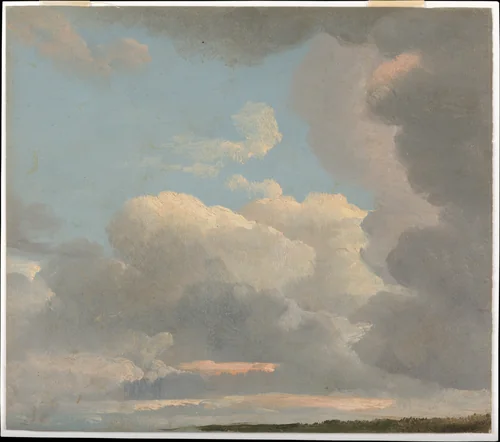
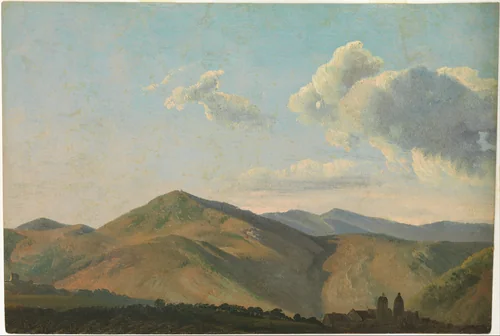
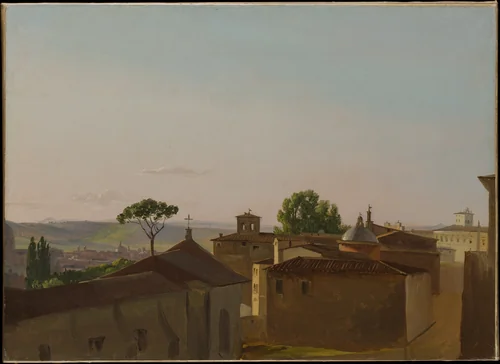
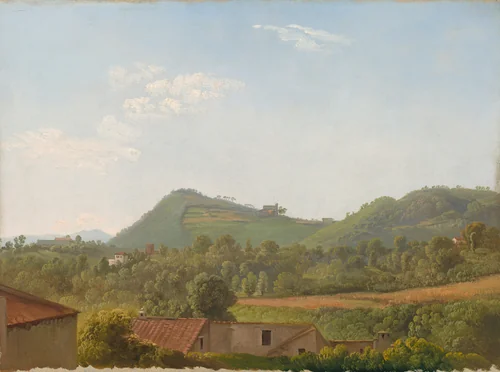
While he completed formal, large-scale compositions, Denis’s critical importance to art history rests in his intimate, rapidly executed oil sketches painted en plein air. He was a dedicated pioneer of this practice, capturing atmospheric effects with a directness and vitality that anticipated later nineteenth-century movements. Works such as Cloud Study (Distant Storm) and Cloud Study (Early Evening) are small masterpieces of observation, depicting transient meteorological events with remarkable speed and accuracy. These oil-on-paper studies suggest a painter who found the ephemeral drama of a shifting sky more compelling than the formalized historical narratives then often demanded of landscape artists.
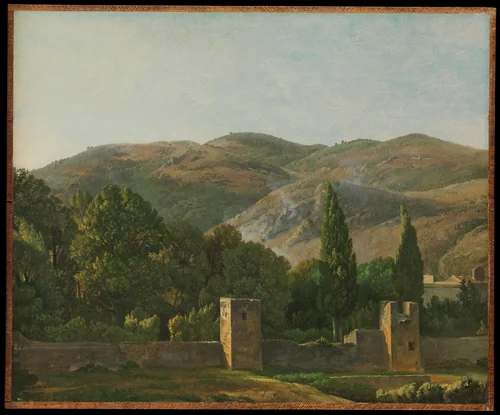
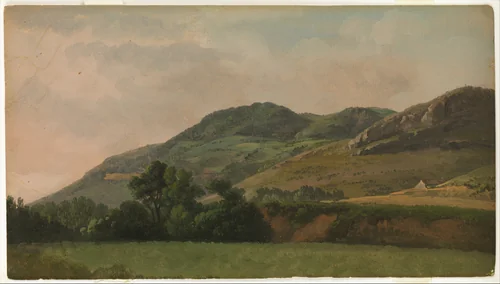
Denis operated within a thriving visual culture that valued both classical history and the sublime natural world. His subjects were drawn overwhelmingly from the mountainous, dramatic terrain surrounding Rome, especially the rugged settings of Tivoli and Vicovaro. Paintings like Fortified Wall at Tivoli and Mountainous Landscape at Vicovaro combine precise topographical information with an evocative, almost Romantic, sense of scale, demonstrating the artist’s mastery of light and shadow over rocky elevations.
Despite a relatively focused output—the Metropolitan Museum of Art and the National Gallery of Art hold essential Simon Denis paintings—his influence was disproportionate to the number of finished canvases he produced. His dedication to capturing immediate sensory experience in his sketches provided a crucial model for subsequent generations of artists working in Italy. Today, many of these historical compositions, now in the public domain, are preserved as museum-quality examples of transitional European landscape art. They are widely studied, and many are available as high-quality prints for contemporary audiences seeking downloadable artwork.
Source: Wikipedia · CC BY-SA 4.0