Simon de la Vallée
Simon de la Vallée (1590–1642) occupies a definitive position at the origin point of formal architectural education in Scandinavia. As a French-Swedish master, he distinguished himself as the first architect in Sweden to have received comprehensive academic training, a crucial detail that transformed the nation’s building culture. Vallée is consequently credited with establishing the Swedish school of architecture, setting institutional and aesthetic precedents that dominated design for the following century.
Prior to Vallée’s influence, construction practices in Sweden largely adhered to regional guilds and inherited practical knowledge. Vallée imported the sophisticated theoretical underpinnings of Continental Renaissance and early Baroque styles, integrating them through a disciplined methodology learned abroad. His contribution was not just the introduction of new aesthetics, but the professionalization of the entire discipline. He demonstrated that architecture was not merely craft, but a liberal art based on classical proportional theory and rigorous draftsmanship.
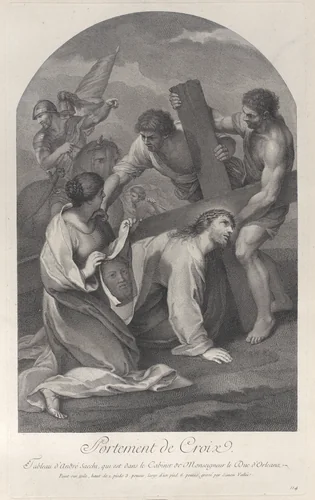
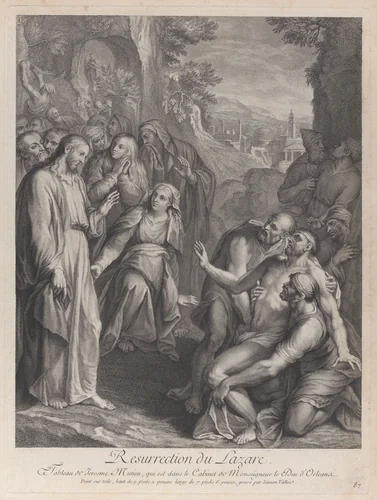
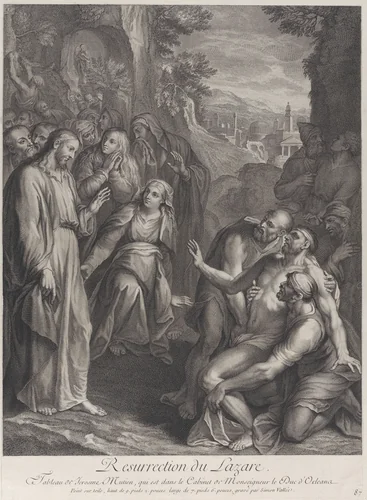
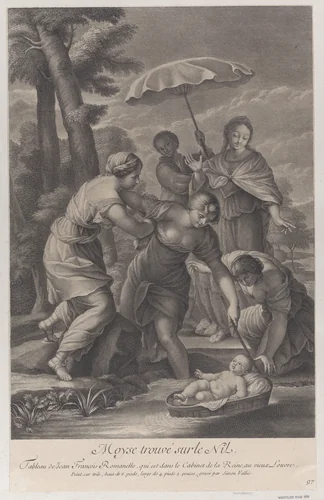
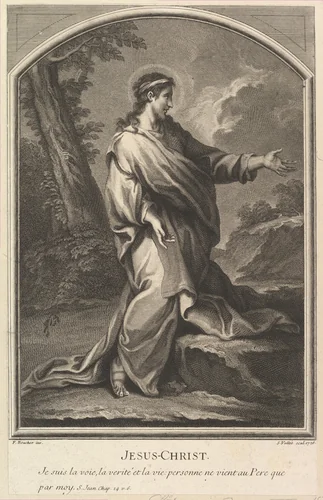
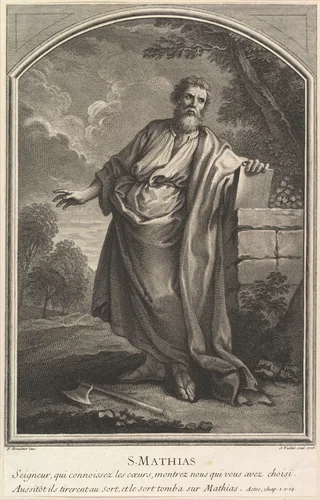
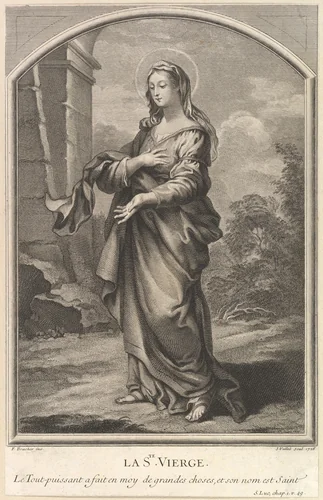
While Vallée’s primary legacy rests in monumental structures and educational reform, the historical record indicates a significant continuity of his name within the graphic arts, most notably through an active printmaker flourishing in the 1720s. This later figure produced a set of highly detailed narrative etchings, including The Raising of Lazarus and Christ fallen to the ground under the weight of the cross, now preserved in major institutional holdings, such as the Metropolitan Museum of Art. The existence of these museum-quality works, demonstrating a command of complex composition and narrative drama, ensures that the name Simon de la Vallée remains pivotal across diverse artistic fields.
It is perhaps fitting that the founder of an architectural tradition should be followed by practitioners who excelled in graphic representation, a field equally dependent on precision and planning. Scholars interested in tracing the evolution of religious iconography in the region frequently encounter these works; many of the early prints have passed into the public domain, offering readily downloadable artwork for historical research. The collective output demonstrates how sophisticated European design principles, first imported by the architect in the seventeenth century, gradually disseminated into high-quality prints and graphic culture.
Source: Wikipedia · CC BY-SA 4.0