Simon Charles Miger
Simon-Charles Miger (1736-1817) was a highly accomplished French engraver whose extensive career bridged the technical rigor of the Enlightenment with the expanding scientific demands of the post-revolutionary era. Active primarily in Paris, Miger specialized in line engraving and etching, skills which placed him at the center of critical collaborative projects requiring visual accuracy and reproducibility. His technical prowess ensured that his works gained institutional recognition, with examples of his output now housed in major collections such as the National Gallery of Art and the Metropolitan Museum of Art.
Miger is most historically significant for the detailed graphic works he contributed to the monumental publication, La Ménagerie du Muséum national d'histoire naturelle. This seminal zoological text, compiled by the leading naturalists Georges Cuvier, Étienne Geoffroy Saint-Hilaire, and Bernard Germain de Lacépède, required an artist capable of translating exotic and newly documented fauna into precise scientific documentation. The resulting Simon Charles Miger prints provided the visual infrastructure for early modern comparative anatomy and taxonomy, illustrating specimens with an exacting standard of clarity required by the academy.
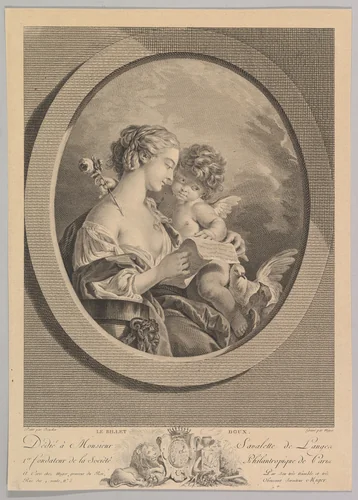
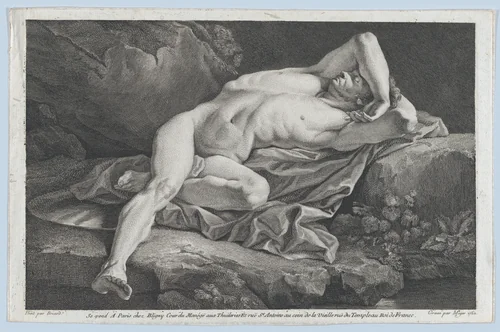
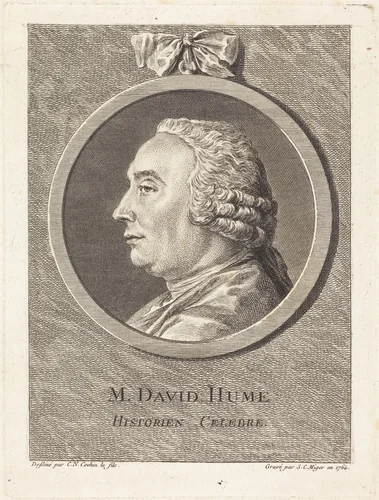
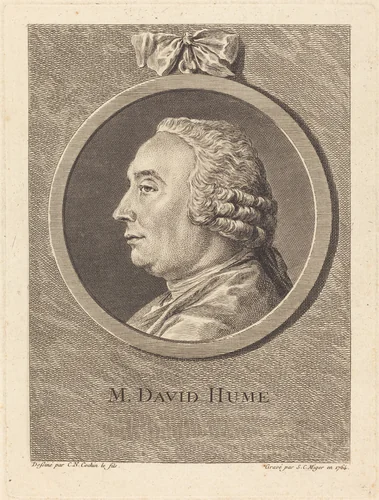
While the exacting representation of specimens dominated his professional output, Miger was not limited to scientific illustration. He demonstrated versatility through his involvement in portraiture and classical genre scenes, often reproducing the works of others or producing original compositions. Plates like the precise intellectual portrait of the philosopher M. David Hume and the expressive figure study Study of Male Nude reveal his dexterity outside the confines of natural history. It is a subtle observation that the artist responsible for documenting the exact scales of a reptile was equally adept at capturing the delicate emotional nuances of a romantic encounter, as seen in his print A Love Letter.
This intersection of scientific obligation and independent artistry defines his legacy. Given the historical period of their production, many of Miger’s graphic works, spanning both scientific illustration and fine art compositions, are now available as public domain resources. Their enduring quality ensures that these museum-quality pieces remain valuable, providing art historians and researchers with access to high-quality prints reflecting the visual culture and scientific ambitions of late eighteenth-century France.
Source: Wikipedia · CC BY-SA 4.0