Sigmund Freudenberger
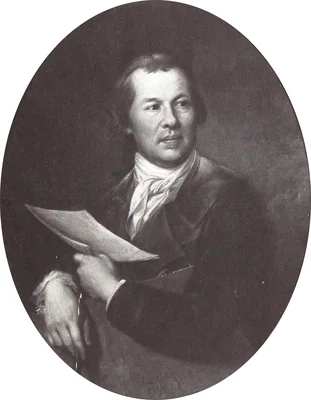
Sigmund Freudenberger (1745-1774) occupies a distinctive, if brief, chapter in 18th-century European draftsmanship. Active primarily across Switzerland and France, his work demonstrates a sophisticated assimilation of contemporary French aesthetics applied to localized Swiss subject matter. While initially trained as a portraitist, a path likely influenced by his origins as the son of a lawyer, Freudenberger’s career trajectory shifted definitively during his formative years in Paris (1765-1773).
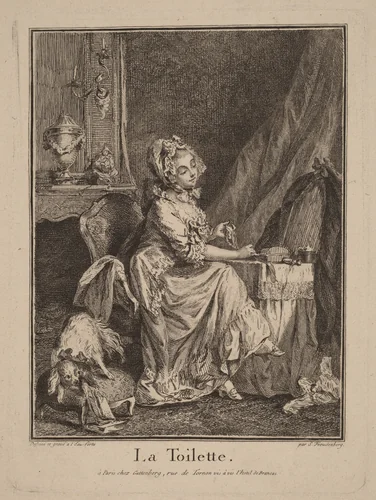
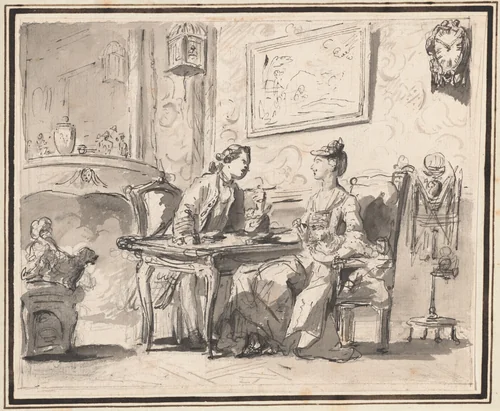
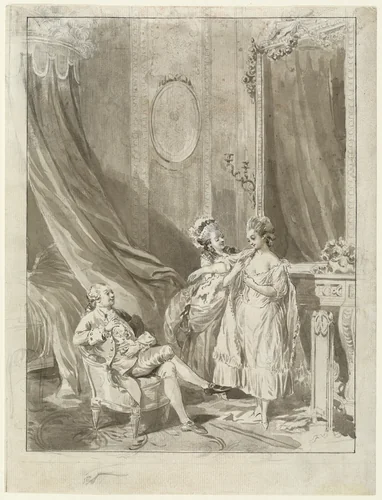
This Parisian decade was crucial, positioning him in the orbit of influential French Rococo masters. He worked directly alongside artists like François Boucher and Jean-Michel Moreau, collaborations that honed his skill in detailed draftsmanship and the creation of highly finished prints and drawings. This refinement of technique is immediately apparent in sophisticated narrative works such as La toilette and the carefully composed Conversation Piece.
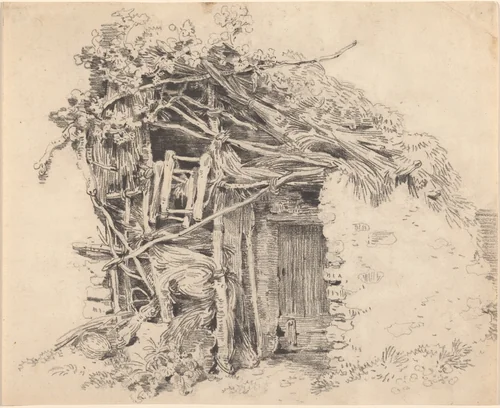
Upon his return to Bern, Freudenberger became a pivotal figure in local artistic education, founding a private art school. More importantly, he began to refine the style for which he is best known: intimate, carefully observed genre scenes of Swiss rural existence. He earned the affectionate moniker, "Little Master," a title acknowledging the small scale and meticulous detail of his etchings and drawings depicting daily life. Rather than producing sweeping canvases, Freudenberger focused on specific, unvarnished moments, cataloging activities that offer rich socio-historical insight. A piece like Corner of a Rustic Barn exemplifies this dedication to the quotidian.
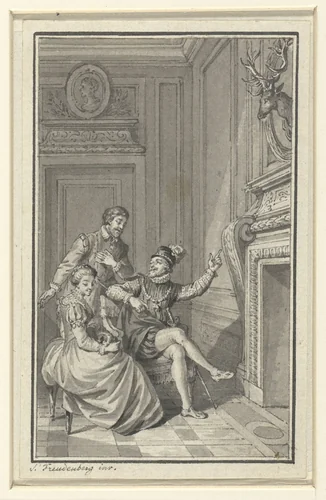
Freudenberger's narrative ability, seen powerfully in the drawing Scène uit de ''Heptameron François", suggests a profound awareness of both literary and dramatic conventions. It is perhaps a great irony that a master of intimate rural scenes should have cut his artistic teeth studying formal portraiture in one of Europe’s grandest capitals. Although his life was tragically short, his oeuvre is preserved in leading international institutions, with important Sigmund Freudenberger prints and drawings held by the Rijksmuseum and the National Gallery of Art. High-quality prints of his works, including the quiet dignity of Early Morning, are frequently available in the public domain, ensuring that these precise, museum-quality observations remain accessible to scholars and contemporary viewers alike.
Source: Wikipedia · CC BY-SA 4.0