Shunbaisai Hokuei (春梅斎北英)
Shunbaisai Hokuei (春梅斎北英) was a Japanese printmaker active in the late Edo period, with his documented artistic output spanning from 1825 to 1837. Primarily working in the ukiyo-e tradition, his known works focus heavily on yakusha-e, or theatrical actor prints, placing him within the lineage of Osaka-based print artists who specialized in capturing the drama of the Kabuki stage.
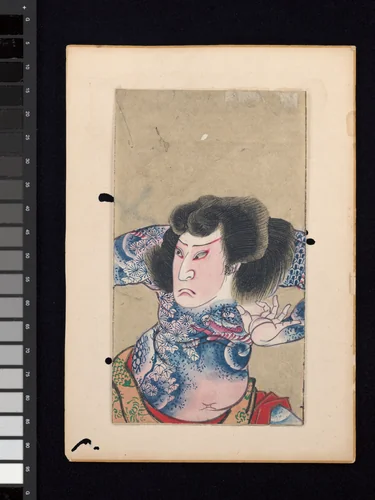
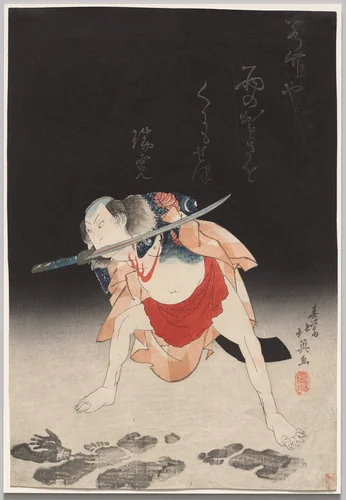
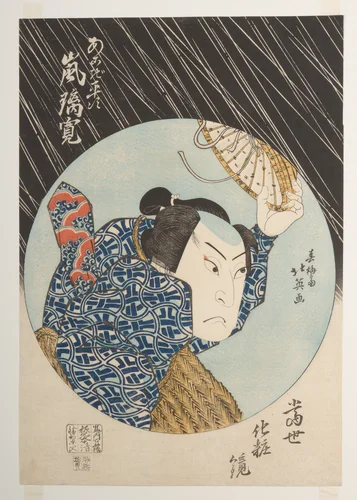
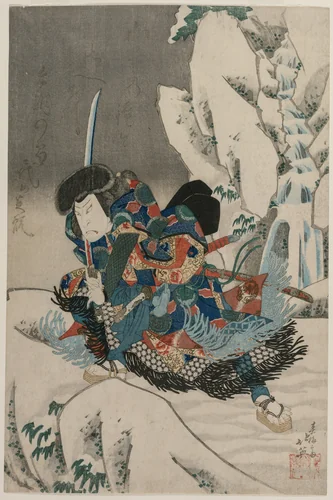
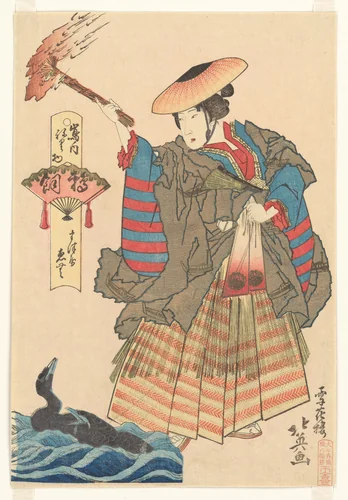
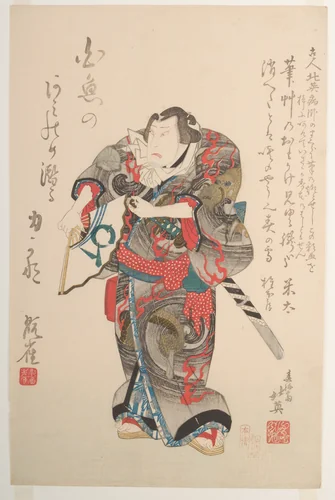
Eight of his prints are currently represented in major museum collections, providing insight into his stylistic approach. His compositions often focus on dramatic, half-length portraits of prominent actors. Key works frequently depict Arashi Rikan II, notably in Arashi Rikan II as Danshichi Kurōbei in Mirror of Naniwa: The Summer Festival and Kabuki Actor Arashi Rikan II as Akogi Heiji, the latter belonging to the series Tōsei keshōkagami (Makeup Mirrors of Our Time).
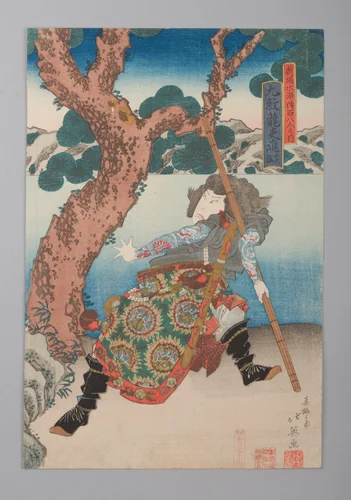
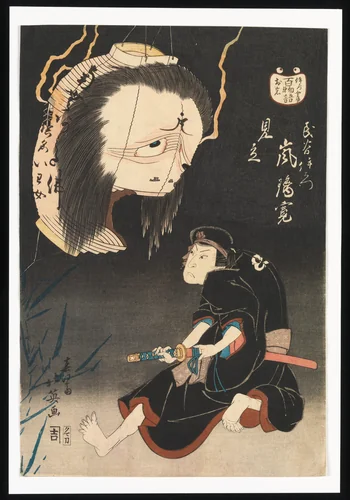
Another significant example of his dramatic character study is Kabuki Actor Arashi Rikan II as Iemon Confronted by an Image of His Murdered Wife, Oiwa, on a Broken Lantern, Referring to Katsushika Hokusai’s Hyaku monogatari (One Hundred Ghost Stories). In addition to theatrical portraits, Shunbaisai Hokuei (春梅斎北英) prints also include works from narrative series, such as Three Heroes of the Water Margin Capture the Bandit Queen Ichijōsei, from the series One Hundred Eight Heroes of the Theater Suikoden.
His contribution to Japanese graphic arts is preserved in prestigious institutions, including the Metropolitan Museum of Art and the Cleveland Museum of Art. These museum-quality works are often available in the public domain, offering access to high-quality prints for scholarly research and appreciation.