Shiba Kokan
Shiba Kōkan, born Andō Kichirō or Katsusaburō, stands as one of the most intellectually curious and stylistically versatile artists of the late Edo period. Active in the 1760s, his significance derives from his simultaneous mastery of established Japanese aesthetics and his radical embrace of Western techniques. He navigated two distinct artistic identities: working as Kōkan, he pioneered Western-style yōga paintings, and as Harushige, he produced sophisticated ukiyo-e prints, ensuring that his influence extended across opposing visual traditions.
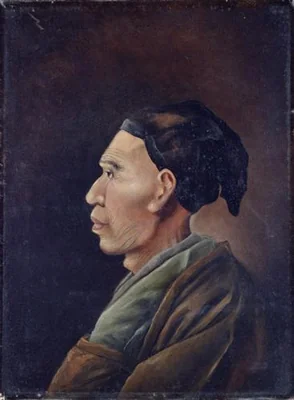
Kōkan’s adoption of yōga represented a critical divergence from native styles. He actively sought to imitate the methods, themes, and oil painting techniques characteristic of the Dutch school, pioneering a form of naturalism previously unseen in Japanese art. This artistic pursuit was intrinsically linked to his broader intellectual engagement with Rangaku (Western learning), particularly in the field of astronomy. His dedication to scientific inquiry informed his perspective, differentiating his output of Shiba Kokan paintings from that of his contemporaries, and establishing him as an early proponent of European linear perspective and chiaroscuro.
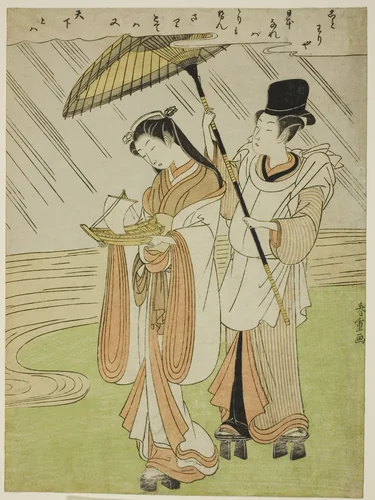
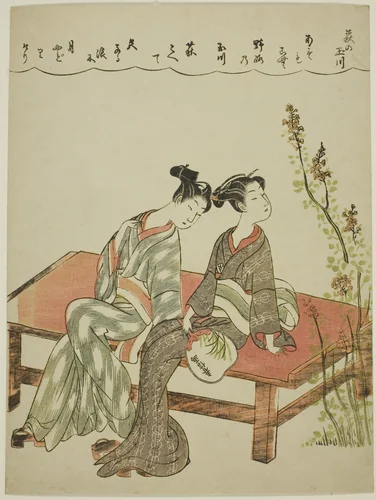
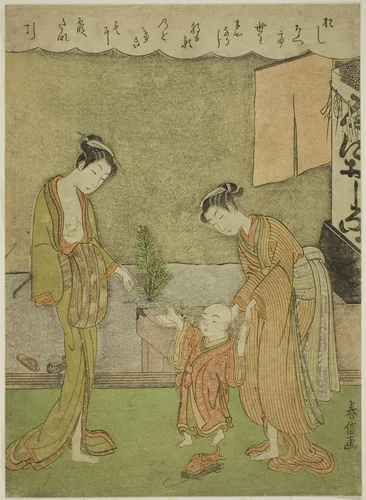
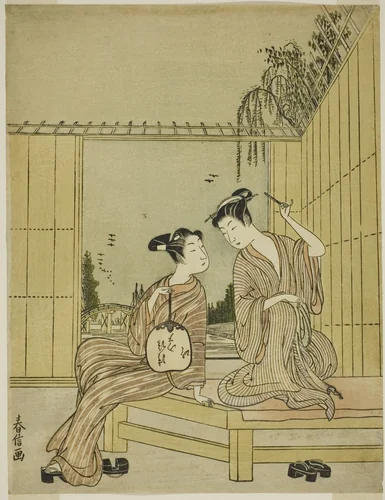
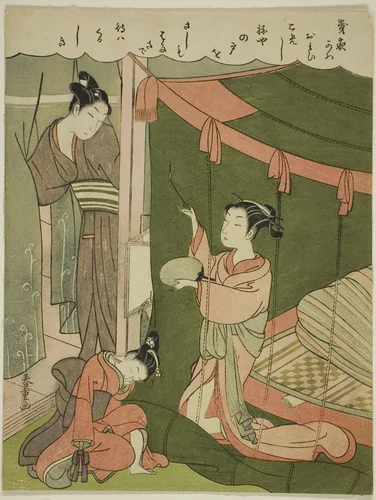
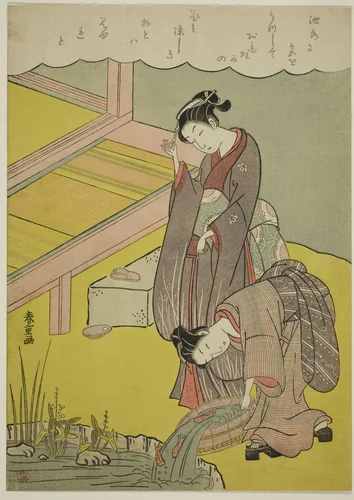
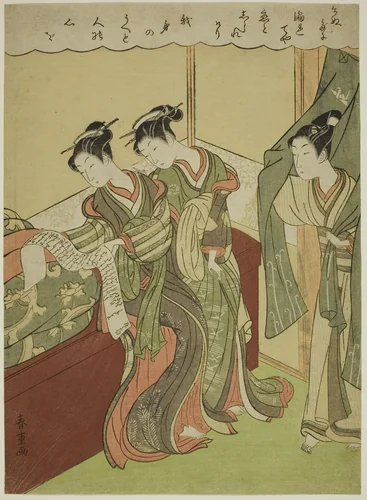
While his yōga defined his revolutionary stance, his work as Harushige cemented his immediate commercial success in the competitive ukiyo-e market. His prints, such as Praying for Rain Komachi or Courtesan Burning Mosquitoes as Her Guest Arrives, demonstrate exceptional skill in representing everyday life. However, Kōkan was not strictly concerned with originality during this phase; he produced careful and extensive forgeries of the revered work of Suzuki Harunobu. Intriguingly, Kōkan is documented as having openly boasted of his near-perfect ability to replicate the great master, an amusing testament to his technical confidence. These high-quality prints and other works now form essential parts of major institutional holdings, including the collection of the Art Institute of Chicago.
Kōkan’s legacy is defined by his willingness to cross boundaries both aesthetic and academic. From rigorous scientific study to the commercial demands of the print market, his career perfectly illustrates the cultural tension and intellectual energy of 18th-century Japan. Many of his significant early prints are now widely accessible as downloadable artwork, having entered the public domain, allowing global appreciation for this transformative figure.
Source: Wikipedia · CC BY-SA 4.0