Severin Roesen
Severin Roesen (c. 1816–c. 1872) stands as a foundational figure in the history of American still life painting, achieving renown during the mid-nineteenth century for his luxurious and densely populated depictions of nature's bounty. Born in Prussia, Roesen immigrated to the United States and rapidly established a reputation based on his singular dedication to the genre of the still life, specifically specializing in lavish arrangements of fruit and flowers. His prolific output ensures his recognition today as one of the major American artists working within this focused tradition.
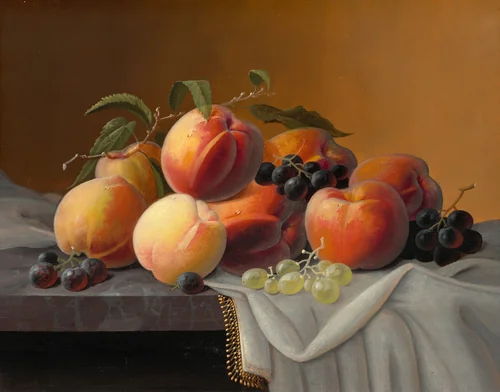
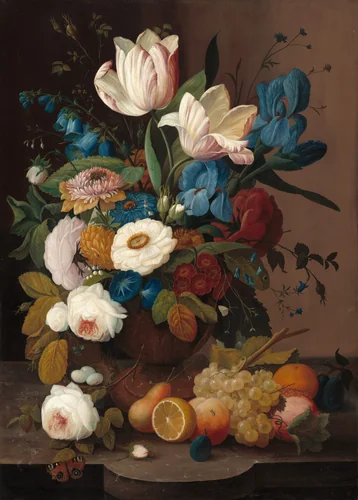
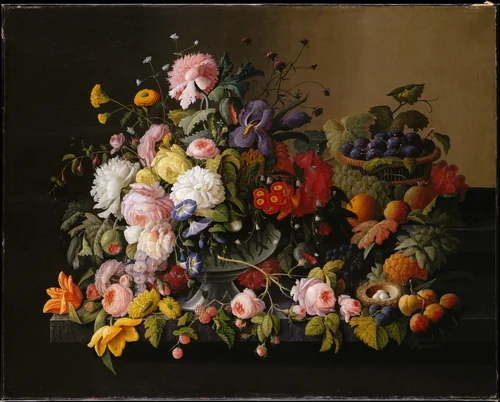
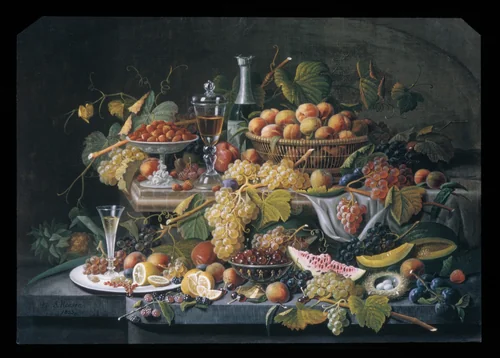
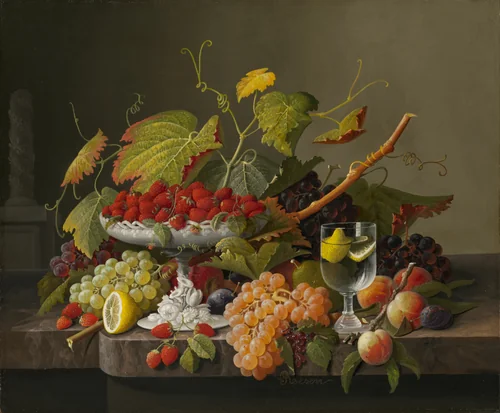
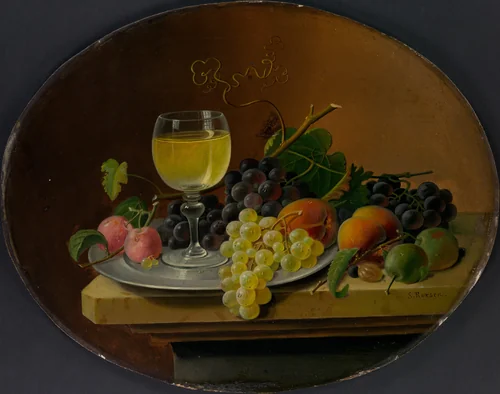
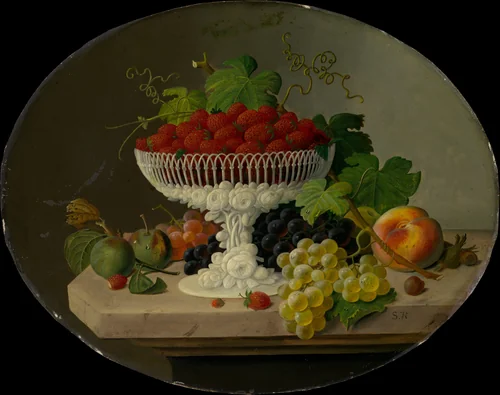
Roesen’s distinctive style is defined by its dramatic sense of plenitude. Works such as An Abundance of Fruit and Still Life, Flowers, and Fruit are characterized by a precise, hyper-realistic technique applied to overflowing compositions. His canvases rarely feature simple, modest arrangements; instead, they present expansive displays of grapes, peaches, berries, and exotic blooms, often spilling over marble ledges. This dedication to visual excess aligns with the era’s taste for material prosperity and meticulous detail, elevating common household objects into magnificent displays of technical skill.
A hallmark of the artist's meticulous approach is his nearly obsessive attention to minute detail, a trait which lends his paintings a subtle, almost photographic, realism. His arrangements frequently feature a single, perfect drop of dew glistening on a berry or a small, carefully positioned insect, serving as a clever visual reminder of the fleeting nature of the arrangement and the artist's sheer technical dexterity.
The enduring appeal and historical significance of Roesen's contributions are affirmed by his prominent placement in institutional holdings across the country, including the Metropolitan Museum of Art, the National Gallery of Art, and the Art Institute of Chicago. These placements ensure that the legacy of Severin Roesen paintings remains accessible for study and appreciation. Moreover, the prevalence of his work and the elapsed copyright period mean that many of his masterful compositions, such as Still Life: Fruit, now reside in the public domain, allowing institutions and enthusiasts alike to access high-quality prints for personal collections and educational use.
Source: Wikipedia · CC BY-SA 4.0