Segna di Buonaventura
Segna di Buonaventura, a distinguished painter of the Sienese School, was actively practicing across the crucial period of approximately 1298 to 1331. Known also by the variant Segna de Bonaventura, he was instrumental in transmitting the aesthetic innovations of the early Trecento following the death of Duccio di Buoninsegna. His work serves as a foundational bridge, moving away from the more iconic stylization of the 13th century toward the increased naturalism and narrative elegance that defined Sienese painting in the 14th century.
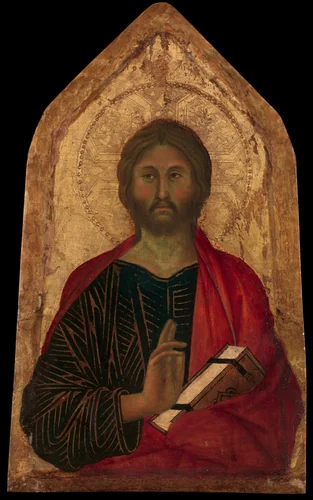
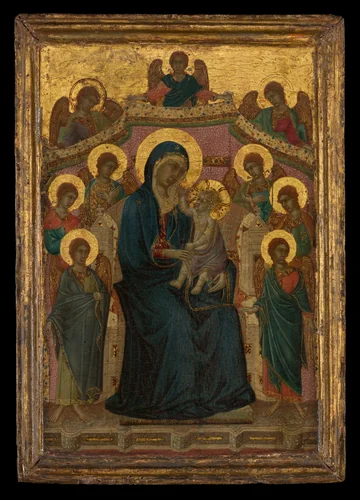
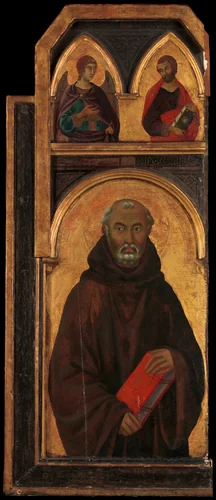
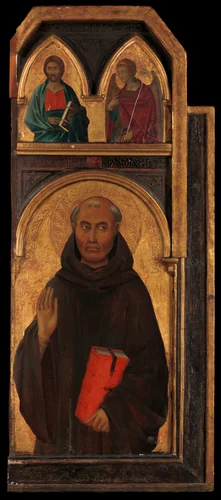
His known artistic output, though limited in number, is consistent in its high standard and profound devotional clarity. Segna maintained the Sienese commitment to graceful, flowing lines and the brilliant chromatic effects typical of the region, utilizing gold grounds to suggest a divine, weightless space for his figures. Surviving Segna di Buonaventura paintings, such as the contemplative Christ Blessing and the revered Madonna and Child with Nine Angels, demonstrate his technical skill in capturing gentle human interaction even within rigid, hieratic formats.
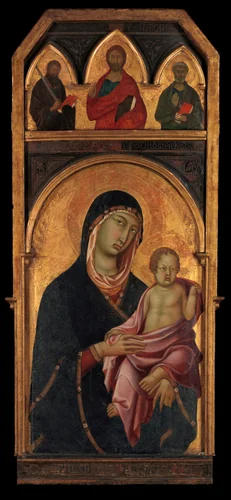
Segna’s compositions often focused intensely on the maternal relationship, lending the Madonna panels a subtle, tender quality. While his artistic structure remained largely dependent on the monumental forms established by Duccio, Segna subtly refined the modeling of faces and drapery, granting them a more pliable, responsive quality. This disciplined adherence to established style, combined with nuanced expressive additions, explains his enduring significance.
His works are now distributed across prominent global collections, affirming their historical value. For instance, the Metropolitan Museum of Art holds several important panels documenting his career. While the intense spotlight of history often falls solely upon the most revolutionary artists, Segna’s consistent, museum-quality output is perhaps a more crucial metric for understanding the sophisticated artistic ecosystem and widely distributed standard of excellence prevalent in early Trecento Siena. Today, the legacy of this early master is easily studied; many of his significant panels are within the public domain, making high-quality prints and downloadable artwork readily available for contemporary scholarship and enjoyment.
Source: Wikipedia · CC BY-SA 4.0